

How Does High-Pressure Die Casting Benefit The Automotive Industry
2026-01-09
In the relentless pursuit of lighter, stronger, and more efficient vehicles, the automotive industry relies on advanced manufacturing technologies. Among these, High-Pressure Die Casting stands out as a cornerstone process, enabling the mass production of complex, high-integrity components. At BSD, we leverage this precise technology to help automakers achieve their design and performance goals, driving innovation from the chassis up.
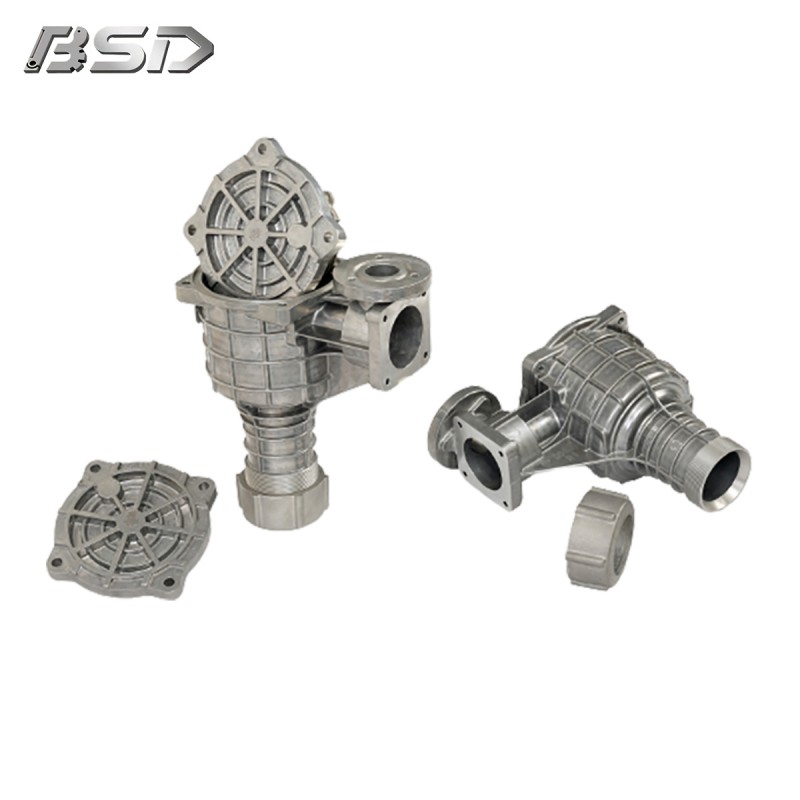
The benefits of High-Pressure Die Casting for automotive manufacturing are profound and multi-faceted:
-
Lightweighting for Efficiency: Replacing heavier steel parts with intricate, thin-walled aluminum castings reduces vehicle weight, directly improving fuel efficiency and electric vehicle range.
-
Structural Integrity & Safety: The process produces parts with excellent dimensional accuracy and strength, crucial for structural components like pillars and frame elements, enhancing overall vehicle safety.
-
Cost-Effective Mass Production: Once the durable mold is created, BSD can produce thousands of identical parts at high speed with minimal post-processing, offering exceptional value for high-volume runs.
-
Design Freedom & Consolidation: Engineers can design complex, single-cast parts that would otherwise require assembling multiple pieces. This consolidates assemblies, improving reliability and reducing production steps.
The following table compares traditional manufacturing with High-Pressure Die Casting for a key automotive component:
| Feature | Traditional Multi-Part Steel Assembly | High-Pressure Die Casting (e.g., Aluminum) |
|---|---|---|
| Component Weight | Higher | Significantly Lower |
| Production Speed | Slower (Assembly Required) | Very High (Near-Net Shape) |
| Part Complexity | Limited by Joining Methods | Very High (Intricate Geometries Possible) |
| Material Strength-to-Weight Ratio | Lower | Higher |
High-Pressure Die Casting FAQ
What types of automotive parts are commonly made with High-Pressure Die Casting?
This process is ideal for both structural and non-structural parts, including engine blocks, transmission housings, steering knuckles, large cross-car beams, and intricate door frames.
Why is aluminum the preferred material for automotive die castings?
Aluminum offers an optimal balance of light weight, good strength, corrosion resistance, and excellent thermal conductivity. It is fundamental to vehicle lightweighting strategies without compromising safety or performance.
How does High-Pressure Die Casting contribute to electric vehicle (EV) manufacturing?
It is critical for EVs, enabling lightweight battery housings for protection and thermal management, complex e-motor frames, and structural components that offset heavy battery weight to maximize driving range and safety.
The strategic application of High-Pressure Die Casting is more than a manufacturing choice; it is a competitive advantage in modern automotive engineering. From enhancing sustainability through lightweighting to enabling the next generation of electric vehicles, this technology is integral to the industry's future.
Is your automotive project leveraging the full potential of advanced die casting? Contact us at BSD today to discuss how our expertise in High-Pressure Die Casting can bring your most ambitious designs to life with precision, strength, and efficiency.
