How does fluid food machinery handle varying viscosity levels in sauce and dairy manufacturing
2026-05-21
Handling fluctuating viscosity is a daily challenge in sauce and dairy production. Fluid Food Machinery from KGL is engineered to adapt seamlessly to thick ketchup, runny milk, creamy yogurt, and chunky salsa. The core lies in adjustable rotor-stator designs, variable speed drives, and real-time viscosity feedback loops that maintain consistent flow, shear rate, and homogenization.
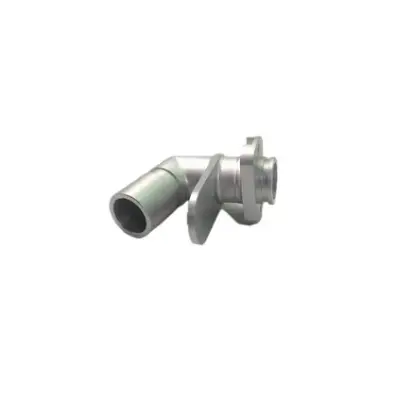
Key technical mechanisms for viscosity variation
| Viscosity Level | Typical Product | Machinery Adaptation |
|---|---|---|
| Low (1–100 cP) | Skim milk, whey | High-speed centrifugal pumps, fine mesh screens |
| Medium (100–10,000 cP) | Yogurt, cream, light sauce | Positive displacement pumps, medium shear mixers |
| High (10,000–100,000+ cP) | Cheese sauce, thick tomato paste | Twin-screw pumps, low-speed high-torque rotors |
Processing adjustments by product type
-
Sauce manufacturing (high viscosity, non-Newtonian)
Fluid Food Machinery uses helical rotor pumps and scraped surface heat exchangers to prevent burn-on and shear thinning. Variable frequency drives lower pump speed as viscosity rises, maintaining laminar flow. -
Dairy manufacturing (shear-sensitive, varying fat content)
For cream (high viscosity) vs. skim milk (low viscosity), KGL integrates flow divert valves and in-line viscometers. The system automatically switches between centrifugal and lobe pumps, preserving fat globule integrity.
Why viscosity control matters
Inconsistent handling leads to separation, clogging, or over-shearing. Fluid Food Machinery from KGL delivers ±1% viscosity repeatability through closed-loop PID control.
Fluid Food Machinery FAQ – Common questions
What happens if fluid food machinery processes a viscosity spike unexpectedly
The KGL control system includes a real-time torque sensor on the pump shaft. When viscosity suddenly increases (e.g., thicker tomato paste batch), the PLC automatically reduces pump speed, increases inlet pressure via a boost feeder, and alerts operators. No product damage or line stop occurs within ±30% viscosity deviation.
Can the same fluid food machinery handle both low-viscosity milk and high-viscosity cheese sauce without changing parts
Yes. KGL designs modular rotor heads and quick-clamp stators. A single unit fitted with a universal lobe pump and variable speed drive (10–500 rpm) processes 50 cP milk and 80,000 cP cheese sauce. Only a tool-free cartridge swap (under 2 minutes) is needed for extreme ranges above 150,000 cP.
How does fluid food machinery clean itself after processing high-viscosity products to avoid residue
KGL implements a three-stage CIP (Clean-In-Place) protocol: First, a warm water rinse at increased flow velocity (2.5 m/s) to push out thick residue. Second, recirculated alkaline detergent at elevated temperature (75°C) with reverse flow pulses. Third, an air-assisted drain and final acid rinse. All done automatically without disassembly.
Why manufacturers trust KGL for variable viscosity processing
-
Energy savings: Up to 35% lower power draw vs. fixed-speed pumps
-
Product quality: No fat separation or sauce syneresis
-
Hygiene: FDA-compliant seals and polished 316L stainless steel
Contact us today to discuss your sauce or dairy viscosity challenges. KGL engineers will analyze your product range and propose the right Fluid Food Machinery configuration – including on-site viscosity mapping and a trial run at our test center. Reach out via the website form or call your regional KGL office.