How Does Die-casting Mold Improve Modern Manufacturing Efficiency?
2026-04-16
Abstract
Die-casting molds are the backbone of high-precision metal component manufacturing. They determine not only the shape and dimensional accuracy of final products but also production efficiency, defect rate, and overall cost control. This article explores how die-casting molds function, what makes them critical in industrial production, and how proper design, material selection, and maintenance can significantly improve manufacturing outcomes. It also highlights common industry challenges and how professional engineering solutions provided by Wuhai Precision Engineering Company help address them effectively.
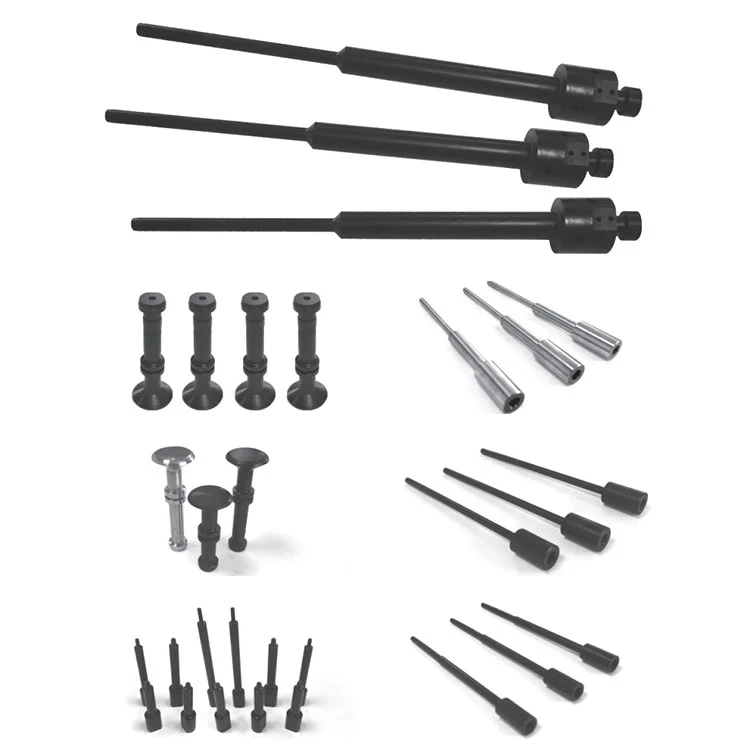
Table of Contents
- 1. Introduction to Die-casting Mold Technology
- 2. What Is a Die-casting Mold?
- 3. How Die-casting Mold Works in Production
- 4. Key Components of a Die-casting Mold
- 5. Core Benefits in Manufacturing
- 6. Common Industry Pain Points
- 7. Material Selection and Design Considerations
- 8. Maintenance and Service Life
- 9. Industrial Applications
- 10. Engineering Expertise from Wuhai Precision Engineering Company
- 11. Conclusion and Practical Guidance
1. Introduction to Die-casting Mold Technology
In modern manufacturing, the demand for lightweight, durable, and high-precision metal parts continues to grow. Industries such as automotive, aerospace, electronics, and industrial machinery rely heavily on die-casting technology to meet strict performance standards. At the center of this process is the die-casting mold, a precision-engineered tool that directly influences product consistency, production speed, and cost efficiency.
Understanding how die-casting molds function and how they are optimized can help manufacturers reduce waste, improve yield rates, and enhance long-term competitiveness.
2. What Is a Die-casting Mold?
A die-casting mold is a hardened steel tool used to shape molten metal under high pressure. It consists of two main halves: the fixed mold and the movable mold. When closed, these halves form a cavity that defines the geometry of the final product.
Once molten metal (commonly aluminum, zinc, or magnesium alloys) is injected into the mold cavity, it rapidly solidifies under controlled cooling conditions. The mold then opens, and the finished part is ejected.
The precision of the mold determines:
- Dimensional accuracy of the final product
- Surface finish quality
- Cycle time efficiency
- Defect rate and scrap reduction
3. How Die-casting Mold Works in Production
The die-casting process follows a highly controlled sequence designed to ensure repeatability and consistency:
- Mold Closing: The two halves of the mold are securely locked under high pressure.
- Injection: Molten metal is injected into the cavity at extremely high speed.
- Cooling: The metal solidifies rapidly, taking the shape of the mold.
- Opening: The mold separates once solidification is complete.
- Ejection: The finished part is pushed out using ejector pins.
Each step must be precisely synchronized. Even minor deviations in mold design or temperature control can lead to defects such as porosity, shrinkage, or deformation.
4. Key Components of a Die-casting Mold
The performance of a die-casting mold depends on several critical components:
| Component | Function | Impact on Production |
|---|---|---|
| Mold Cavity | Defines product shape | Directly affects dimensional accuracy |
| Core Pins | Forms internal features | Ensures structural complexity |
| Cooling Channels | Regulates temperature | Improves cycle time and quality |
| Ejector System | Removes finished parts | Prevents deformation and sticking |
5. Core Benefits in Manufacturing
High-quality die-casting molds offer significant advantages in industrial production:
- High Precision: Enables tight tolerances for complex components.
- Mass Production Efficiency: Supports rapid cycle times and large-scale output.
- Material Efficiency: Reduces waste through near-net-shape manufacturing.
- Surface Quality: Minimizes the need for post-processing.
These advantages make die-casting molds essential in industries requiring both speed and precision.
6. Common Industry Pain Points
Despite their advantages, die-casting molds present several engineering challenges:
- Thermal Fatigue: Repeated heating and cooling cycles can cause cracking.
- Wear and Erosion: High-speed metal flow gradually damages mold surfaces.
- Porosity Defects: Improper venting leads to trapped gases.
- High Initial Cost: Precision molds require significant upfront investment.
Addressing these issues requires advanced design strategies and high-grade materials.
7. Material Selection and Design Considerations
Material selection plays a crucial role in mold performance. Common materials include hot-work tool steels such as H13, known for heat resistance and toughness.
Key design considerations include:
- Optimized cooling channel layout for uniform temperature distribution
- Proper draft angles for smooth part ejection
- Ventilation systems to reduce gas entrapment
- Surface coatings to improve wear resistance
A well-engineered mold design can significantly extend service life and improve production stability.
8. Maintenance and Service Life
Routine maintenance is essential to ensure consistent mold performance. Preventive maintenance includes:
- Cleaning after production cycles
- Lubrication of moving components
- Inspection for cracks or wear
- Polishing of cavity surfaces
With proper maintenance, high-quality die-casting molds can achieve long operational lifespans, reducing total production costs over time.
9. Industrial Applications
Die-casting molds are widely used across multiple industries:
- Automotive engine and transmission components
- Electronic housings and heat sinks
- Aerospace structural parts
- Industrial machinery components
Their versatility makes them indispensable in modern precision manufacturing environments.
10. Engineering Expertise from Wuhai Precision Engineering Company
Wuhai Precision Engineering Company specializes in the design and manufacturing of high-performance die-casting molds tailored to industrial requirements. With a focus on precision machining, material optimization, and process innovation, the company delivers solutions that enhance productivity while minimizing operational risks.
Compared with standard tooling solutions, their engineering approach emphasizes:
- Advanced CAD/CAM-based mold design optimization
- Strict quality control at every manufacturing stage
- Customized solutions for complex geometries
- Long-term durability and performance stability
11. Conclusion and Practical Guidance
Die-casting molds are not just manufacturing tools—they are strategic assets that directly influence production efficiency, cost structure, and product quality. Understanding their structure, working principles, and maintenance requirements allows manufacturers to significantly improve operational outcomes.
By partnering with experienced engineering providers such as Wuhai Precision Engineering Company, businesses can achieve more stable production processes, higher yield rates, and reduced long-term costs.
If you are looking to enhance your die-casting production capabilities or develop customized mold solutions tailored to your industry needs, contact us today to discuss how we can support your next project.