How Does CNC Sheet Metal Improve Precision and Production Efficiency?
2026-03-24
Article Summary
CNC sheet metal fabrication has become a cornerstone of modern manufacturing due to its ability to deliver high precision, repeatability, and cost efficiency. This article explains how CNC sheet metal works, the challenges it solves for customers, and how to select the right solution for different applications. From material selection to process optimization, this guide provides practical insights for businesses aiming to improve product quality and reduce production costs.
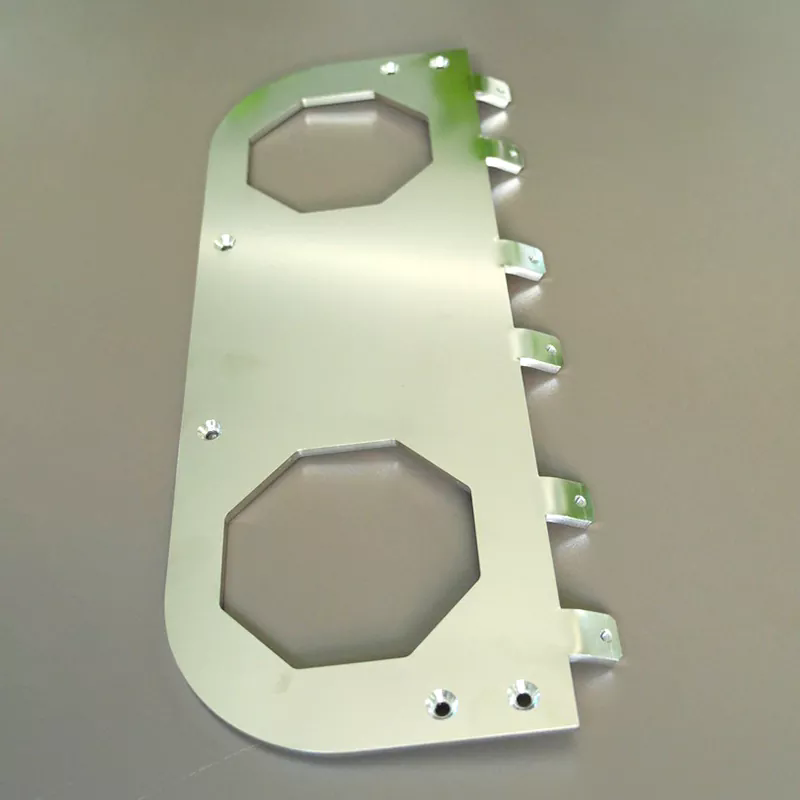
Table of Contents
- 1. What Is CNC Sheet Metal?
- 2. How Does CNC Sheet Metal Work?
- 3. Key Customer Pain Points Solved
- 4. Core Processes in CNC Sheet Metal Fabrication
- 5. Technical Parameters and Capabilities
- 6. Advantages Over Traditional Methods
- 7. How to Choose a Reliable CNC Sheet Metal Supplier
- 8. Frequently Asked Questions
- 9. Conclusion
1. What Is CNC Sheet Metal?
CNC sheet metal refers to the process of cutting, bending, and forming metal sheets using computer numerical control (CNC) machines. This method ensures high precision and repeatability, making it ideal for industries such as automotive, electronics, aerospace, and industrial equipment.
Unlike manual fabrication, CNC sheet metal processing relies on digital designs and automated machinery to produce consistent components with tight tolerances. This eliminates human error and enhances overall production efficiency.
2. How Does CNC Sheet Metal Work?
CNC sheet metal fabrication begins with a digital design, typically created using CAD software. This design is then converted into machine-readable instructions that guide CNC equipment throughout the production process.
- Design input and programming
- Material selection and preparation
- Precision cutting (laser, plasma, or punching)
- Bending and forming
- Surface finishing and inspection
Each step is controlled with high accuracy, ensuring that every component meets strict specifications.
3. Key Customer Pain Points Solved
Many customers face challenges such as inconsistent quality, high labor costs, and long production cycles. CNC sheet metal effectively addresses these issues.
- Inconsistent Quality: Automated processes ensure uniform results
- High Production Costs: Reduced labor and material waste
- Slow Turnaround: Faster production cycles with CNC automation
- Complex Designs: Capability to handle intricate geometries
These advantages make CNC sheet metal a preferred solution for businesses seeking reliability and scalability.
4. Core Processes in CNC Sheet Metal Fabrication
Understanding the main processes helps customers evaluate service providers and production capabilities.
- Laser Cutting: High precision and clean edges
- Punching: Efficient for repetitive patterns
- Bending: Accurate angle formation
- Welding: Strong structural assembly
- Surface Treatment: Powder coating, anodizing, polishing
Each process contributes to the final product quality and performance.
5. Technical Parameters and Capabilities
| Parameter | Specification |
| Material Types | Stainless steel, aluminum, carbon steel, copper |
| Thickness Range | 0.5 mm – 20 mm |
| Tolerance | ±0.1 mm or better |
| Surface Finish | Powder coating, anodizing, brushing |
| Production Volume | Prototype to mass production |
| Processing Methods | Laser cutting, bending, welding |
Manufacturers like Xinyang provide advanced CNC sheet metal solutions with stable quality and flexible production capabilities, supporting both custom and large-scale projects.
6. Advantages Over Traditional Methods
Compared to traditional manual fabrication, CNC sheet metal offers several distinct advantages:
- Higher Precision: Computer-controlled operations reduce deviations
- Repeatability: Consistent results across large batches
- Efficiency: Faster processing speeds
- Cost Savings: Reduced waste and labor costs
- Flexibility: Easy design modifications
These benefits enable businesses to remain competitive in demanding markets.
7. How to Choose a Reliable CNC Sheet Metal Supplier
Selecting the right supplier is critical to ensuring product quality and delivery reliability.
- Technical Capability: Advanced machinery and skilled engineers
- Quality Control: Strict inspection standards
- Customization: Ability to meet specific design requirements
- Lead Time: Fast and reliable delivery schedules
- Experience: Proven track record in the industry
Working with an experienced manufacturer like Xinyang ensures access to professional expertise and consistent production performance.
8. Frequently Asked Questions
Q1: What materials can be used in CNC sheet metal fabrication?
Common materials include stainless steel, aluminum, carbon steel, and copper. The choice depends on the application, strength requirements, and environmental conditions.
Q2: How accurate is CNC sheet metal processing?
CNC systems can achieve tolerances as tight as ±0.1 mm or even better, depending on the equipment and process used.
Q3: Is CNC sheet metal suitable for small batch production?
Yes. CNC fabrication is highly flexible and supports both prototyping and mass production efficiently.
Q4: What industries use CNC sheet metal the most?
Industries such as automotive, electronics, telecommunications, and industrial equipment rely heavily on CNC sheet metal components.
9. Conclusion
CNC sheet metal fabrication offers a powerful combination of precision, efficiency, and scalability. By leveraging advanced automation and digital design, businesses can achieve higher product quality while reducing costs and production time.
Xinyang continues to deliver reliable CNC sheet metal solutions tailored to diverse industry needs, ensuring consistent performance and customer satisfaction.
If you are looking to enhance your manufacturing capabilities with high-precision sheet metal solutions, contact us today to discover how our expertise can support your next project and drive measurable results.