How Does Chassis Sheet Metal Improve Vehicle Structural Performance?
2026-04-21
Abstract
Chassis sheet metal plays a critical role in modern vehicle manufacturing, directly influencing structural strength, safety performance, weight efficiency, and production cost control. This article explores how chassis sheet metal is designed, processed, and applied in automotive engineering, addressing common customer challenges such as durability concerns, corrosion resistance, and manufacturing precision. It also provides practical insights into material selection, fabrication techniques, and quality control strategies to help buyers and engineers make informed decisions.
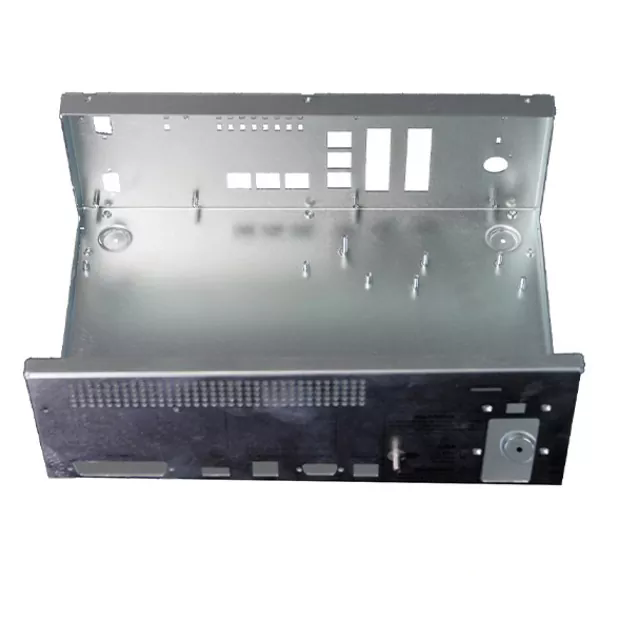
Table of Contents
- 1. Overview of Chassis Sheet Metal
- 2. Why Chassis Sheet Metal Matters
- 3. Common Materials Used
- 4. Manufacturing Processes
- 5. Common Customer Pain Points
- 6. Engineering Solutions and Improvements
- 7. Material Performance Comparison
- 8. Industrial Applications
- 9. Frequently Asked Questions
- 10. Conclusion and Contact
1. Overview of Chassis Sheet Metal
Chassis sheet metal refers to the metal components used in the structural framework of vehicles. These parts form the backbone of automobiles, supporting loads, absorbing impact energy, and maintaining overall rigidity. In modern automotive engineering, chassis sheet metal is no longer just a structural necessity—it is a carefully engineered component that balances strength, weight, and manufacturability.
It is widely used in passenger cars, trucks, electric vehicles, and industrial transport systems. The evolution of chassis sheet metal has been driven by demands for lighter vehicles, improved fuel efficiency, and enhanced crash safety standards.
2. Why Chassis Sheet Metal Matters
The importance of chassis sheet metal can be summarized in three key areas:
- Structural Integrity: Ensures the vehicle maintains shape under stress and impact.
- Safety Performance: Helps absorb collision energy and protects passengers.
- Weight Optimization: Reduces vehicle mass to improve fuel or energy efficiency.
Without properly engineered chassis sheet metal, vehicles would suffer from reduced durability, poor handling, and increased safety risks.
3. Common Materials Used
Different materials are selected based on strength requirements, cost constraints, and corrosion resistance needs.
| Material Type | Advantages | Limitations |
|---|---|---|
| Mild Steel | Low cost, easy to form | Heavier, lower corrosion resistance |
| High-Strength Steel (HSS) | Excellent strength-to-weight ratio | Higher forming complexity |
| Aluminum Alloys | Lightweight, corrosion resistant | More expensive, lower stiffness |
| Advanced High-Strength Steel (AHSS) | Superior crash performance | Requires advanced tooling |
4. Manufacturing Processes
Chassis sheet metal manufacturing involves multiple precision-driven steps to ensure dimensional accuracy and mechanical performance:
- Stamping: High-pressure forming of flat sheets into complex shapes.
- Cutting: Laser or CNC cutting for precise geometry.
- Welding: Joining multiple sheet components into a rigid frame.
- Surface Treatment: Anti-corrosion coatings such as galvanization.
- Assembly: Integration into full chassis structures.
Each process must be tightly controlled to prevent deformation, cracking, or misalignment.
5. Common Customer Pain Points
Customers in automotive manufacturing and procurement often face several challenges:
- Inconsistent thickness leading to structural weakness
- Corrosion issues in humid or coastal environments
- High tooling costs for custom designs
- Difficulty balancing weight reduction and strength
- Long lead times in production and prototyping
6. Engineering Solutions and Improvements
To address these issues, modern chassis sheet metal production adopts several advanced solutions:
- Finite Element Analysis (FEA): Simulates stress distribution before production.
- Precision Laser Cutting: Ensures high dimensional accuracy.
- Modular Design Systems: Reduces tooling cost and increases flexibility.
- Advanced Coatings: Improves corrosion resistance significantly.
- Automated Welding Lines: Enhances consistency and reduces defects.
7. Material Performance Comparison
| Performance Factor | Steel | Aluminum | AHSS |
|---|---|---|---|
| Weight | High | Low | Medium |
| Strength | Medium | Medium | Very High |
| Cost | Low | High | Medium |
| Corrosion Resistance | Low | High | Medium |
8. Industrial Applications
Chassis sheet metal is widely used across multiple industries beyond automotive manufacturing:
- Passenger vehicle frames and underbodies
- Electric vehicle battery enclosures
- Commercial truck chassis systems
- Railway structural components
- Industrial machinery frames
Its adaptability makes it a fundamental material in modern engineering design.
9. Frequently Asked Questions
Q1: What is the main purpose of chassis sheet metal?
It provides structural support, crash protection, and load distribution for vehicles.
Q2: Which material is best for lightweight design?
Aluminum alloys and advanced high-strength steel are commonly used for lightweight applications.
Q3: How is durability ensured?
Through material selection, surface coating, and precision manufacturing processes.
Q4: Can chassis sheet metal be customized?
Yes, it can be tailored using stamping dies, CNC cutting, and modular engineering designs.
10. Conclusion and Contact
Chassis sheet metal is a foundational component in modern vehicle engineering, combining mechanical strength, design flexibility, and cost efficiency. As automotive demands continue to evolve toward lighter, safer, and more efficient vehicles, advancements in materials and manufacturing processes will further enhance its performance.
For high-quality chassis sheet metal solutions, Dongguan city Xinyang Industrial Co., Ltd. provides professional manufacturing capabilities, advanced processing technology, and customized engineering support tailored to diverse industrial needs.
Ready to upgrade your chassis sheet metal solutions? Contact Dongguan city Xinyang Industrial Co., Ltd. today — contact us for professional support and customized manufacturing solutions.