How Does C3 Clearance Affect Deep Groove Ball Bearing Performance?
2026-11-17
A maintenance team at a food processing plant noticed that the drive end bearings on several conveyor gearmotors were running hot and failing earlier than expected. The bearings were standard clearance units, selected by shaft diameter and load rating. The failure analysis showed that the internal clearance had closed to nearly zero after the bearing reached operating temperature, which increased the contact stress and the friction. The team replaced the bearings with Deep Groove Ball Bearings that had C3 clearance, and the operating temperature dropped by about 12 degrees Celsius. Our factory has seen this pattern many times. Cixi Hengji Bearing Co., Ltd. has been manufacturing bearings for over 12 years, and we explain the clearance effect in this guide.
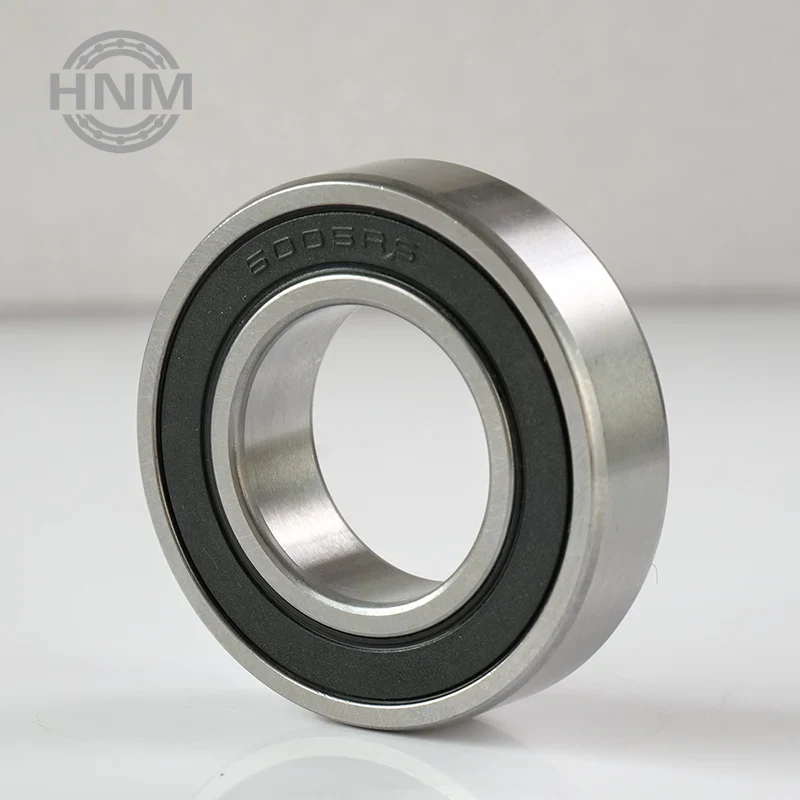
1. Why Does a Standard Clearance Bearing Overheat in High-Speed or High-Temperature Applications?
Internal clearance is the small gap between the rolling elements and the raceways when the bearing is not mounted. When the bearing is pressed onto the shaft and into the housing, the interference fit reduces the clearance. When the bearing starts to run, the temperature rise expands the inner ring more than the outer ring, and the clearance reduces further. In a high-speed or high-temperature application, the reduction can exceed the initial clearance and produce a negative clearance, which is a preload. The preload increases the contact stress, the friction torque, and the heat generation, and the heat generation further reduces the clearance. This is a thermal runaway loop. Our factory recommends C3 clearance for applications where the operating temperature is above 70 degrees Celsius or where the speed index exceeds 300,000 millimeters per minute. Cixi Hengji Bearing Co., Ltd. has seen this pattern in conveyor gearmotors, fan motors, and pump drives.
The clearance is not a quality defect. It is a design variable. A standard CN bearing is correct for a normal temperature and a normal speed. A C3 bearing is correct when the operating conditions will consume part of the clearance. The buyer should match the clearance to the application, not default to the most common part number.
2. How Does C3 Clearance Change the Internal Load Distribution and the Fatigue Life?
A C3 bearing has a larger radial internal clearance than a CN bearing. The larger gap allows the shaft to move slightly more within the bearing, and it changes the load zone. In a bearing with a small clearance, the load is carried by a narrow arc of rolling elements. In a bearing with a larger clearance, the load is carried by a wider arc, but the maximum load on the most heavily loaded element is reduced. The result is a lower contact stress and a longer fatigue life, provided the clearance is not so large that the bearing runs with too few elements in the load zone. The table below shows the typical radial internal clearance for CN and C3 bearings at several bore sizes. Our factory measures the clearance on every bearing before shipment and records the value against the serial number.
| Bore size | CN clearance range (micrometers) | C3 clearance range (micrometers) | Typical application |
| 10 to 18 mm | 3 to 18 | 10 to 25 | Small motors, fans |
| 20 to 30 mm | 5 to 20 | 13 to 28 | Pumps, conveyors |
| 35 to 50 mm | 6 to 23 | 15 to 33 | Gearmotors, blowers |
| 55 to 80 mm | 8 to 28 | 18 to 40 | Industrial drives |
| 85 to 120 mm | 10 to 35 | 23 to 48 | Heavy conveyors |
The clearance range is defined by the ISO 5753 standard. A bearing that is marked C3 but measures at the lower end of the C3 range may behave like a CN bearing in a hot application. Our factory records the actual clearance, not just the marking, so that the buyer can verify that the bearing will perform as expected. Cixi Hengji Bearing Co., Ltd. provides the clearance measurement with each shipment on request.
3. What Are the Trade-Offs of C3 Clearance in Noise and Vibration?
A larger clearance can increase the noise and vibration of a bearing, especially at low speed and light load. When the bearing is lightly loaded, the rolling elements can move more freely within the clearance, and the cage can rattle. The noise is often described as a soft metallic sound at low speed. The effect is more noticeable in small bearings and in applications where the load is primarily radial and steady. In a high-speed application, the centrifugal force keeps the rolling elements in contact with the outer raceway, and the noise difference is smaller. Our factory tests the noise level of each C3 bearing on a noise test stand and compares it with the CN bearing of the same size. The table below shows the trade-offs that the designer should consider. Cixi Hengji Bearing Co., Ltd. can supply a noise tested bearing for applications where the sound level is critical.
| Performance factor | Effect of C3 clearance | Design consideration |
| Fatigue life at high temperature | Improved, because the clearance compensates for thermal growth | Use C3 when the operating temperature exceeds 70 degrees Celsius |
| Noise at low speed and light load | May increase slightly due to element movement | Specify a noise tested bearing or use CN for quiet applications |
| Vibration at high speed | Reduced, because the load zone is wider | Use C3 for high speed applications above 300,000 mm/min |
| Preload risk | Reduced, because the initial gap is larger | Do not use C3 where a preload is intentionally applied |
| Axial displacement | Increased slightly, which may affect shaft location | Check the axial end play in precision positioning applications |
Application engineer's note: The noise trade-off is the main reason some designers hesitate to use C3. In a gearmotor, the gear mesh noise usually dominates the bearing noise, so the C3 trade-off is acceptable. In a small fan or a precision instrument, the bearing noise may be audible, and a CN bearing with a controlled temperature may be the better choice. Our factory reviews the application with the buyer before recommending the clearance. Cixi Hengji Bearing Co., Ltd. can supply both CN and C3 bearings from the same production line for comparison.
4. How Should Engineers Specify and Verify C3 Clearance for a Given Application?
The specification should include the clearance class, the operating temperature, the speed, the load, and the mounting fit. The engineer should calculate the operating clearance, which is the initial clearance minus the interference fit reduction plus the thermal expansion difference. The operating clearance should remain positive at the maximum operating temperature. If the calculation shows that the operating clearance will be negative with a CN bearing, the engineer should specify C3. The verification should include the clearance measurement on the bearing before mounting, the temperature measurement after the first run, and the vibration measurement at the operating speed. Our factory provides the clearance measurement and the mounting fit recommendation with each order. Cixi Hengji Bearing Co., Ltd. also offers a calculation worksheet that the engineer can use to estimate the operating clearance.
The clearance measurement should be performed with the bearing in a vertical position and with a small measuring load applied to remove the internal play. A feeler gauge or a dial indicator can be used. The measurement should be taken at several positions around the circumference, and the average should be compared with the C3 range. A bearing that measures below the C3 range should not be used in a high-temperature application, even if it is marked C3.
5. What Happens to Bearing Life When C3 Is Used in the Wrong Application?
C3 is not a universal upgrade. When C3 is used in a low-speed, light-load, precision application, the larger clearance can allow the shaft to move more than the application permits, and the vibration and noise can increase. In a machine tool spindle or a precision positioning stage, the additional axial displacement can affect the part accuracy. In a lightly loaded bearing, the rolling elements can skid instead of roll, which can cause smearing on the raceway. Our factory has seen C3 bearings fail in low-load applications because the clearance was too large for the load. The failure mode is not fatigue but surface damage. The designer should match the clearance to the load and the speed, not simply choose the largest available clearance.
The correct approach is to calculate the operating clearance for the actual application and to choose the clearance class that keeps the operating clearance positive but small. A bearing that runs with a small positive clearance has the best combination of low friction, low noise, and long fatigue life. A bearing that runs with a negative clearance has high friction and short life. A bearing that runs with an excessive clearance has noise, vibration, and possible skidding. Our factory can help the designer perform this calculation.
Frequently Asked Questions About C3 Clearance in Deep Groove Ball Bearings
Summary and Recommendation: C3 clearance affects Deep Groove Ball Bearings performance by changing the internal load distribution, the operating temperature, the noise, and the fatigue life. A C3 bearing is the correct choice when the operating temperature or the interference fit will reduce the internal clearance and a CN bearing would run with a negative clearance. A C3 bearing is not the correct choice for a low-speed, light-load, precision application where the larger clearance can increase vibration and noise. The engineer should calculate the operating clearance and verify the actual clearance before mounting. Our factory provides the clearance measurement and the application review to help the buyer select the right class.