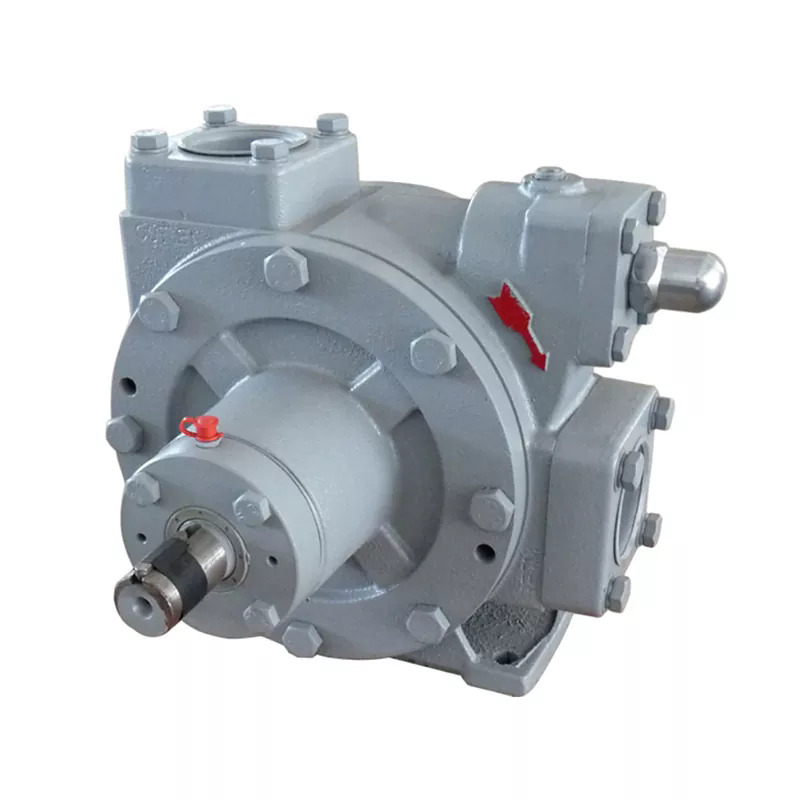
1. The Core Mechanism of an LPG Vane Pump
At its heart, an LPG vane pump is a positive displacement rotary pump specifically engineered to handle liquefied gases under pressure. Unlike pumps for water or viscous oils, it operates under the unique condition of maintaining LPG in its liquid state to enable efficient transfer.
The pump consists of a cylindrical housing (stator), a rotor mounted eccentrically within it, and several sliding vanes that seat in slots on the rotor. As the rotor turns, centrifugal force pushes the vanes against the housing's inner wall, creating a series of expanding and contracting sealed chambers. This action draws LPG into the inlet port, transports it around the casing, and discharges it at a higher, consistent pressure through the outlet.
For LPG applications, materials and design are paramount. Key components are manufactured from high-strength ductile iron or steel, and seals are meticulously chosen for compatibility with propane and butane. This fundamental yet robust design is what allows the pump to tackle the specific challenges of the LPG industry effectively.
2. Addressing Key Industry Challenges
LPG transfer is fraught with operational hurdles that can impact safety, efficiency, and profitability. Modern LPG vane pumps are engineered as direct solutions to these persistent pain points.
- Vapor Lock & Cavitation: LPG's low boiling point makes it prone to vaporization if pressure drops. Vane pumps are designed with optimized inlet paths and precise internal clearances to maintain sufficient Net Positive Suction Head (NPSH), preventing vapor lock and the damaging cavitation that follows.
- Seal Integrity & Leakage: Leaks are unacceptable. High-performance mechanical seals, often in double or tandem configurations with leak-off ports, are standard. These contain the liquid LPG and prevent fugitive emissions, ensuring a safe working environment and protecting the pump's bearings.
- Dry Running & Wear: Accidental dry operation can destroy a pump in minutes. Advanced vane pump designs incorporate self-lubricating materials for the vanes and housing, and some models feature built-in protection systems that minimize scoring and allow for short-term dry running without catastrophic failure.
- Pulsation & System Stress: Smooth flow is critical for meter accuracy and system longevity. The rotary action of a vane pump generates a consistent, low-pulsation discharge flow, reducing stress on pipes, hoses, and valves, and enabling precise measurement during dispensing.
- Contamination & Material Degradation: Specialized seals and compatibility charts ensure all wetted materials resist the solvent properties of LPG, preventing internal degradation and contamination of the transferred product.
3. Comparison: Vane Pump vs. Alternative Technologies
Selecting the right pump technology is crucial. Below is a comparison of vane pumps against other common pump types used in LPG applications.
| Pump Type | Key Advantages | Considerations for LPG | Best Suited For |
|---|---|---|---|
| Vane Pump | Low pulsation, self-priming, handles vapor well, good efficiency, compact. | Vane wear is a maintenance item; requires clean fluid. | LPG dispensers, tanker unloading, industrial bottling lines. |
| Piston Pump | Very high pressure capability, excellent volumetric efficiency. | High pulsation, more complex, higher cost, sensitive to contamination. | High-pressure injection, specialized industrial processes. |
| Centrifugal Pump | Simple design, low cost for high flow, minimal maintenance points. | Prone to cavitation with LPG, requires flooding, performance drops with pressure. | Large-volume transfer from pressurized sources (e.g., storage to process). |
4. Essential Features for Reliable Operation
Not all vane pumps are created equal. When specifying a pump for LPG duty, insist on these non-negotiable features that define a robust, long-lasting unit.
- Safety Relief Valve: An integral, adjustable bypass valve protects the pump and downstream piping from over-pressure conditions.
- Leak-Free Shaft Sealing: A premium, industry-approved mechanical seal system designed specifically for LPG service is mandatory.
- Robust Construction: Housing, rotor, and end covers must be made from materials with proven strength and compatibility for liquefied gases (e.g., ductile iron, carbon steel).
- Vane Durability: Vanes should be made from composite materials or treated alloys that offer excellent wear resistance and low friction against the housing.
- Efficient Drive Connection: A balanced, precision-machined shaft compatible with standard couplings or direct motor mounts ensures smooth, vibration-free operation.
Manufacturers like Wenzhou Supertech Machine Co., Ltd. engineer their LPG vane pumps with these very principles in mind, incorporating decades of field experience into each component to deliver reliability where it matters most.
5. Maintenance Guidelines & Best Practices
Proactive maintenance is the single biggest factor in maximizing pump lifespan and preventing costly downtime.
Daily/Operational Checks: Listen for unusual noise or vibration. Visually inspect for any signs of leakage at the seal or connections. Monitor pump performance (flow rate, pressure).
Regular Maintenance (Semi-Annual/Annual):
- Inspect and replace the vanes if wear exceeds the manufacturer's specification. This is the most common wear part.
- Check the mechanical seal for signs of leakage or wear. Replace as a complete set if necessary.
- Verify the setting and operation of the internal relief valve.
- Inspect bearings for smooth operation and re-lubricate if not sealed-for-life.
- Check all bolts and connections for tightness.
Critical Tip: Always follow lock-out/tag-out procedures before performing any maintenance. Purge the pump completely of all LPG using an inert gas like nitrogen before disassembly. Never use air to purge due to explosion risk.
6. Frequently Asked Questions (FAQ)
Q: Can an LPG vane pump handle both propane and butane?
A: Yes, a properly designed LPG vane pump is engineered to handle common liquefied petroleum gases, including commercial propane, butane, and their mixtures. Material compatibility and seal design are key for universal handling.
Q: What is the typical lifespan of the vanes, and are they easy to replace?
A: Vane lifespan varies greatly based on operating conditions (pressure, cleanliness, presence of dry running). Under normal conditions, they can last 1-3 years. Replacement is a straightforward process for a trained technician: remove the pump end cover, slide out the old vanes, and insert new ones—a design feature that minimizes downtime.
Q: Is external lubrication required for these pumps?
A: No. A genuine LPG vane pump is designed to be internally lubricated by the LPG itself. The bearings are typically sealed or located outside the fluid chamber. Introducing external lubricants into the LPG stream would contaminate the product and is strictly prohibited.
Q: How do I select the correct pump size for my application?
A: Selection depends on three key parameters: Flow Rate (e.g., liters per minute), Discharge Pressure Required (to overcome system resistance), and Available NPSH (Net Positive Suction Head). Reputable suppliers like Wenzhou Supertech Machine Co., Ltd. provide detailed selection charts and expert technical support to help you match the perfect pump model to your specific system requirements.