Abstract
The injection molding screw is one of the most critical components in modern plastic processing machinery. It directly determines plasticizing quality, melt uniformity, production stability, and final product consistency. This article explains the working mechanism, structure, selection factors, maintenance strategies, and performance optimization methods of an injection molding screw. It also addresses common operational challenges such as material degradation, inconsistent melt flow, and energy inefficiency, offering practical solutions for manufacturers seeking improved productivity and cost control.
Article Outline
This article systematically explores how an injection molding screw functions within a molding machine, its engineering structure, material compatibility, performance optimization strategies, and real-world troubleshooting techniques. It is designed to help manufacturers, engineers, and procurement specialists make informed decisions when selecting or maintaining screw components for injection molding systems.
Structure of an Injection Molding Screw
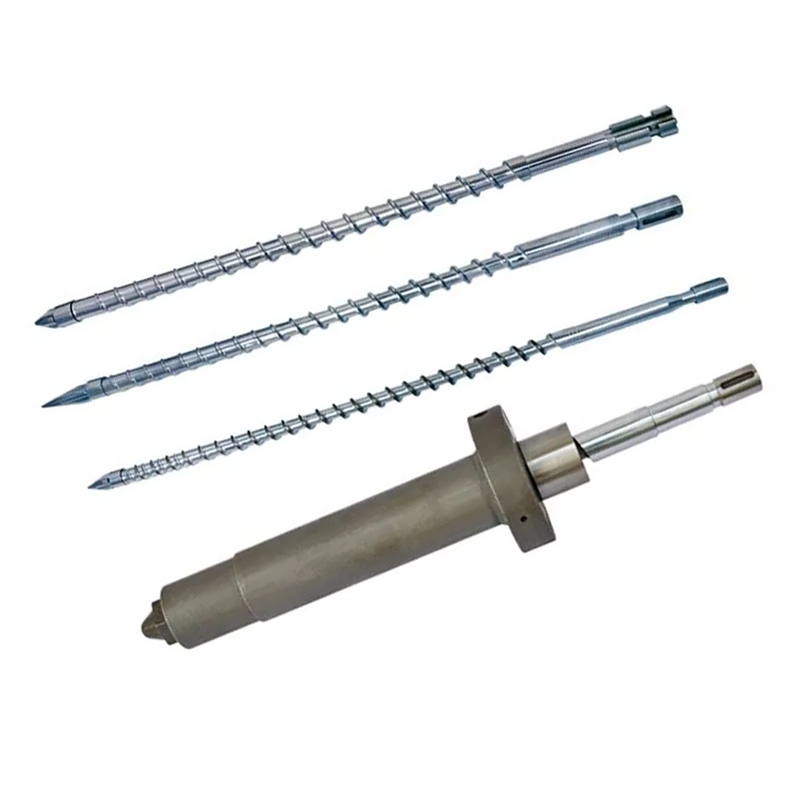
An injection molding screw is typically installed inside the barrel of an injection molding machine. It is responsible for conveying, compressing, melting, and homogenizing plastic materials before injection.
-
Feed Zone: Solid plastic pellets are introduced and transported forward.
-
Compression Zone: Material is melted through heat and shear force.
-
Metering Zone: Fully molten material is homogenized for injection consistency.
The geometric design of the screw—such as channel depth, compression ratio, and length-to-diameter ratio (L/D)—significantly affects plasticizing efficiency and output quality.
Working Principle
The injection molding screw operates through a combination of mechanical rotation and thermal conduction. As the screw rotates inside the heated barrel, it performs three key functions:
-
Conveying raw polymer material forward.
-
Generating frictional heat through shear forces.
-
Mixing and homogenizing molten plastic for consistent injection.
During injection, the screw also acts as a plunger, pushing the molten material into the mold cavity under high pressure. This dual functionality makes it indispensable for precision manufacturing.
Types of Injection Molding Screws
Different processing requirements demand different screw designs:
-
General-purpose screws: Suitable for standard resins like PP, PE, and ABS.
-
Barrier screws: Improve melting efficiency and reduce unmelted particles.
-
Mixing screws: Enhance color and additive dispersion.
-
High-speed screws: Designed for rapid cycle production environments.
Selecting the correct type is essential for balancing output efficiency and product quality.
How to Choose the Right Screw
Choosing an appropriate injection molding screw depends on multiple operational and material-based factors. Below is a practical guideline:
|
Factor
|
Consideration
|
Impact
|
|
Material Type
|
Crystalline vs amorphous polymers
|
Affects melting behavior and screw design
|
|
Product Requirement
|
Precision, strength, transparency
|
Determines mixing and compression needs
|
|
Production Volume
|
Low, medium, high throughput
|
Influences screw diameter and L/D ratio
|
|
Abrasive Additives
|
Glass fiber or fillers
|
Requires wear-resistant materials
|
Manufacturers like Nanhaiya provide customized screw solutions tailored to different industrial applications, ensuring optimal performance under varying processing conditions.
Common Processing Problems & Solutions
Even a high-quality injection molding screw can encounter performance issues if not properly configured or maintained. Below are frequent problems and corrective measures:
-
Inconsistent melt quality: Often caused by improper screw design or wear.
-
Material degradation: Excessive shear heat leads to polymer breakdown.
-
Low output efficiency: Incorrect compression ratio or worn screw channels.
-
Color streaking: Poor mixing performance or contamination.
Proper diagnostics and timely replacement of worn components can significantly extend machine lifespan and maintain product quality.
Maintenance and Lifespan Optimization
Regular maintenance of the injection molding screw is essential for ensuring consistent production quality and reducing downtime.
-
Conduct periodic inspection for wear and surface damage.
-
Use compatible cleaning compounds to remove residue buildup.
-
Avoid over-temperature operation to prevent thermal degradation.
-
Ensure proper lubrication of machine components.
A well-maintained screw not only improves output stability but also reduces long-term operational costs.
Performance Comparison Table
|
Parameter
|
Standard Screw
|
Optimized Screw (Nanhaiya Design)
|
|
Melt Uniformity
|
Moderate
|
High consistency
|
|
Energy Efficiency
|
Average
|
Improved thermal efficiency
|
|
Wear Resistance
|
Standard steel
|
Enhanced alloy coating
|
|
Service Life
|
Medium
|
Extended lifespan
|
Advanced engineering solutions from Nanhaiya significantly improve production reliability and reduce maintenance frequency.
FAQ
Q1: What is the main function of an injection molding screw?
It melts, mixes, and conveys plastic material into a mold cavity with consistent pressure and temperature control.
Q2: How long does an injection molding screw last?
Service life varies depending on material usage, maintenance, and wear resistance, typically ranging from moderate to extended industrial cycles.
Q3: Can one screw work for all materials?
No. Different polymers require different screw geometries to ensure optimal melting and mixing performance.
Q4: What causes screw wear?
Abrasive fillers, high processing temperatures, and prolonged operation contribute to gradual wear.
Q5: Why choose Nanhaiya products?
Nanhaiya provides engineered solutions designed for stability, durability, and efficient plastic processing performance across diverse industrial applications.
Conclusion
The injection molding screw plays a decisive role in determining the efficiency, stability, and quality of plastic manufacturing processes. Understanding its structure, selecting the correct type, and maintaining it properly are essential for achieving consistent production performance. By integrating advanced design principles and material science, manufacturers can significantly reduce downtime, improve output quality, and optimize operational costs.
For industries seeking reliable and high-performance solutions, Nanhaiya offers engineered injection molding screw products designed to meet demanding production requirements and long-term operational stability.
Contact us today to learn more about how Nanhaiya can support your injection molding system with precision-engineered screw solutions tailored to your production needs.


