How Does an Extruder Screw Barrel Drive Efficient Material Processing?
2026-01-29
Article Summary
An extruder screw barrel is the mechanical core of any extrusion system, directly influencing output stability, material quality, and production efficiency. This article explains how extruder screw barrels function, what technical parameters matter most, and how proper design solves common processing challenges across plastics, rubber, and compound manufacturing. It also provides practical guidance on selection, maintenance, and application performance.
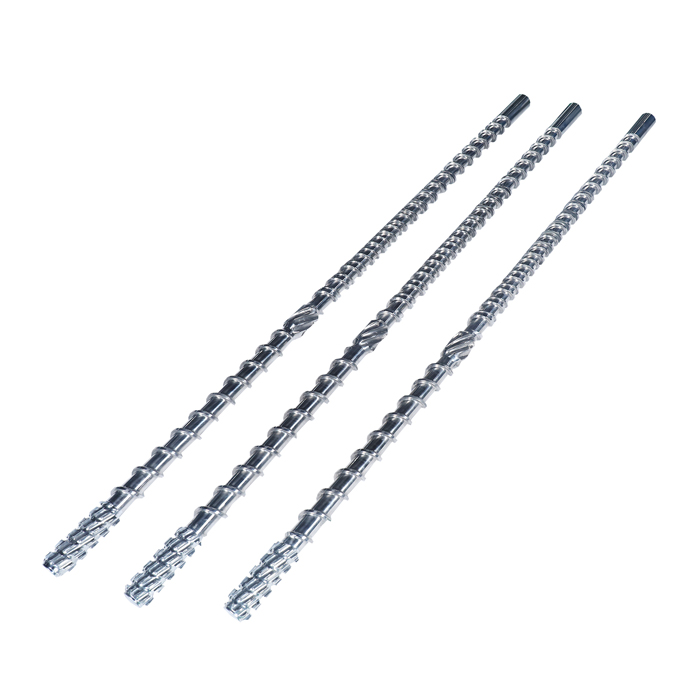
Table of Contents
- Overview of Extruder Screw Barrel Systems
- How an Extruder Screw Barrel Works
- Key Technical Parameters Explained
- Common Customer Challenges and Solutions
- Typical Industrial Applications
- Frequently Asked Questions
- Conclusion and Contact Us
Overview of Extruder Screw Barrel Systems
An extruder screw barrel is a precision-engineered assembly consisting of a rotating screw housed inside a hardened cylindrical barrel. Together, these components transport, compress, melt, mix, and homogenize raw materials before shaping them into continuous products.
From plastic pipes and profiles to masterbatches and engineering compounds, extrusion performance depends heavily on screw geometry, barrel metallurgy, and surface treatment. Even minor deviations in design can lead to inconsistent melt quality, high energy consumption, or premature wear.
How an Extruder Screw Barrel Works
The extrusion process relies on controlled mechanical and thermal interaction between the screw and barrel. As the screw rotates, material moves forward through multiple functional zones:
- Feed Zone: Solid material is conveyed forward while maintaining bulk density.
- Compression Zone: Material is compacted, air is removed, and melting begins.
- Metering Zone: Fully molten material is homogenized and delivered at constant pressure.
The barrel provides external heating and structural alignment, while internal screw geometry generates shear energy. The balance between these forces determines output stability and product uniformity.
Key Technical Parameters Explained
| Parameter | Description |
|---|---|
| Screw Diameter | Defines throughput capacity and shear rate during processing |
| L/D Ratio | Determines residence time and melting efficiency |
| Material | Typically alloy steel or bimetallic for wear and corrosion resistance |
| Nitriding Depth | Enhances surface hardness and extends service life |
| Screw Geometry | Optimized for specific polymers or compound formulations |
Precision machining and surface treatment directly influence how long an extruder screw barrel can operate under high load without dimensional degradation.
Common Customer Challenges and Solutions
Manufacturers often encounter performance issues when screw barrel specifications do not match material behavior or production goals.
- Inconsistent Melt Quality: Caused by improper compression ratio or worn screw flights
- High Energy Consumption: Resulting from excessive friction or poor thermal balance
- Premature Wear: Linked to abrasive fillers or corrosive polymers
Customized extruder screw barrel designs address these challenges by tailoring metallurgy, coating methods, and screw profiles to real processing conditions. Companies like EJS focus on application-specific solutions rather than generic configurations.
Typical Industrial Applications
Extruder screw barrels are used across a wide range of industries:
- Plastic pipe and profile extrusion
- Film and sheet production
- Cable insulation and jacketing
- Masterbatch and compound manufacturing
- Recycling and reprocessing systems
Each application demands a different balance between mixing efficiency, output rate, and wear resistance, reinforcing the importance of correct screw barrel selection.
Frequently Asked Questions
What determines the service life of an extruder screw barrel?
Service life depends on material quality, surface treatment, processing temperature, and the abrasiveness or corrosiveness of the raw material being processed.
Can one extruder screw barrel handle multiple materials?
While possible, performance may be compromised. Optimized screw designs deliver better efficiency and stability when matched to specific material formulations.
How often should an extruder screw barrel be inspected?
Routine inspections are recommended based on production hours, material type, and wear patterns to prevent unexpected downtime.
Conclusion and Contact Us
An extruder screw barrel is not just a mechanical component but a critical productivity driver within any extrusion line. Proper design, precise manufacturing, and application-specific optimization directly influence output consistency and operational cost control.
With extensive experience in screw and barrel manufacturing, EJS provides engineered solutions that align with real-world processing demands. For tailored configurations, technical consultation, or replacement components, contact us today to discuss how optimized extruder screw barrel systems can support long-term production reliability.