

How Does an Endoscope Lens Improve Medical and Industrial Imaging?
2026-04-22
Abstract
Endoscope lenses are at the core of modern minimally invasive imaging systems used in healthcare, industrial inspection, and precision diagnostics. This article explains how an Endoscope Lens works, why it is essential for high-clarity imaging in constrained environments, and what factors influence its performance. It also breaks down common challenges users face—such as image distortion, low illumination, and durability issues—and provides practical guidance for selecting the right optical configuration. Whether you are a medical equipment engineer, industrial inspector, or procurement specialist, this guide will help you make more informed decisions.
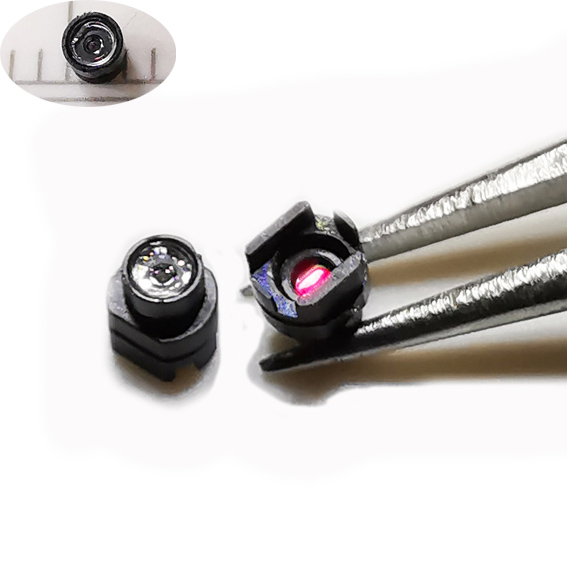
Table of Contents
- 1. Outline Overview
- 2. What Is an Endoscope Lens?
- 3. Working Principle of Endoscope Lens Systems
- 4. Key Performance Factors
- 5. Major Application Scenarios
- 6. Lens Specification Comparison
- 7. Common Issues and Practical Solutions
- 8. How to Choose the Right Endoscope Lens
- 9. Frequently Asked Questions
- 10. Conclusion
Outline Overview
- Definition and structure of endoscope lens systems
- Optical principles behind image transmission in confined spaces
- Key specifications influencing imaging quality
- Industrial and medical use cases
- Comparative analysis of lens types
- Problem-solving guide for common optical issues
- Selection checklist for procurement decisions
What Is an Endoscope Lens?
An Endoscope Lens is a precision optical component designed to capture and transmit images from hard-to-reach or enclosed environments. It is typically integrated into endoscopic systems used in medical diagnostics, industrial inspection, aerospace maintenance, and automotive quality control.
Unlike standard camera lenses, endoscope lenses must operate under strict spatial constraints while maintaining high resolution, minimal distortion, and consistent illumination. They are usually combined with fiber optics, micro-lens arrays, or rod lens systems to achieve clear image relay over long, narrow pathways.
Working Principle of Endoscope Lens Systems
The imaging process of an endoscope lens system relies on a combination of optical transmission and relay mechanisms. Light enters through the distal lens, is transmitted through a series of relay optics, and finally reaches the imaging sensor or eyepiece.
- Distal Objective Lens: Captures light from the target area
- Relay System: Transfers the image through narrow channels
- Eyepiece or Sensor Lens: Converts optical data into visible or digital images
The biggest engineering challenge is maintaining image clarity over long distances within a limited diameter tube. Advanced coatings and aspheric lens designs are often used to reduce chromatic aberration and spherical distortion.
Key Performance Factors
Several critical parameters determine the performance of an endoscope lens system:
- Resolution: Defines how much detail can be captured
- Field of View (FOV): Determines the observable area
- Depth of Field: Affects focus range in tight spaces
- Light Transmission: Impacts brightness and clarity
- Distortion Rate: Influences geometric accuracy of images
Balancing these parameters is essential. For instance, increasing FOV often reduces edge sharpness, while higher resolution may require stronger illumination systems.
Major Application Scenarios
Endoscope lenses are widely used across industries where direct visual access is limited or impossible.
- Medical Field: Gastrointestinal examination, arthroscopy, ENT diagnostics
- Industrial Inspection: Pipeline inspection, engine maintenance, turbine evaluation
- Aerospace: Internal aircraft structural inspection
- Automotive: Cylinder bore inspection, component quality control
Each application demands specific optical configurations tailored to environmental conditions such as temperature, humidity, and space constraints.
Lens Specification Comparison
| Lens Type | Resolution | Field of View | Durability | Typical Use |
|---|---|---|---|---|
| Rod Lens System | High | Medium | High | Medical Endoscopy |
| Fiber Optic Lens | Medium | Wide | Medium | Industrial Inspection |
| Micro Lens Array | Very High | Narrow | High | Precision Diagnostics |
Common Issues and Practical Solutions
Users of endoscope systems often encounter several recurring challenges. Below are typical problems and practical solutions:
- Blurry Image Output: Often caused by misalignment or dirty optical surfaces. Regular calibration and cleaning are essential.
- Poor Illumination: Upgrade to high-efficiency LED or fiber optic light sources.
- Lens Fogging: Use anti-fog coatings or controlled temperature environments.
- Mechanical Wear: Choose reinforced lens housing for industrial applications.
How to Choose the Right Endoscope Lens
Selecting the right Endoscope Lens requires careful evaluation of application needs and optical performance requirements. Below is a simplified checklist:
- Define inspection environment (wet, dry, high-temperature)
- Determine required resolution level
- Assess space constraints (diameter and insertion length)
- Evaluate compatibility with imaging sensors
- Consider durability and maintenance requirements
A well-matched lens system can significantly improve diagnostic accuracy and operational efficiency.
Frequently Asked Questions
Q1: What is the main advantage of an endoscope lens?
It allows high-quality imaging in confined or inaccessible environments without requiring invasive procedures.
Q2: Are all endoscope lenses interchangeable?
No. Compatibility depends on diameter, optical system design, and sensor integration.
Q3: How often should endoscope lenses be maintained?
Regular cleaning after each use is recommended, with periodic professional calibration depending on usage frequency.
Q4: Can endoscope lenses be used in harsh industrial environments?
Yes, but they must be designed with reinforced housing and protective coatings.
Q5: What affects image clarity the most?
Lens quality, alignment accuracy, and lighting conditions are the most critical factors.
Conclusion
The performance of an endoscope system depends heavily on the quality and configuration of its optical components. A well-designed Endoscope Lens not only improves image clarity but also enhances operational efficiency in both medical and industrial applications. Understanding its working principles, specifications, and selection criteria helps users make more informed technical decisions.
For advanced optical solutions and customized endoscope lens systems, Shanghai Silk Optical Technology Co. Ltd provides professional engineering support and manufacturing expertise tailored to diverse application needs. If you are looking for reliable optical integration or project consultation, please contact us to discuss your requirements and receive technical assistance.
