

How Does an Automotive Parts Mould Improve Manufacturing Efficiency and Product Quality?
2026-05-15
Automotive manufacturing requires precision, durability, consistency, and speed. A high-quality automotive parts mould plays a critical role in producing reliable vehicle components that meet strict industrial standards. From interior trims to bumpers and dashboard structures, mould technology directly impacts production efficiency, dimensional accuracy, and long-term product performance. This article explains how automotive parts moulds work, why they are essential in modern vehicle manufacturing, and what buyers should consider when choosing a professional mould supplier like KSHOW.
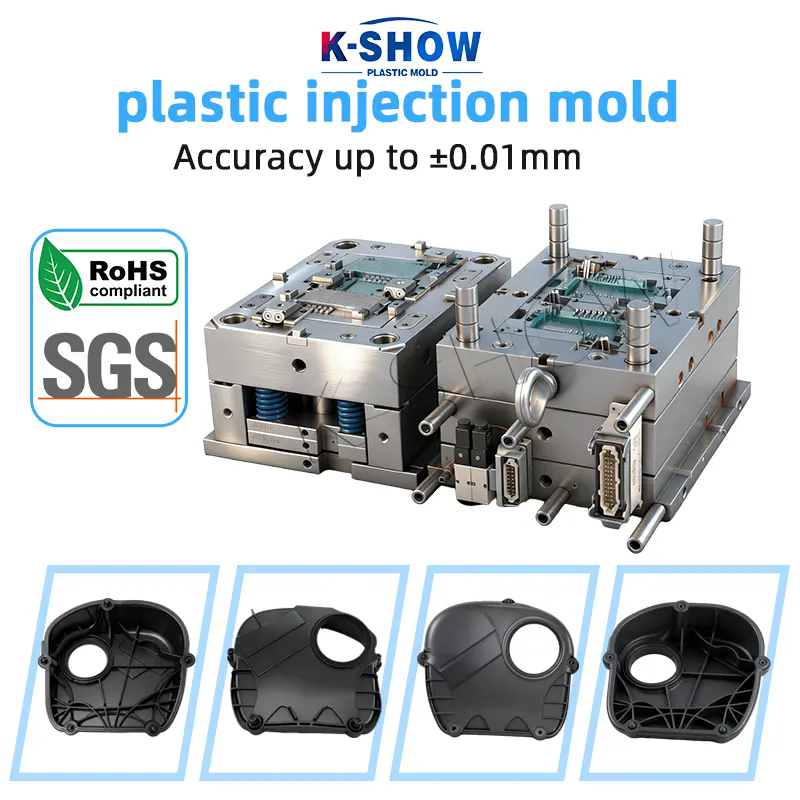
Table of Contents
- What Is an Automotive Parts Mould?
- Why Automotive Parts Moulds Are Important
- How Automotive Parts Moulds Work
- Common Types of Automotive Parts Moulds
- Key Materials Used in Automotive Mould Manufacturing
- How to Choose the Right Automotive Parts Mould Supplier
- Common Customer Pain Points and Solutions
- Advantages of Working With KSHOW
- FAQ
- Conclusion
What Is an Automotive Parts Mould?
An automotive parts mould is a specialized industrial tool used to shape plastic, metal, or composite materials into automotive components. These moulds are designed with extremely precise dimensions to ensure every produced part meets exact engineering specifications.
Automotive moulds are widely used in manufacturing:
- Car bumpers
- Dashboard panels
- Door trims
- Lighting housings
- Air conditioning components
- Engine covers
- Interior decorative parts
- Automotive connectors
The mould determines the final shape, texture, accuracy, and production efficiency of the automotive component.
Why Automotive Parts Moulds Are Important
In automotive manufacturing, even minor dimensional deviations can lead to assembly problems, safety risks, or product failures. High-performance moulds help manufacturers maintain production consistency while reducing waste and downtime.
| Benefit | Impact on Production |
|---|---|
| High Precision | Ensures accurate component dimensions |
| Faster Production Cycles | Improves manufacturing efficiency |
| Long Service Life | Reduces replacement costs |
| Stable Product Quality | Minimizes defective parts |
| Lower Material Waste | Optimizes material utilization |
How Automotive Parts Moulds Work
Automotive mould manufacturing involves advanced engineering, CNC machining, polishing, testing, and quality inspection. During production, raw materials are injected or pressed into the mould cavity under controlled pressure and temperature.
The production process usually includes:
- Product structure analysis
- Mould flow simulation
- 3D mould design
- Steel material selection
- Precision machining
- Assembly and polishing
- Trial mould testing
- Final optimization
Modern automotive moulds are developed using high-precision software and automated machining systems to ensure dimensional consistency and production stability.
Common Types of Automotive Parts Moulds
Different automotive applications require different mould structures and production methods.
| Mould Type | Application |
|---|---|
| Injection Mould | Plastic automotive components |
| Blow Mould | Air ducts and fluid containers |
| Compression Mould | Composite material parts |
| Die Casting Mould | Metal automotive components |
| Prototype Mould | Product development testing |
Key Materials Used in Automotive Mould Manufacturing
The quality of mould steel directly affects mould durability, production speed, and product finish quality.
Common materials include:
- P20 Steel: Suitable for medium production volumes
- H13 Steel: Excellent heat resistance and durability
- 718 Steel: High polishing performance
- S136 Steel: Corrosion-resistant and ideal for precision parts
- NAK80 Steel: Good machinability and mirror polishing capability
Selecting the appropriate steel material depends on production quantity, product complexity, and surface finish requirements.
How to Choose the Right Automotive Parts Mould Supplier
Choosing the right mould manufacturer is critical for controlling cost, quality, and project timelines.
Before selecting a supplier, buyers should evaluate:
- Engineering and design capabilities
- Production equipment and technology
- Quality control procedures
- Delivery lead time
- Export experience
- After-sales technical support
- Mould testing standards
- Customization flexibility
An experienced supplier can help customers optimize mould structure, reduce production defects, and improve manufacturing efficiency.
Common Customer Pain Points and Solutions
| Customer Problem | Professional Solution |
|---|---|
| Short mould lifespan | Use premium hardened steel materials |
| Poor dimensional accuracy | Apply precision CNC machining technology |
| Long delivery time | Improve production management systems |
| High defect rate | Perform strict mould testing and optimization |
| Difficult maintenance | Design easy-maintenance mould structures |
Advantages of Working With KSHOW
KSHOW specializes in high-quality automotive parts mould manufacturing with advanced engineering solutions and modern machining equipment. The company focuses on delivering stable product quality, fast lead times, and customized mould development services for global customers.
Key advantages include:
- Professional mould design team
- Advanced CNC machining systems
- Strict quality inspection standards
- Efficient project management
- Customized mould solutions
- Global export experience
- Reliable after-sales support
KSHOW continuously improves mould performance and manufacturing efficiency to help automotive manufacturers reduce production costs and improve market competitiveness.
FAQ
Q1: What is the lifespan of an automotive parts mould?
The lifespan depends on steel material quality, production volume, maintenance, and manufacturing precision. High-quality moulds can produce hundreds of thousands or even millions of parts.
Q2: Which industries use automotive moulds?
Automotive moulds are mainly used in passenger vehicle manufacturing, commercial vehicles, electric vehicles, aftermarket accessories, and industrial transportation equipment.
Q3: How long does automotive mould production take?
Production time varies depending on mould complexity. Standard projects usually require several weeks, while complex automotive mould systems may take longer.
Q4: Why is mould precision important?
High precision ensures consistent product dimensions, smooth assembly, and reduced production defects.
Q5: Can automotive moulds be customized?
Yes. Professional manufacturers like KSHOW provide customized mould solutions according to customer drawings, samples, and production requirements.
Conclusion
Automotive parts moulds are essential tools for achieving precision manufacturing, production consistency, and long-term operational efficiency in the automotive industry. Choosing a reliable mould supplier can significantly improve product quality while reducing production risks and manufacturing costs.
KSHOW provides professional automotive mould solutions designed to meet the evolving demands of modern vehicle manufacturing. Whether you need high-precision injection moulds, customized automotive tooling, or large-scale production support, KSHOW can deliver dependable solutions tailored to your project requirements.
Looking for a trusted automotive parts mould manufacturer?
KSHOW is ready to provide customized mould solutions, professional engineering support, and stable production quality for your automotive projects. Contact us today to discuss your requirements and get competitive manufacturing solutions for your business.
