Tire pressure is one of the most important variables affecting an off-road vehicle's traction, ride quality, tire performance, and ability to handle changing terrain. On pavement, drivers generally maintain a relatively consistent pressure. Off-road driving is different. Sand, mud, gravel, rocks, and uneven trails can require different tire-pressure strategies, making fast and controlled air-down procedures an important part of trail preparation.
An Automatic Quick Offroad Tire Air Down Tool is designed to make this process faster and more consistent by allowing air to escape from a tire while helping the user monitor or control the pressure reduction. Instead of repeatedly removing valve cores, manually checking pressure, or spending unnecessary time at every wheel, an appropriate air-down tool can make pressure adjustment more convenient.
This guide explains how automatic quick air-down tools work, why controlled deflation matters, how to use them responsibly, what features to evaluate, and how to avoid common problems when preparing an off-road vehicle.
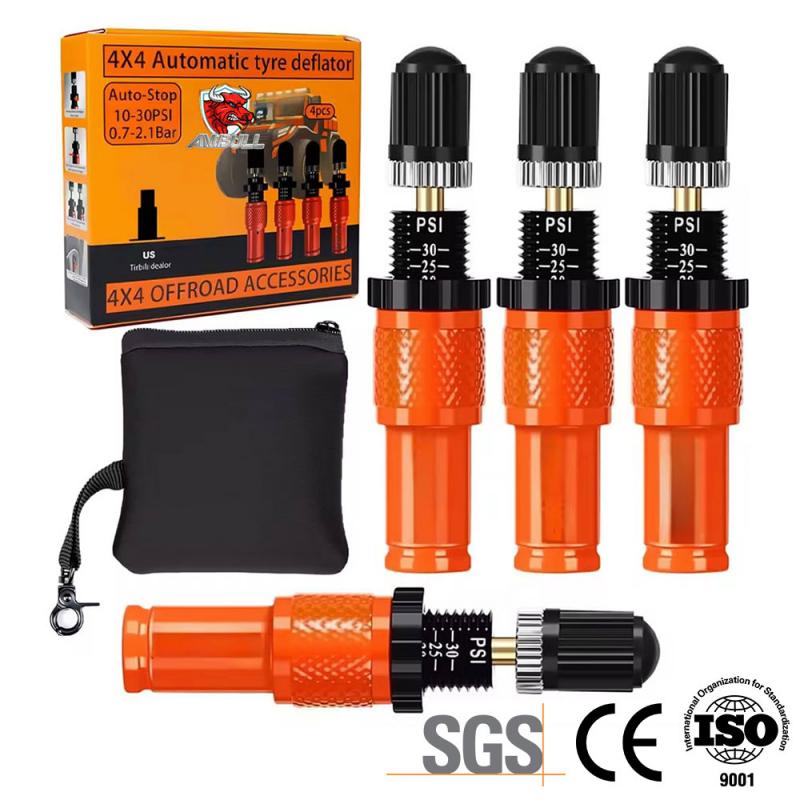
1. Understanding an Automatic Quick Offroad Tire Air Down Tool
An Automatic Quick Offroad Tire Air Down Tool is a tire-pressure adjustment accessory intended to make controlled tire deflation more convenient. The tool connects to the tire's valve stem and provides a defined air-release path. Depending on the design, it may incorporate a preset pressure mechanism, pressure indication, or automatic shutoff feature.
The basic objective is simple: reduce tire pressure efficiently without relying entirely on repeated manual checks. This can be especially useful when several tires need to be adjusted before entering a trail.
The word "automatic" should be understood according to the actual product design. Some tools stop or regulate air release at a preset pressure, while others use a pressure gauge or calibrated mechanism to assist the process. Users should always verify the operating method and pressure range of the specific product.
2. Why Tire Air-Down Matters Off Road
Tire pressure affects the shape and behavior of the tire contact patch. Lowering pressure within an appropriate range can allow the tire to conform more readily to uneven surfaces and may improve traction on certain loose terrains.
Sand
On sand, reducing pressure appropriately can increase the tire's footprint and help distribute vehicle weight over a larger area. This may reduce the tendency of the vehicle to dig into soft sand.
Rocky Terrain
Lower pressure can allow suitable tires to conform around irregular surfaces, potentially improving grip and ride comfort. However, excessively low pressure increases the risk of tire or wheel damage, particularly when obstacles are sharp or the vehicle is carrying heavy loads.
Mud
Tire pressure is only one part of mud performance. Tread pattern, tire construction, vehicle weight, drivetrain, throttle control, and terrain conditions all affect traction. Pressure adjustments should therefore be made conservatively and tested according to the specific vehicle.
Gravel and Dirt Trails
Moderate pressure changes can improve comfort and traction on uneven dirt roads. However, the pressure should remain high enough to maintain stable tire behavior and protect the tire from impacts.
| Terrain | Potential Benefit of Appropriate Air-Down | Important Consideration |
|---|---|---|
| Sand | Larger footprint and improved flotation | Avoid excessive deflation and monitor bead security |
| Rocks | Improved conformity to uneven surfaces | Protect tires and wheels from impacts |
| Mud | May improve contact on some surfaces | Tread design and driving technique remain critical |
| Gravel | Improved ride comfort and surface compliance | Maintain adequate pressure for stability |
3. How an Automatic Quick Air-Down Tool Works
Although designs differ, most quick air-down tools follow a straightforward operating principle. The device connects directly to the tire valve and opens a controlled passage through which compressed air can escape.
Valve Connection
The user attaches the tool to the tire valve stem. A properly designed connection should provide a secure seal without requiring excessive force.
Controlled Air Release
Once connected, the mechanism allows air to escape. In an automatic or preset design, the tool may regulate the process according to a selected pressure value. This can reduce the need for the user to manually remove and reinstall the tool during the deflation process.
Pressure Monitoring
Some products incorporate a pressure gauge or pressure-reading function. This allows users to monitor progress and confirm that the tire is approaching the intended setting.
Completion of Air-Down
Once the target pressure is reached, the appropriate mechanism stops or limits further air release, depending on the product design. The user should still verify the final pressure with a reliable tire-pressure gauge when accuracy is important.
Automatic operation can improve consistency, but it should never replace basic tire inspection. Valve condition, tire damage, temperature, load, and actual pressure should be checked before driving.
4. Key Benefits for Off-Road Drivers
Faster Tire Preparation
Deflating four tires manually can take time, especially when a driver must repeatedly check pressure. A quick air-down tool can simplify the process and reduce the number of manual steps.
More Consistent Pressure Adjustment
When each tire is adjusted individually by estimating air-release time, final pressures can vary. A suitable automatic tool can help bring tires closer to a common target, although final verification remains recommended.
Reduced Need for Repeated Valve Manipulation
Frequent removal and installation of valve caps or valve cores can be inconvenient during trail preparation. A dedicated tool provides a more organized method for pressure adjustment.
Better Trail Preparation Efficiency
When drivers are traveling with a group, time spent preparing vehicles can become significant. Faster air-down procedures allow drivers to complete pressure adjustments more efficiently before entering difficult terrain.
Convenient for Repeated Off-Road Use
Off-road enthusiasts who regularly change tire pressure between pavement and trails can benefit from a compact tool that can be kept with other recovery and tire equipment.
5. Understanding Tire Pressure and Terrain
There is no universal off-road tire pressure that works for every vehicle. Recommended settings vary considerably depending on tire size, construction, wheel diameter, vehicle weight, load, speed, terrain, and manufacturer specifications.
Drivers should begin with the tire and vehicle manufacturer's recommendations and make only appropriate adjustments for the actual terrain. Extremely low pressure can create serious risks, including tire debeading, sidewall damage, rim damage, poor steering response, and excessive heat generation if the tire is driven improperly.
Why Lower Pressure Can Help
Lower pressure can increase the area of the tire contacting the ground and allow the tire to deform around certain obstacles. On loose surfaces, this may improve flotation and traction.
Why Lower Is Not Always Better
A tire is an engineered component designed to operate within a specific pressure range. Going below an appropriate level can compromise handling and protection. Sharp rocks, side loads, heavy vehicles, and high speeds make excessive deflation particularly risky.
Pressure Should Be Checked Cold When Appropriate
Tire pressure changes with temperature. For consistent comparisons, measurements should be made under comparable conditions and interpreted according to the tire and vehicle manufacturer's guidance.
When returning to paved roads, tires should be reinflated to the appropriate road-going pressure before driving at normal road speeds.
6. Important Product Features to Evaluate
Not every air-down tool is designed for the same users or operating conditions. Evaluating the following features can help buyers identify a product that fits their needs.
Preset Pressure Capability
A preset mechanism can simplify repeated adjustments when the user frequently targets a particular pressure. The available range and adjustment method should match the intended application.
Pressure Gauge Accuracy
If a tool includes a gauge, readability and accuracy are important. Buyers should review the gauge range, scale resolution, and stated accuracy where available.
Valve Compatibility
The tool should be compatible with standard tire valve stems used on the vehicle. The connection mechanism should create a secure seal and be easy to attach and remove.
Construction Quality
Off-road equipment may be exposed to dust, mud, vibration, temperature changes, and rough handling. Durable materials and reliable connections are therefore valuable for field use.
Portability
Compact dimensions make the tool easier to store in an off-road recovery kit. A product that is difficult to carry or organize may be less convenient during actual trail use.
| Feature | What to Check | Why It Matters |
|---|---|---|
| Pressure range | Does it cover the intended adjustment range? | Ensures compatibility with the planned use |
| Pressure indication | Gauge readability and accuracy | Supports more controlled adjustment |
| Valve connection | Secure seal and compatibility | Reduces leakage and operating difficulty |
| Materials | Resistance to impact and field conditions | Supports long-term usability |
| Size and weight | Storage and portability | Makes the tool practical for vehicle kits |
7. How to Select the Right Automatic Quick Offroad Tire Air Down Tool
The best tool should be selected according to actual vehicle and driving requirements rather than appearance alone.
Consider Your Vehicle
Identify the vehicle type, tire size, valve configuration, normal load, and typical off-road conditions. A lightweight recreational vehicle and a heavily loaded expedition vehicle may have very different pressure-management requirements.
Consider Your Off-Road Frequency
Occasional trail users may prioritize simplicity and compact storage. Frequent off-road drivers may benefit more from durable construction, quick operation, clear pressure indication, and repeatable settings.
Consider Your Target Pressure Range
Establish the range of pressures you realistically expect to use. The tool should operate comfortably within that range without forcing the user to work near the limits of its mechanism.
Consider Environmental Conditions
If the tool will be exposed to mud, sand, dust, rain, or extreme temperatures, construction quality becomes especially important. Moving components and connections should be easy to inspect and clean.
Consider the Complete Tire Kit
An air-down tool is only one part of a complete tire-management system. An off-road vehicle should also carry an appropriate inflation solution, reliable pressure gauge, valve accessories, and equipment necessary to address punctures or other tire emergencies.
- Confirm tire and vehicle pressure recommendations.
- Check the tool's pressure range.
- Verify valve compatibility.
- Evaluate gauge readability if included.
- Consider durability under off-road conditions.
- Check portability and storage requirements.
- Confirm the operating procedure before using it on a trail.
8. How to Use an Automatic Quick Offroad Tire Air Down Tool
The exact procedure depends on the product design, so the manufacturer's instructions should always take priority. A general workflow can help users understand the process.
Step 1: Park Safely
Stop the vehicle on stable, level ground away from moving traffic. Engage the parking brake and ensure the vehicle cannot move unexpectedly.
Step 2: Check Current Tire Pressure
Record the starting pressure of each tire. This establishes a reference and can reveal unexpected differences between tires.
Step 3: Inspect the Tires and Valves
Look for visible cuts, punctures, abnormal wear, damaged valve stems, or other conditions that should be addressed before adjusting pressure.
Step 4: Connect the Tool
Attach the air-down tool securely to the valve stem according to the manufacturer's instructions. Confirm that the connection is properly sealed.
Step 5: Set or Monitor the Desired Pressure
If the tool provides a preset function, configure the target according to the product instructions. Otherwise, monitor the pressure as air is released.
Step 6: Repeat Consistently
Apply the same process to each tire. Maintaining reasonably consistent pressure across the axle and vehicle helps preserve predictable handling.
Step 7: Verify Before Entering the Trail
Confirm the final pressure and inspect each valve connection. After beginning to drive off road, pay attention to tire behavior and stop if anything appears abnormal.
When leaving the trail, reinflate all tires to the appropriate road pressure before returning to normal-speed pavement driving.
9. Common Air-Down Mistakes to Avoid
Using a Pressure Setting Without Considering the Vehicle
Copying another driver's pressure setting can be misleading because vehicles, tires, loads, and wheel combinations differ. Use manufacturer guidance and adjust cautiously based on actual conditions.
Deflating Too Much
Extremely low pressure can increase the risk of tire debeading, wheel damage, sidewall failure, and unstable handling. More deflation does not automatically mean more traction.
Ignoring Temperature
Pressure readings can change with tire temperature. Comparing measurements made under different conditions can produce misleading results.
Failing to Reinflate Before Highway Driving
Off-road pressure is not automatically suitable for paved-road driving. Driving at normal road speeds with significantly reduced pressure can create excessive tire flex and heat.
Ignoring Tire Damage
A pressure-management tool cannot compensate for a damaged tire. Tires should be inspected before and after demanding off-road trips.
10. Maintenance and Storage for Reliable Performance
An air-down tool may be small, but its reliability matters when it is needed away from normal service facilities. Basic maintenance can help preserve its performance.
Keep the Connection Clean
Dirt and sand around the valve connection can interfere with sealing. Clean the connection after use in dusty or muddy environments.
Inspect Seals and Moving Components
Check for worn seals, damaged threads, loose components, or visible corrosion. Any component showing significant damage should be serviced or replaced according to the manufacturer's instructions.
Protect the Gauge
If the tool has an integrated pressure gauge, avoid impacts and excessive pressure beyond the gauge's rated range. Store it where it will not be crushed by other recovery equipment.
Store It in a Dry Location
After wet or muddy trips, clean and dry the tool before long-term storage. A compact protective case or dedicated compartment can help prevent accidental damage.
Check Before Every Major Trip
Do not wait until reaching the trailhead to discover that a pressure tool is damaged. A quick inspection before departure can prevent unnecessary delays.
11. Frequently Asked Questions
What is an Automatic Quick Offroad Tire Air Down Tool?
It is a tire-pressure adjustment device designed to release air from an off-road tire quickly and in a controlled manner. Depending on the model, it may use a preset pressure mechanism, gauge, or automatic shutoff system.
Why do off-road drivers lower tire pressure?
Appropriate pressure reduction can increase the tire's footprint and allow it to conform more effectively to certain loose or uneven surfaces. The correct pressure varies by vehicle, tire, load, and terrain.
Is lower tire pressure always better off road?
No. Excessive deflation can increase the risk of tire damage, wheel damage, bead separation, and poor handling. Pressure should remain within a suitable range for the vehicle and tire.
Can an automatic air-down tool be used on all vehicles?
Compatibility depends on the valve stems, pressure range, tire configuration, and product specifications. Confirm compatibility before use.
Does an automatic air-down tool replace a tire-pressure gauge?
Not necessarily. Some models include pressure indication, but users should understand the accuracy and operating characteristics of the specific product. A reliable independent gauge can be useful for verification.
How long does it take to air down a tire?
Deflation time varies according to starting pressure, tire volume, valve design, tool airflow, and target pressure. A quick air-down tool is designed to reduce the effort and time required compared with basic manual methods.
Can the same tool be used for all four tires?
Yes, a portable air-down tool is generally designed to be moved from one valve to another. Some systems may provide multiple-valve configurations, but the specific product instructions should be followed.
Do I need to reinflate the tires after off-roading?
Yes. Before returning to normal paved-road driving, tires should be reinflated to the appropriate road-going pressure specified for the vehicle and tire combination.
What should I carry with an air-down tool?
A complete tire kit can include a reliable pressure gauge, suitable air compressor or inflation equipment, tire-repair supplies, valve accessories, and other recovery equipment appropriate for the trip.
What should I check before buying an automatic quick air-down tool?
Check the pressure range, valve compatibility, pressure-setting mechanism, gauge specifications if included, construction materials, portability, ease of operation, and suitability for the expected off-road environment.
12. Final Considerations for Faster Off-Road Tire Preparation
Tire pressure management is an important part of preparing a vehicle for changing terrain. An Automatic Quick Offroad Tire Air Down Tool can simplify the deflation process by reducing repetitive manual steps and helping drivers achieve a more controlled and consistent adjustment.
The most effective solution is not necessarily the tool with the most features. Buyers should focus on practical compatibility, pressure range, construction quality, ease of operation, portability, and the specific requirements of their vehicle and tires.
Proper use is equally important. Drivers should begin with manufacturer recommendations, inspect tires and valves before use, avoid excessive deflation, monitor tire behavior, and reinflate to the appropriate road pressure before returning to normal paved-road driving.
AMBULL focuses on practical automotive and off-road accessories designed around real-world vehicle-use requirements. A well-designed tire air-down solution can become a useful part of an organized trail kit, helping drivers spend less time preparing tires and more time focusing on the journey.
Looking for an Automatic Quick Offroad Tire Air Down Tool?
If you are sourcing an Automatic Quick Offroad Tire Air Down Tool for off-road driving, vehicle accessory distribution, outdoor equipment retail, or private-label projects, selecting a reliable product and suitable specifications is an important first step.
AMBULL provides automotive and off-road product solutions for customers looking for practical equipment with convenient operation and dependable construction. Product specifications, pressure ranges, materials, and available configurations should be confirmed according to the intended application.
Learn more about AMBULL and its product capabilities. If you have requirements for product specifications, packaging, bulk purchasing, or customized solutions, our team can discuss the project with you.
Ready to improve your off-road tire preparation process? Contact us today to discuss your Automatic Quick Offroad Tire Air Down Tool requirements and find a practical solution for your market or application.
Explore AMBULLTechnical and safety note: Tire pressure recommendations vary by vehicle, tire, wheel, load, terrain, temperature, and manufacturer specifications. Always follow the relevant tire and vehicle instructions. Inspect tires and valves before use, avoid excessive deflation, and restore appropriate road-going pressure before normal-speed paved-road driving.