How Does an Air Conditioning Mould Improve Manufacturing Efficiency and Product Quality?
2026-08-03
Article Summary
Air conditioning systems require precision-engineered components to achieve reliable cooling performance, energy efficiency, and long service life. Behind every high-quality air conditioner is an accurately designed air conditioning mould that ensures plastic parts are produced with consistent dimensions, smooth surfaces, and excellent durability.
This article explains how an air conditioning mould works, why it is essential for modern HVAC manufacturing, what challenges manufacturers face during mould production, and how professional mould solutions from ZHONGYUE MOULD help companies improve production efficiency, reduce costs, and maintain stable product quality.
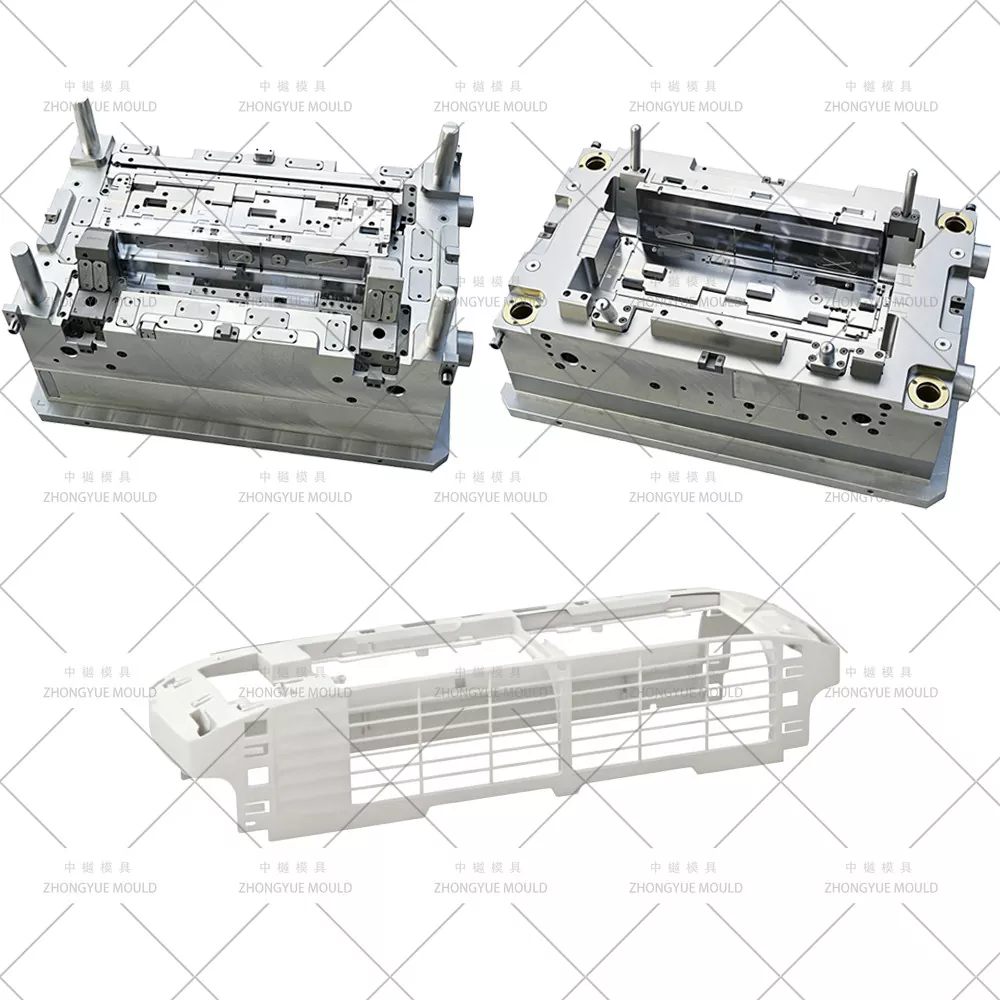
Table of Contents
- What Is an Air Conditioning Mould?
- Why Is an Air Conditioning Mould Important?
- How Is an Air Conditioning Mould Manufactured?
- What Challenges Do Manufacturers Face?
- How ZHONGYUE MOULD Provides Reliable Mould Solutions
- How to Choose the Right Air Conditioning Mould Supplier?
- Frequently Asked Questions
What Is an Air Conditioning Mould?
An air conditioning mould is a specialized injection mould designed to manufacture plastic components used in air conditioning equipment. These moulds are widely used to produce parts such as air conditioner covers, panels, ventilation grilles, fan blades, internal frames, drainage components, and other structural elements.
Unlike ordinary plastic moulds, air conditioning moulds require higher levels of precision because HVAC components must meet strict requirements for appearance, assembly accuracy, airflow performance, and long-term reliability.
A well-designed air conditioning mould allows manufacturers to produce thousands or even millions of identical parts while maintaining consistent quality. This makes mould technology a critical factor in large-scale air conditioner production.
- High dimensional accuracy for perfect component assembly
- Stable production performance for mass manufacturing
- Excellent surface finishing for attractive product appearance
- Strong durability for long mould service life
- Optimized production cycles to reduce manufacturing costs
Why Is an Air Conditioning Mould Important?
The quality of an air conditioning mould directly influences the performance, appearance, and production efficiency of finished air conditioner products. Manufacturers cannot achieve competitive advantages without reliable mould solutions.
| Key Factor | Impact on Manufacturing |
|---|---|
| Precision Design | Ensures components fit correctly and reduces assembly problems. |
| Material Selection | Improves mould durability and resistance to repeated production cycles. |
| Cooling System Design | Shortens cycle time and improves production efficiency. |
| Surface Treatment | Creates better appearance and extends mould lifespan. |
Modern air conditioning manufacturers are under increasing pressure to improve product quality while controlling production expenses. A high-performance mould helps reduce material waste, minimize defects, and increase manufacturing consistency.
How Is an Air Conditioning Mould Manufactured?
Producing a high-quality air conditioning mould requires professional engineering knowledge, advanced processing equipment, and strict quality control. The manufacturing process usually includes several important stages.
1. Product Design Analysis
Before mould production begins, engineers analyze the structure, size, material requirements, and production goals of the air conditioning component. Computer-aided design technology is used to optimize the mould structure and prevent potential manufacturing issues.
2. Mould Design Development
Engineers create detailed mould designs based on product requirements. Important elements include cavity structure, injection system, cooling channels, ejection system, and mould strength.
3. Precision Machining
Advanced CNC machining equipment processes mould components with high accuracy. Precision machining ensures that every mould part matches the design specifications.
4. Assembly and Testing
After machining, mould components are assembled and tested. Trial production helps engineers identify possible defects such as deformation, uneven filling, or surface problems.
5. Final Optimization
Based on testing results, engineers adjust the mould structure to achieve stable performance, longer service life, and better production efficiency.
What Challenges Do Manufacturers Face When Producing Air Conditioning Components?
Air conditioning component manufacturing involves several technical challenges. Choosing the wrong mould solution can lead to increased production costs, delayed delivery, and inconsistent product quality.
- Complex Component Structures: Many air conditioner parts have large sizes, thin walls, curves, and detailed surface designs, requiring advanced mould engineering.
- Production Efficiency Requirements: Large-volume manufacturing requires moulds that can operate continuously with minimal maintenance.
- Appearance Quality Control: Visible components must have smooth surfaces without marks, defects, or deformation.
- Material Compatibility: Different plastic materials require suitable mould designs to achieve optimal performance.
- Cost Management: Manufacturers need durable moulds that reduce replacement frequency and maintenance expenses.
Solving these challenges requires cooperation with an experienced mould manufacturer that understands both product requirements and production processes.
How ZHONGYUE MOULD Provides Reliable Air Conditioning Mould Solutions
ZHONGYUE MOULD focuses on developing professional mould solutions for different industrial applications, including air conditioning mould manufacturing. With advanced mould design technology and manufacturing experience, the company helps customers achieve efficient and stable production.
The company pays close attention to every stage of mould development, from initial design evaluation to final testing. This approach ensures that each air conditioning mould delivers excellent performance during long-term production.
- Professional mould design based on customer requirements
- Advanced manufacturing technology for precise mould processing
- Strict quality inspection during production
- Customized solutions for different air conditioning components
- Reliable support to improve production efficiency
By combining engineering expertise with manufacturing capabilities, ZHONGYUE MOULD helps customers reduce production risks and create high-quality air conditioning products that meet market demands.
How to Choose the Right Air Conditioning Mould Supplier?
Selecting the right mould supplier is an important decision for air conditioner manufacturers. A reliable partner can significantly influence product quality, delivery schedules, and long-term production costs.
- Evaluate Technical Experience: Choose a supplier with experience in complex injection mould projects.
- Check Manufacturing Capability: Professional equipment and skilled engineers are essential for producing precision moulds.
- Consider Customization Ability: Different air conditioning products require different mould structures and solutions.
- Focus on Quality Control: Strict inspection procedures help prevent production problems.
- Review After-Sales Support: Good technical support ensures stable mould operation after delivery.
A professional mould supplier does more than manufacture tools. The supplier becomes a technical partner that supports product improvement and manufacturing success.
Key Benefits of Using a High-Quality Air Conditioning Mould
- Improved product consistency during mass production
- Lower manufacturing waste and operational costs
- Faster production cycles and higher output capacity
- Better product appearance and assembly accuracy
- Longer mould lifespan and reduced maintenance requirements
For companies producing air conditioning systems, investing in reliable mould technology creates long-term value and strengthens competitiveness in the global market.
Frequently Asked Questions About Air Conditioning Mould
1. What materials are commonly used for air conditioning moulds?
Air conditioning moulds are usually manufactured using high-quality mould steels that provide excellent hardness, wear resistance, and durability for repeated injection cycles.
2. How long can an air conditioning mould be used?
The service life depends on mould material, design quality, maintenance, and production conditions. A professionally manufactured mould can support large-scale production for many years.
3. Can air conditioning moulds be customized?
Yes. Air conditioning moulds can be customized according to component size, structure, material requirements, and production volume.
4. Why is mould design important for air conditioning production?
Proper mould design improves injection performance, reduces defects, shortens production cycles, and ensures stable product quality.
5. Why choose ZHONGYUE MOULD for air conditioning mould solutions?
ZHONGYUE MOULD provides professional mould design and manufacturing services with a focus on precision, reliability, and customer-specific requirements, helping manufacturers achieve efficient production.
Conclusion
An air conditioning mould plays a fundamental role in modern HVAC manufacturing. From improving production efficiency to ensuring product quality, a well-designed mould helps manufacturers overcome technical challenges and achieve long-term success.
With professional experience, advanced manufacturing capabilities, and customized solutions, ZHONGYUE MOULD supports customers in developing reliable mould systems for air conditioning components. If you are looking for a trusted partner to improve your mould production performance, please contact us today for professional assistance and customized solutions.