How Does Aluminum CNC Machining Improve Precision Manufacturing?
2026-01-21
Summary: Aluminum CNC machining has revolutionized modern manufacturing by providing high precision, efficiency, and versatility. This article explores the advantages, applications, and critical considerations when choosing aluminum CNC machining services. It also addresses common questions to help manufacturers make informed decisions and highlights how Youlin ensures quality and reliability in every project.
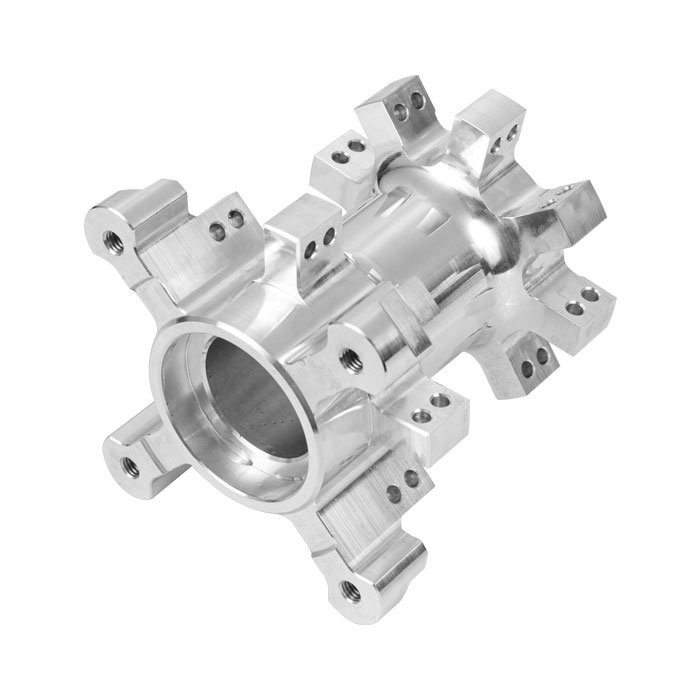
Table of Contents
- Introduction to Aluminum CNC Machining
- Key Benefits of Aluminum CNC Machining
- Applications Across Industries
- Understanding the CNC Machining Process
- Material Specifications and Parameters
- Quality Standards and Tolerances
- Frequently Asked Questions
- Conclusion
Introduction to Aluminum CNC Machining
Aluminum CNC machining refers to the use of computer numerical control (CNC) systems to cut, shape, and fabricate aluminum parts with precision. It is widely used in industries ranging from aerospace and automotive to electronics and medical devices. By automating complex cutting and shaping processes, CNC machining ensures consistent quality and reduces production errors.
Key Benefits of Aluminum CNC Machining
- High Precision: CNC machines can produce parts with tolerances as tight as ±0.01 mm, which is critical for applications requiring exact dimensions.
- Repeatability: Once a design is programmed, it can be reproduced hundreds or thousands of times with identical results.
- Speed and Efficiency: CNC machining reduces manual labor and accelerates production times while maintaining high-quality standards.
- Versatility: Complex geometries, multi-axis cuts, and intricate designs are achievable with CNC technology.
- Material Optimization: Efficient use of aluminum reduces waste and lowers material costs.
Applications Across Industries
Aluminum CNC machining is applied in a variety of industries due to aluminum’s lightweight, strength, and corrosion resistance:
| Industry | Typical Components | Benefits |
|---|---|---|
| Aerospace | Aircraft brackets, fuselage components | High strength-to-weight ratio, precise fit |
| Automotive | Engine parts, chassis components | Durability and reduced vehicle weight |
| Electronics | Housings, heat sinks | Effective thermal management and accurate dimensions |
| Medical Devices | Surgical tools, implants | Sterility, corrosion resistance, high precision |
| Industrial Machinery | Custom machine components | Reliable performance and long service life |
Understanding the CNC Machining Process
The CNC machining process involves several stages to produce high-quality aluminum parts:
- Design and CAD Modeling: The part is first designed in a CAD (Computer-Aided Design) program.
- CAM Programming: CNC programs are created using CAM software to guide the machine tool.
- Material Preparation: Aluminum billets or sheets are cut to appropriate sizes.
- Machining: The CNC machine performs milling, turning, drilling, or other operations as programmed.
- Finishing: Surface treatments like anodizing, polishing, or coating are applied for durability and aesthetics.
- Inspection: Parts are measured and tested to ensure they meet dimensional and quality standards.
Material Specifications and Parameters
Aluminum alloys used in CNC machining vary depending on the application. Common options include:
| Alloy | Typical Use | Properties |
|---|---|---|
| 6061 | Structural components, automotive parts | Excellent corrosion resistance, medium strength |
| 6063 | Architectural parts, extrusions | Good surface finish, medium strength |
| 7075 | Aerospace components, defense equipment | Very high strength, lightweight |
| 5052 | Marine equipment, sheet metal | High corrosion resistance, good formability |
Quality Standards and Tolerances
High-quality aluminum CNC machining requires strict adherence to tolerances and surface finish standards. Key considerations include:
- Dimensional tolerance: ±0.01–0.05 mm depending on part complexity
- Surface roughness: Ra 0.8–1.6 μm standard, with finer finishes available
- Geometric accuracy: Straightness, flatness, roundness, and perpendicularity compliance
- Material inspection: Alloy composition and hardness verification
Frequently Asked Questions
Q1: What types of aluminum can be CNC machined?
A1: Most common alloys like 6061, 6063, 7075, and 5052 can be machined, each selected based on strength, corrosion resistance, and application needs.
Q2: How does CNC machining improve part consistency?
A2: CNC machines follow precise digital instructions, ensuring every part is identical. This reduces human error and improves overall production quality.
Q3: What surface finishes are possible after CNC machining?
A3: Aluminum parts can be anodized, polished, brushed, or coated to enhance durability, aesthetics, and corrosion resistance according to project requirements.
Q4: Can CNC machining handle complex geometries?
A4: Yes, multi-axis CNC machines can produce intricate designs, including curved surfaces, undercuts, and detailed features not possible with manual machining.
Conclusion
Aluminum CNC machining provides unmatched precision, repeatability, and efficiency for manufacturers across industries. By understanding the process, material options, and quality standards, businesses can optimize production and reduce costs. At Youlin, every aluminum CNC project is executed with strict quality control, advanced machinery, and expert engineering support. For customized solutions, timely delivery, and professional guidance, contact us today and experience reliable machining services that meet your exact specifications.