How Does Aluminium Alloy Die Casting Part Enhance Modern Manufacturing Performance?
2026-04-22
Article Summary
Aluminium alloy die casting parts are widely used in automotive, electronics, machinery, and industrial equipment due to their excellent strength-to-weight ratio, dimensional accuracy, and cost efficiency in mass production. This article explores how aluminium alloy die casting parts are manufactured, why they are critical in modern engineering, the common challenges customers face, and how to select a reliable supplier to ensure consistent quality and performance.
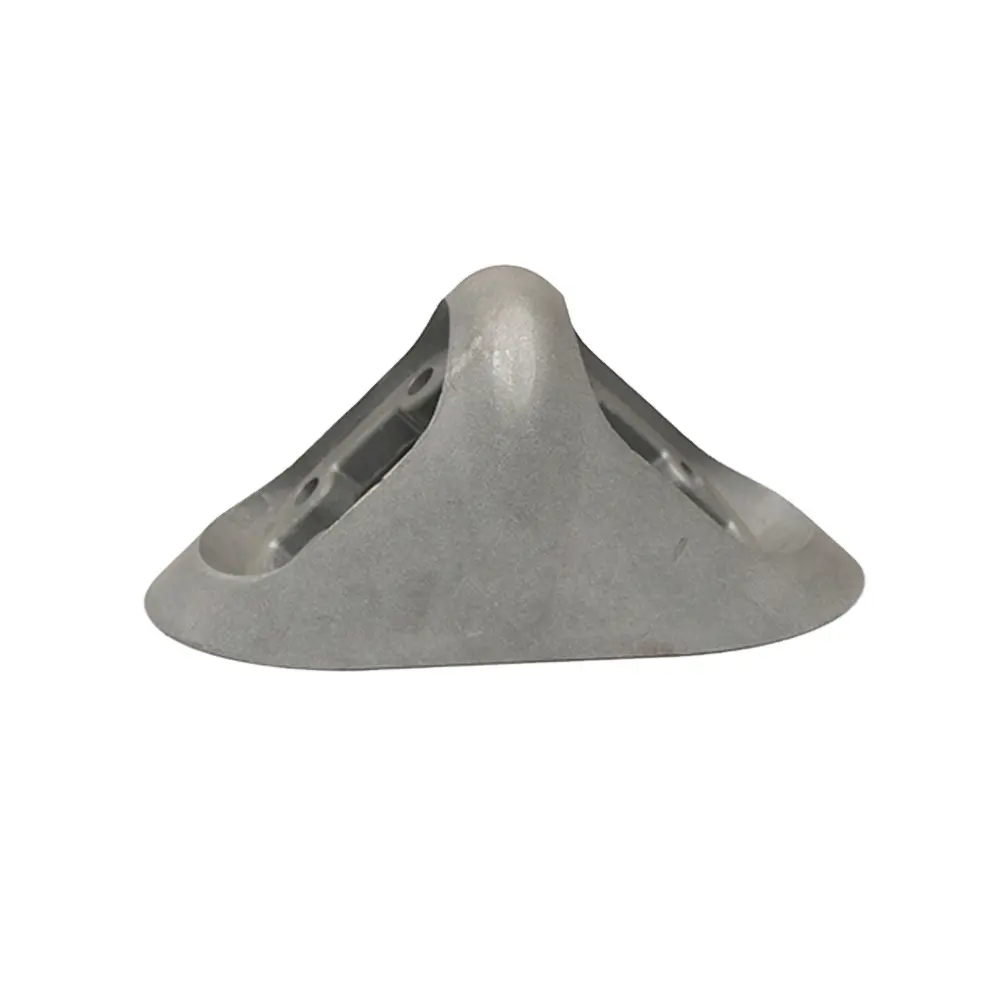
Table of Contents
- 1. Introduction to Aluminium Alloy Die Casting Parts
- 2. Manufacturing Process Overview
- 3. Material Properties and Selection
- 4. Key Advantages in Industrial Applications
- 5. Quality Control and Precision Standards
- 6. Industrial Applications
- 7. Common Challenges and Solutions
- 8. Comparison Table: Die Casting vs Other Methods
- 9. Frequently Asked Questions
- 10. Conclusion
1. Introduction to Aluminium Alloy Die Casting Parts
Aluminium Alloy Die Casting Part technology plays a crucial role in producing complex metal components with high dimensional accuracy and smooth surface finishes. This process involves injecting molten aluminium alloy into a steel mold under high pressure, allowing manufacturers to produce highly detailed and repeatable parts at scale.
Industries rely on these components because they reduce machining requirements, lower production costs, and improve product durability. As global manufacturing demands increase, die casting continues to be a preferred solution for high-volume production environments.
2. Manufacturing Process Overview
The production of Aluminium Alloy Die Casting Parts involves several precise steps designed to ensure structural integrity and consistency.
- Melting: Aluminium alloy is melted at controlled temperatures.
- Injection: Molten metal is injected into a hardened steel mold.
- Cooling: The part solidifies rapidly inside the mold.
- Ejection: The formed part is removed from the mold.
- Finishing: Trimming, polishing, or machining is applied if required.
Each step must be tightly controlled to avoid defects such as porosity, shrinkage, or surface imperfections.
3. Material Properties and Selection
Aluminium alloys used in die casting are selected based on strength, corrosion resistance, thermal conductivity, and weight considerations.
Common alloy characteristics include:
- High strength-to-weight ratio
- Excellent corrosion resistance
- Good thermal and electrical conductivity
- Strong dimensional stability
Selecting the correct alloy ensures the final Aluminium Alloy Die Casting Part performs reliably under operational stress conditions.
4. Key Advantages in Industrial Applications
Aluminium die casting offers several advantages that make it indispensable in modern manufacturing.
- High production efficiency for mass manufacturing
- Excellent surface finish reduces post-processing costs
- Ability to produce complex geometries
- Lightweight yet durable structural properties
- Cost-effective for large-scale production
These benefits significantly improve product performance while reducing overall lifecycle costs.
5. Quality Control and Precision Standards
Quality assurance is essential in producing reliable Aluminium Alloy Die Casting Parts. Manufacturers implement strict inspection protocols to ensure consistency and performance.
| Quality Factor | Inspection Method | Purpose |
|---|---|---|
| Dimensional Accuracy | CMM Measurement | Ensure precise tolerances |
| Surface Quality | Visual & Roughness Testing | Detect imperfections |
| Internal Defects | X-ray Inspection | Identify porosity or cracks |
| Mechanical Strength | Tensile Testing | Verify load-bearing capacity |
Strict quality control ensures each part meets international manufacturing standards.
6. Industrial Applications
Aluminium Alloy Die Casting Parts are widely used across multiple industries due to their versatility.
- Automotive components (engine housings, brackets)
- Electronic enclosures
- Industrial machinery parts
- Telecommunication equipment
- Household appliances
Their adaptability makes them essential for both structural and functional applications.
7. Common Challenges and Solutions
Despite its advantages, die casting can face production challenges that must be managed carefully.
- Porosity: Controlled through optimized pressure and venting systems
- Thermal cracking: Prevented by proper mold temperature control
- Surface defects: Reduced by improving mold finishing quality
- Dimensional variation: Minimized through precise process calibration
Experienced manufacturers implement advanced process monitoring systems to overcome these challenges effectively.
8. Comparison Table: Die Casting vs Other Manufacturing Methods
| Method | Precision | Cost Efficiency | Production Speed |
|---|---|---|---|
| Die Casting | High | High (for mass production) | Very Fast |
| Forging | Medium | Medium | Medium |
| Machining | Very High | Low (high material waste) | Slow |
This comparison highlights why die casting is often the preferred method for scalable production.
9. Frequently Asked Questions
Q1: What is an Aluminium Alloy Die Casting Part used for?
It is used in automotive, electronics, and industrial equipment for producing lightweight and durable components.
Q2: Is die casting suitable for small production runs?
It is more cost-effective for medium to large-scale production due to mold investment costs.
Q3: How long do die casting molds last?
High-quality steel molds can last for thousands to hundreds of thousands of cycles depending on usage.
Q4: Can die cast parts be customized?
Yes, they can be designed in complex geometries based on engineering requirements.
10. Conclusion
Aluminium Alloy Die Casting Parts continue to transform global manufacturing by offering efficiency, precision, and scalability. Their ability to meet complex design requirements while maintaining cost-effectiveness makes them essential in modern engineering industries.
Choosing a reliable manufacturer is critical to ensuring product quality and long-term performance.
About Ningbo Jinggang Machinery Co., Ltd.
Ningbo Jinggang Machinery Co., Ltd. specializes in the production of high-quality Aluminium Alloy Die Casting Parts with advanced manufacturing capabilities and strict quality control systems. With extensive industry experience, the company focuses on delivering precision-engineered components tailored to customer requirements across global markets.
If you are looking for reliable solutions, professional engineering support, and consistent product quality, contact us today to discuss your project requirements and receive expert assistance from our technical team.