How Does Accurate Machining Enhance Manufacturing Precision and Efficiency?
2026-03-24
Article Summary
Accurate machining is crucial for modern manufacturing, ensuring parts meet exact specifications, improving product quality, and reducing waste. This article explores the principles, technologies, and best practices behind precise machining, helping engineers, manufacturers, and procurement teams understand how to implement and benefit from accurate machining processes. It also highlights common customer challenges and practical solutions.
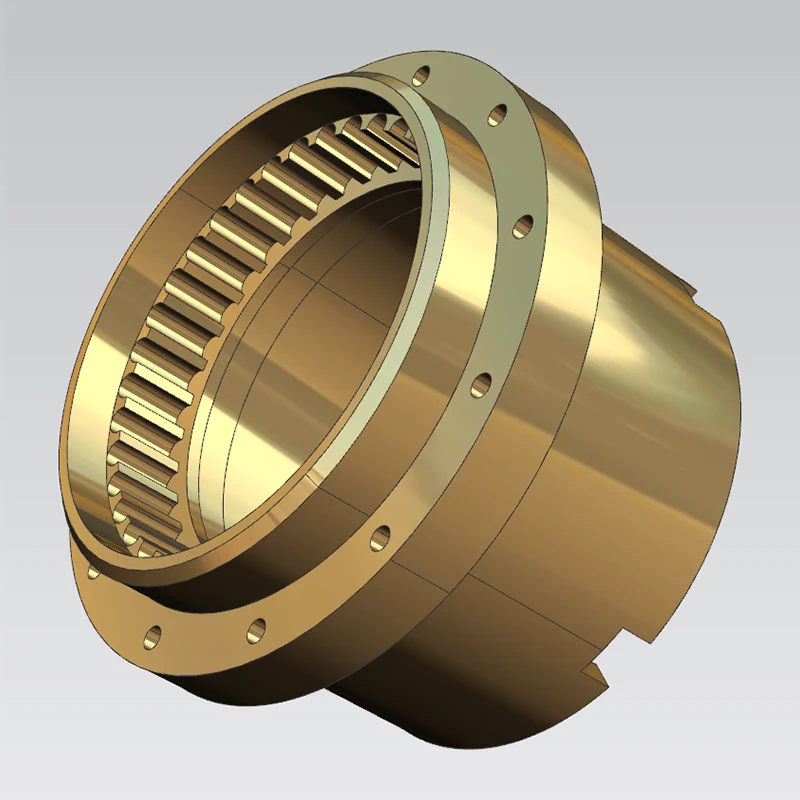
Table of Contents
- 1. What Is Accurate Machining?
- 2. How Accurate Machining Works
- 3. Key Advantages of Accurate Machining
- 4. Technical Parameters and Specifications
- 5. Types of Accurate Machining Processes
- 6. How to Choose the Right Machining Solution
- 7. Installation, Maintenance, and Quality Control
- 8. Frequently Asked Questions
- 9. Conclusion
1. What Is Accurate Machining?
Accurate machining refers to manufacturing processes designed to produce components with extremely tight tolerances and high dimensional precision. It is widely used in aerospace, automotive, medical devices, electronics, and industrial machinery. High precision machining reduces errors, ensures interoperability of parts, and enhances overall product quality.
2. How Accurate Machining Works
Accurate machining combines advanced equipment, skilled operators, and precise programming. The workflow typically includes:
- Computer-Aided Design (CAD): Creating detailed 3D models with exact specifications.
- Computer-Aided Manufacturing (CAM): Converting CAD models into tool paths and machine instructions.
- CNC Machining: Using computer-controlled lathes, mills, and grinders for precision cutting.
- Measurement and Inspection: Applying coordinate measuring machines (CMM), laser scanners, and other tools to ensure tolerances are met.
Combining these steps ensures parts are manufactured accurately, reducing scrap rates and minimizing errors during assembly.
3. Key Advantages of Accurate Machining
- High Precision: Consistently meets tight tolerances for critical components.
- Improved Product Quality: Reduces defects and improves reliability.
- Reduced Waste: Minimizes material loss and lowers production costs.
- Faster Time-to-Market: Efficient production with minimal rework.
- Enhanced Competitiveness: Enables complex part manufacturing that supports innovation.
4. Technical Parameters and Specifications
| Parameter | Description |
| Tolerance | Range of acceptable deviation from the nominal dimension (e.g., ±0.01 mm) |
| Surface Finish | Achievable surface roughness after machining (e.g., Ra 0.4 μm) |
| Material Compatibility | Metals, plastics, composites, and specialty alloys |
| Spindle Speed | High-speed operation for smooth cutting and minimal vibration |
| Tooling | Precision cutting tools, drills, and end mills |
| Machine Type | CNC milling, turning, grinding, or multi-axis machining centers |
Sanluo provides advanced machining solutions with precision engineering, high-quality tooling, and robust quality control systems to ensure consistent and reliable results.
5. Types of Accurate Machining Processes
- CNC Milling: High-precision 3D cutting for complex parts.
- CNC Turning: Accurate cylindrical machining with minimal tolerances.
- Grinding: Fine surface finishing and tight tolerance correction.
- EDM (Electrical Discharge Machining): Precision machining of hard or complex geometries.
- Laser and Waterjet Cutting: Non-contact machining with precise dimensional control.
6. How to Choose the Right Machining Solution
Selecting the appropriate machining process requires evaluating product specifications, production volume, and material characteristics. Key considerations include:
- Component Complexity: Multi-axis machining for complex shapes.
- Material Type: Hardness, brittleness, and thermal sensitivity.
- Required Tolerance: High-precision CNC for critical dimensions.
- Production Volume: Batch size determines efficiency of machining method.
- Cost and ROI: Balancing equipment cost, tooling, and expected yield.
7. Installation, Maintenance, and Quality Control
- Ensure machines are installed on stable, vibration-free surfaces.
- Regular calibration of CNC machines and inspection tools.
- Routine maintenance of spindles, tool holders, and lubrication systems.
- Implement a robust inspection process using CMM, laser scanners, and gauges.
- Document and analyze measurement data to continuously improve accuracy.
8. Frequently Asked Questions
Q1: What industries benefit most from accurate machining?
Aerospace, automotive, medical devices, electronics, and high-precision manufacturing industries rely heavily on accurate machining for critical components.
Q2: Can accurate machining reduce production costs?
Yes, by minimizing rework, scrap, and errors, accurate machining reduces overall material waste and operational costs.
Q3: How precise can modern machining be?
Modern CNC and grinding technologies can achieve tolerances as tight as ±0.001 mm with high surface finish quality.
Q4: Is training required for operators?
Yes. Skilled operators and engineers are essential for programming, machine operation, and quality inspection to maximize the benefits of accurate machining.
9. Conclusion
Accurate machining is vital for producing high-quality, reliable, and efficient products in modern manufacturing. By using advanced equipment, precise tooling, and effective quality control, manufacturers can meet tight tolerances and improve competitiveness.
Sanluo provides professional accurate machining solutions that combine advanced CNC technology, experienced engineers, and strict quality management. For expert guidance, tailored solutions, and reliable manufacturing support, contact us today.