How Does a Semi-Open Impeller Improve Pump Performance?
2026-05-26
Semi-open impellers are widely used in industrial pumps because they offer an effective balance between efficiency, durability, and solids-handling capability. Industries such as wastewater treatment, chemical processing, food production, mining, and agriculture rely on this impeller design to handle fluids containing suspended particles, fibers, or viscous materials. Choosing the wrong impeller can lead to clogging, excessive wear, unstable flow rates, and costly downtime.
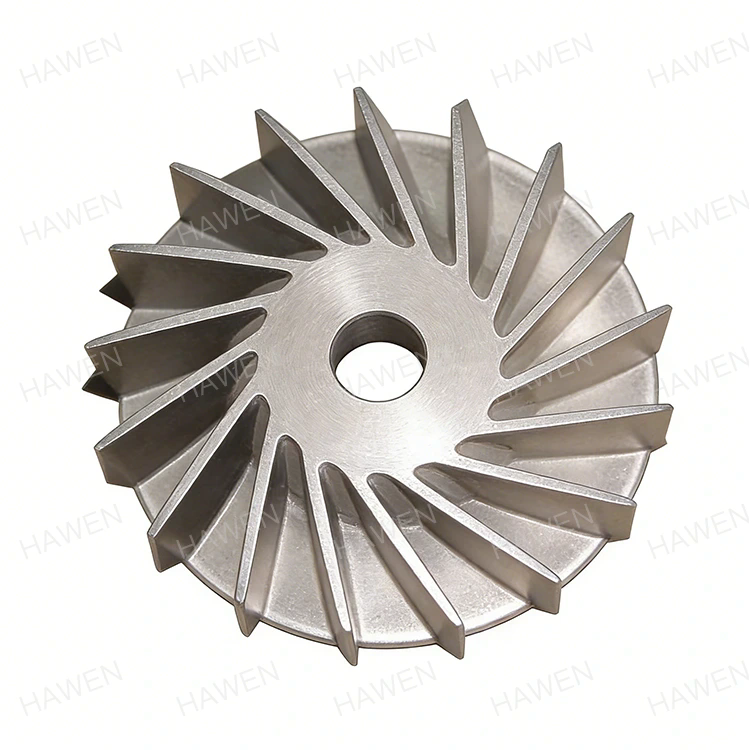
This article explains how a semi-open impeller works, its advantages, common industrial applications, maintenance considerations, and how businesses can select the right design for long-term operational reliability.
Table of Contents
- What Is a Semi-Open Impeller?
- How Does a Semi-Open Impeller Work?
- Main Advantages of Semi-Open Impellers
- Semi-Open vs Closed Impeller
- Industries That Commonly Use Semi-Open Impellers
- Common Problems and Solutions
- How to Choose the Right Semi-Open Impeller
- Maintenance Tips for Longer Service Life
- Why Material Selection Matters
- FAQ
- Conclusion
What Is a Semi-Open Impeller?
A semi-open impeller is a pump impeller design featuring vanes attached to a back plate while the front side remains partially open. This structure allows the pump to transport liquids containing small solids, sludge, fibers, or impurities more effectively than fully closed impellers.
Unlike closed impellers, semi-open designs are less likely to clog when handling contaminated fluids. At the same time, they maintain better hydraulic efficiency than fully open impellers. This makes them a preferred choice for many demanding industrial environments.
- Back shroud support for improved strength
- Partially exposed vanes for solids handling
- Adjustable clearance for wear compensation
- Suitable for medium-viscosity fluids
How Does a Semi-Open Impeller Work?
The semi-open impeller rotates inside the pump casing and generates centrifugal force. As fluid enters the impeller eye, the rotating vanes accelerate the liquid outward toward the discharge outlet. Because the front side of the impeller is partially open, suspended solids can pass through more easily without becoming trapped.
This design significantly reduces blockage risks while maintaining steady flow performance. In applications involving dirty water or process fluids with particles, semi-open impellers provide a practical balance between efficiency and reliability.
| Component | Function |
|---|---|
| Impeller Vanes | Transfer kinetic energy to the fluid |
| Back Plate | Provides structural support and stability |
| Open Front Design | Allows better solids handling capability |
| Pump Casing | Directs fluid toward discharge piping |
Main Advantages of Semi-Open Impellers
-
Better Solids Handling
Semi-open impellers can process liquids containing debris, slurry, fibers, or suspended particles with lower clogging risk. -
Easier Maintenance
The partially open structure simplifies cleaning and inspection, reducing maintenance time. -
Improved Operational Flexibility
They perform well across varying fluid conditions, especially where liquid quality changes frequently. -
Reduced Downtime
Lower blockage frequency improves production continuity in industrial systems. -
Cost-Effective Solution
Semi-open impellers provide reliable performance without the high maintenance burden associated with frequent clogging.
Semi-Open vs Closed Impeller
| Feature | Semi-Open Impeller | Closed Impeller |
|---|---|---|
| Solids Handling | Excellent | Limited |
| Hydraulic Efficiency | Moderate to High | Very High |
| Maintenance Difficulty | Lower | Higher |
| Clogging Resistance | Strong | Weaker |
| Best Application | Dirty or mixed fluids | Clean liquids |
Industries That Commonly Use Semi-Open Impellers
Semi-open impellers are used across multiple industries where fluid purity cannot always be guaranteed.
Wastewater Treatment
Handles sewage, sludge, and suspended solids with improved anti-clogging performance.
Chemical Processing
Suitable for corrosive or particle-containing chemical fluids.
Food Processing
Used for transporting viscous liquids and production residues.
Mining Operations
Designed for abrasive slurry transfer and challenging working conditions.
Common Problems and Solutions
| Problem | Possible Cause | Recommended Solution |
|---|---|---|
| Reduced Flow Rate | Wear on impeller vanes | Inspect and replace worn components |
| Excessive Vibration | Impeller imbalance | Perform balancing and alignment checks |
| Frequent Clogging | Improper impeller sizing | Select larger passage design |
| Rapid Wear | Highly abrasive media | Upgrade to wear-resistant materials |
How to Choose the Right Semi-Open Impeller
Selecting the correct impeller design is critical for long-term system performance. Buyers should evaluate several operational factors before making a purchasing decision.
- Fluid type and viscosity
- Particle size and solids concentration
- Required flow rate and pressure
- Operating temperature
- Corrosion and abrasion conditions
- Maintenance accessibility
- Motor compatibility and energy consumption
Working with an experienced manufacturer helps ensure the impeller matches actual operational requirements rather than relying only on theoretical specifications.
Maintenance Tips for Longer Service Life
- Regularly inspect impeller clearance and wear condition
- Clean accumulated debris during scheduled maintenance
- Monitor vibration and noise levels
- Use compatible materials for corrosive environments
- Maintain proper shaft alignment
- Replace damaged seals promptly
- Operate within recommended flow parameters
Why Material Selection Matters
Semi-open impellers are manufactured using various materials depending on the application environment. Material selection directly affects durability, corrosion resistance, and operational lifespan.
| Material | Advantages | Typical Applications |
|---|---|---|
| Stainless Steel | Corrosion resistant | Chemical and food industries |
| Cast Iron | Cost-effective and durable | General industrial pumping |
| Bronze | Good seawater resistance | Marine applications |
| High-Chrome Alloy | Excellent abrasion resistance | Mining and slurry transport |
FAQ
Can semi-open impellers handle solids?
Yes. Semi-open impellers are specifically designed to transport liquids containing suspended solids, fibers, or debris with reduced clogging risk.
Are semi-open impellers energy efficient?
They provide a good balance between efficiency and solids-handling capability. While closed impellers may achieve slightly higher efficiency in clean water applications, semi-open designs perform better in contaminated fluid environments.
What industries benefit most from semi-open impellers?
Wastewater treatment, mining, chemical processing, agriculture, marine systems, and food processing industries commonly use semi-open impellers.
How often should semi-open impellers be inspected?
Inspection frequency depends on operating conditions. In abrasive or heavy-duty applications, regular inspections are recommended to prevent unexpected wear or efficiency loss.
Conclusion
Semi-open impellers provide an effective solution for industries requiring reliable fluid handling under demanding operating conditions. Their ability to process liquids containing solids while maintaining stable performance makes them an essential component in many industrial pump systems.
Zhejiang Hawen Electromechanical Co., Ltd. specializes in high-quality semi-open impeller solutions designed for industrial durability, operational efficiency, and long service life. With advanced manufacturing capabilities and professional engineering support, the company delivers customized products for a wide range of industrial applications.
Looking for reliable semi-open impeller products for your industrial system? Contact Zhejiang Hawen Electromechanical Co., Ltd. today to discuss your application requirements and receive professional technical support. Contact us now for customized solutions and competitive pricing.