How Does a Refrigerator Mould Improve Refrigerator Manufacturing Efficiency and Product Quality?
2026-06-01
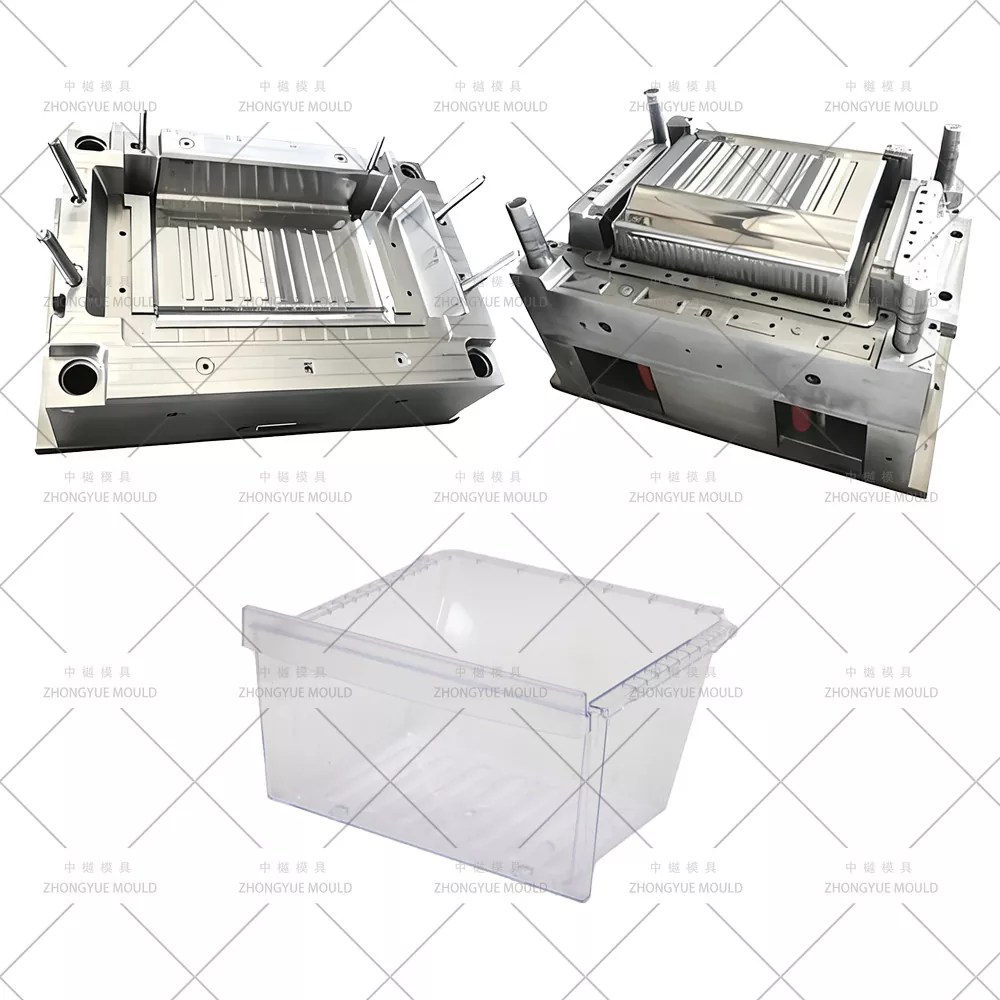
In this article, we explore how refrigerator moulds work, why they are essential for appliance manufacturers, and what factors should be considered when selecting a reliable mould supplier. Whether you are launching a new refrigerator production line or upgrading existing tooling, understanding refrigerator mould technology can help maximize productivity and long-term profitability.
Table of Contents
- What Is a Refrigerator Mould?
- Why Is Refrigerator Mould Important?
- Common Refrigerator Components Produced by Moulds
- How Does a Refrigerator Mould Work?
- Key Benefits of High-Quality Refrigerator Moulds
- Materials Used in Refrigerator Mould Manufacturing
- How to Choose the Right Refrigerator Mould Supplier
- Maintenance Tips for Longer Mould Life
- Refrigerator Mould Quality Comparison Table
- Future Trends in Refrigerator Mould Technology
- FAQ
What Is a Refrigerator Mould?
A refrigerator mould is a specialized industrial tool used to manufacture plastic components for refrigerators through injection moulding or thermoforming processes. These moulds are engineered to create precise shapes and dimensions while ensuring consistent quality throughout large-scale production runs.
Refrigerator moulds are commonly used to produce:
- Refrigerator inner liners
- Door liners
- Vegetable crisper drawers
- Door shelves and racks
- Freezer compartments
- Water dispenser components
- Decorative plastic panels
- Structural plastic assemblies
Since refrigerators are expected to operate reliably for many years, every plastic component must meet strict standards for dimensional accuracy, durability, and appearance. The mould itself plays a vital role in achieving these requirements.
Why Is Refrigerator Mould Important?
The quality of a refrigerator mould directly impacts manufacturing efficiency and final product performance. Even minor imperfections in mould design can lead to defects, assembly issues, increased material waste, and higher production costs.
Manufacturers rely on precision moulds because they help:
- Maintain consistent product dimensions
- Reduce production downtime
- Improve assembly accuracy
- Minimize material waste
- Enhance product appearance
- Extend mould service life
- Increase overall production capacity
For large appliance manufacturers, even a small improvement in mould performance can result in significant annual cost savings.
Common Refrigerator Components Produced by Moulds
| Component | Function | Production Method |
|---|---|---|
| Inner Liner | Creates the internal storage structure | Vacuum Forming / Injection Moulding |
| Door Liner | Supports shelves and storage bins | Injection Moulding |
| Vegetable Drawer | Stores fruits and vegetables | Injection Moulding |
| Door Shelf | Provides additional storage | Injection Moulding |
| Freezer Drawer | Organizes frozen food | Injection Moulding |
| Decorative Panels | Enhances product appearance | Injection Moulding |
Each component requires a dedicated mould design optimized for material flow, cooling efficiency, and dimensional precision.
How Does a Refrigerator Mould Work?
Refrigerator moulds operate through a highly controlled manufacturing process. The objective is to transform raw plastic material into accurately shaped refrigerator components with minimal defects.
- Plastic resin is heated until it becomes molten.
- The molten material is injected into the mould cavity under high pressure.
- The mould cooling system rapidly removes heat.
- The plastic solidifies and takes the exact shape of the mould.
- The mould opens and ejector systems release the finished component.
- The cycle repeats continuously for mass production.
Advanced refrigerator moulds incorporate optimized cooling channels, precision gating systems, and high-quality steel structures to ensure stable production over hundreds of thousands or even millions of cycles.
Key Benefits of High-Quality Refrigerator Moulds
1. Superior Product Consistency
Precision machining ensures every component matches design specifications, reducing assembly issues and improving product reliability.
2. Faster Production Cycles
Efficient cooling systems reduce cycle times, allowing manufacturers to produce more units within the same operating period.
3. Reduced Manufacturing Costs
High-performance moulds minimize scrap rates, reduce maintenance requirements, and improve material utilization.
4. Enhanced Product Appearance
Smooth cavity surfaces create attractive finished products with minimal post-processing requirements.
5. Long Service Life
Properly engineered moulds can withstand extensive production cycles while maintaining dimensional stability.
Materials Used in Refrigerator Mould Manufacturing
The performance and durability of a refrigerator mould depend heavily on the steel selected during manufacturing.
| Mould Steel | Advantages | Application |
|---|---|---|
| P20 | Good machinability and cost efficiency | Medium-volume production |
| 718H | Improved hardness and durability | Large appliance moulds |
| NAK80 | Excellent polishing capability | Visible cosmetic parts |
| H13 | High wear resistance | Long production runs |
| S136 | Excellent corrosion resistance | Premium mould applications |
Selecting the right mould steel helps manufacturers balance performance, lifespan, and production costs.
How to Choose the Right Refrigerator Mould Supplier
Choosing a mould supplier is a strategic decision that affects product quality and manufacturing efficiency for years to come.
Consider the following factors:
- Industry experience in appliance mould manufacturing
- Engineering and design capabilities
- Advanced CNC machining equipment
- Quality control procedures
- Mould testing capabilities
- After-sales technical support
- Global project experience
- Delivery reliability
Taizhou Zhongyue Mould Co.,Ltd. specializes in developing customized refrigerator mould solutions for appliance manufacturers worldwide. Through continuous innovation, precision manufacturing, and strict quality management, the company helps customers achieve stable production and consistent product quality.
Maintenance Tips for Longer Mould Life
Proper maintenance significantly extends mould lifespan and reduces unexpected downtime.
- Clean mould cavities regularly
- Inspect cooling channels for blockages
- Lubricate moving components
- Monitor wear on ejector pins
- Check alignment systems frequently
- Store moulds in controlled environments
- Perform preventive maintenance schedules
Consistent maintenance helps preserve dimensional accuracy and maintains production efficiency throughout the mould's lifecycle.
Refrigerator Mould Quality Comparison Table
| Feature | Standard Mould | High-Precision Refrigerator Mould |
|---|---|---|
| Dimensional Accuracy | Moderate | Excellent |
| Cycle Time | Longer | Shorter |
| Product Consistency | Average | High |
| Maintenance Frequency | Higher | Lower |
| Mould Life | Medium | Long |
| Production Efficiency | Standard | Optimized |
Investing in a high-quality refrigerator mould often results in lower total ownership costs despite higher initial tooling investment.
Future Trends in Refrigerator Mould Technology
As refrigerator designs continue to evolve, mould technology is advancing rapidly to meet higher performance expectations.
- Advanced simulation-driven mould design
- Improved cooling channel technologies
- Higher-precision CNC machining
- Automation-compatible mould systems
- Smart monitoring and predictive maintenance
- Enhanced energy-efficient production processes
Manufacturers adopting these innovations can achieve better product quality, faster production cycles, and stronger competitiveness in the appliance market.
FAQ
Q1: What is the primary purpose of a refrigerator mould?
A refrigerator mould is used to manufacture precise plastic components required for refrigerator assembly, ensuring consistency, efficiency, and product quality.
Q2: What materials are commonly used in refrigerator mould construction?
Common materials include P20, 718H, NAK80, H13, and S136 mould steels, depending on production requirements and durability expectations.
Q3: How long can a refrigerator mould last?
With proper maintenance and high-quality materials, a refrigerator mould can operate for hundreds of thousands to millions of production cycles.
Q4: Why is cooling system design important in refrigerator moulds?
Efficient cooling reduces cycle times, improves dimensional stability, and increases overall manufacturing productivity.
Q5: How can manufacturers reduce mould maintenance costs?
Regular inspection, cleaning, lubrication, and preventive maintenance programs help minimize wear and extend mould service life.
Conclusion
Refrigerator moulds are the foundation of efficient refrigerator manufacturing. They directly influence product consistency, production speed, material utilization, and long-term operational costs. By investing in precision-engineered moulds and partnering with experienced manufacturers, appliance producers can achieve higher quality standards while maintaining competitive production efficiency.
As a professional mould manufacturer, Taizhou Zhongyue Mould Co.,Ltd. is committed to providing reliable, high-performance refrigerator mould solutions tailored to the evolving needs of global appliance manufacturers. Whether you require custom mould development, production optimization, or technical consultation, our experienced team is ready to support your project.
Looking for a dependable refrigerator mould partner? Contact us today to discuss your project requirements and discover how Taizhou Zhongyue Mould Co.,Ltd. can help you improve production efficiency, reduce costs, and achieve outstanding product quality.