How Does a Pipe Fitting Tee Work?
2026-01-21
Pipe Fitting Tees are fundamental components in piping systems, providing a method to split or combine flow efficiently. Widely used in industrial, commercial, and residential piping applications, they ensure proper distribution of fluids or gases while maintaining system integrity. This article explores the functionality, types, installation tips, and maintenance of Pipe Fitting Tees to help customers make informed decisions and solve common piping challenges.
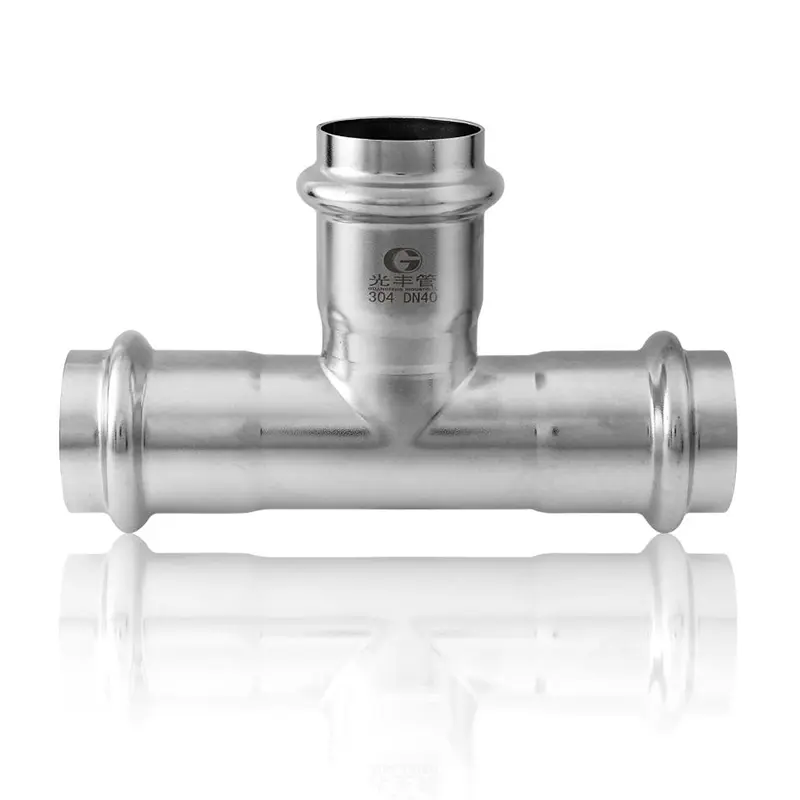
Table of Contents
- Pipe Fitting Tee Overview
- Types of Pipe Fitting Tees
- Applications in Piping Systems
- Installation Guidelines
- Product Parameters
- Maintenance Tips
- Frequently Asked Questions
- Conclusion & Contact
Pipe Fitting Tee Overview
A Pipe Fitting Tee is a T-shaped connector that allows the redirection or combination of fluid flow in a piping system. It is designed with one inlet and two outlets (or vice versa), forming a 90-degree angle connection. Constructed from high-quality materials like carbon steel, stainless steel, or alloy, the Tee fitting is robust, corrosion-resistant, and suitable for high-pressure systems.
- Facilitates branching of piping networks
- Ensures smooth fluid or gas flow
- Compatible with multiple pipe diameters and materials
- Available in various end connections: threaded, welded, or socketed
Types of Pipe Fitting Tees
Understanding the different types of Pipe Fitting Tees is crucial for selecting the correct fitting for any system. Below are the main categories:
| Type | Description | Common Use |
|---|---|---|
| Equal Tee | All three branches have the same diameter | Standard fluid distribution in pipelines |
| Reducing Tee | The branch outlet has a smaller diameter than the main pipe | Connecting pipes of different sizes |
| Threaded Tee | Fitted with internal or external threads for easy assembly | Low-pressure or temporary systems |
| Welded Tee | Designed to be welded for high-strength connections | High-pressure or permanent systems |
Applications in Piping Systems
Pipe Fitting Tees are versatile and used in various industries. Key applications include:
- Water supply networks in residential and commercial buildings
- Oil and gas pipelines for branching and flow control
- Chemical plants and process industries requiring corrosion-resistant fittings
- HVAC systems for distributing heating or cooling fluids
- Irrigation systems for efficient water management
Installation Guidelines
Correct installation ensures optimal performance and prevents leaks or system failures. Follow these best practices:
- Verify pipe dimensions and Tee fitting size before installation
- Ensure threads or welding surfaces are clean and free of debris
- Apply appropriate sealing compounds or Teflon tape for threaded connections
- Use proper welding techniques for welded Tees to avoid stress points
- Check alignment with the main pipeline to prevent unnecessary stress on joints
Product Parameters
Key specifications to consider when selecting a Pipe Fitting Tee include:
| Parameter | Specification |
|---|---|
| Material | Carbon Steel, Stainless Steel, Alloy Steel |
| Size Range | 1/2" to 24" (DN15–DN600) |
| End Connections | Threaded, Butt-Welded, Socket-Weld |
| Pressure Rating | 150 PSI to 2500 PSI |
| Temperature Range | -29°C to 425°C (-20°F to 800°F) |
| Standards | ASME B16.9, ASTM A234, ISO 9001 |
Maintenance Tips
Proper maintenance ensures the longevity of Pipe Fitting Tees and prevents operational disruptions. Recommendations include:
- Regular inspection for corrosion or cracks
- Cleaning internal surfaces to avoid sediment build-up
- Retightening threaded connections periodically
- Replacing damaged or worn Tees promptly
- Monitoring pressure and temperature to prevent exceeding rated limits
Frequently Asked Questions
- Q1: What is the difference between an equal and reducing Tee?
- A: An equal Tee has all three branches of the same diameter, suitable for uniform flow. A reducing Tee has a smaller branch to connect pipes of different diameters, allowing controlled flow distribution.
- Q2: Can Pipe Fitting Tees handle high-pressure systems?
- A: Yes, welded or alloy steel Tees are designed to withstand high-pressure applications, with ratings up to 2500 PSI depending on material and standards compliance.
- Q3: How do I prevent leaks in threaded Tees?
- A: Proper use of thread sealants, Teflon tape, and ensuring threads are clean and undamaged will minimize the risk of leaks in threaded Tee connections.
- Q4: What industries commonly use Pipe Fitting Tees?
- A: They are used in water supply, oil and gas, chemical processing, HVAC, and irrigation systems, making them versatile components across multiple sectors.
Conclusion & Contact
Pipe Fitting Tees play a critical role in fluid and gas distribution within piping systems. Selecting the correct type, size, and material ensures optimal system efficiency and longevity. Guangfeng Industrial offers a wide range of high-quality Pipe Fitting Tees designed for diverse applications, backed by professional support and reliable performance.
For detailed product inquiries or to request a quote, contact us today and ensure the success of your pipeline installations.