Article Summary
Passive piezoelectric buzzers are widely used sound-producing components in electronic equipment, industrial control systems, consumer products, and safety devices. Unlike active buzzers, passive piezoelectric buzzers require an external driving signal to generate sound, providing designers with greater flexibility in controlling frequency, tone, and application performance.
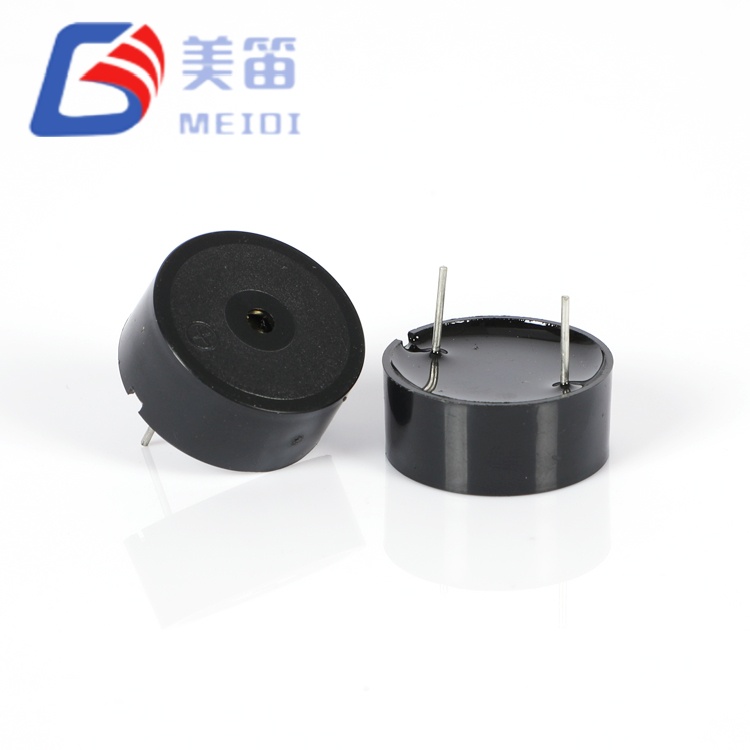
This article explains how passive piezoelectric buzzers work, their internal structure, key advantages, common applications, and how to select the right buzzer for different projects. By understanding the working principles and technical considerations, engineers and buyers can avoid common selection problems, improve product reliability, and achieve better acoustic performance. MEIDI provides professional passive piezoelectric buzzer solutions designed to meet the requirements of various electronic applications.
1. Overview of Passive Piezoelectric Buzzer
A passive piezoelectric buzzer is an electronic sound component that converts electrical signals into mechanical vibration and then produces audible sound waves. It does not contain an internal oscillation circuit, meaning it depends on an external control circuit to provide the required frequency signal.
Compared with traditional electromagnetic sound devices, passive piezoelectric buzzers offer advantages such as low power consumption, compact size, stable performance, and long service life. These features make them an important choice for modern electronic products where space efficiency and reliability are critical.
MEIDI develops and manufactures passive piezoelectric buzzer products that support different voltage levels, frequencies, sizes, and application requirements. These solutions help customers achieve efficient sound alerts while maintaining excellent product design flexibility.
2. How Does a Passive Piezoelectric Buzzer Work?
The working principle of a passive piezoelectric buzzer is based on the piezoelectric effect. Certain ceramic materials can produce mechanical deformation when an electrical voltage is applied. This physical movement creates vibration, which generates sound through the surrounding air.
The operating process can be divided into several steps:
-
Electrical Signal Input: The external circuit sends an alternating voltage signal to the buzzer.
-
Piezoelectric Material Response: The piezoelectric ceramic element expands and contracts according to the electrical frequency.
-
Mechanical Vibration Generation: The vibration plate moves rapidly and creates sound pressure waves.
-
Sound Output: The generated acoustic signal is transmitted through the buzzer housing and becomes audible sound.
Because the sound frequency is controlled externally, engineers can adjust the tone and melody according to system requirements. This makes passive piezoelectric buzzers suitable for applications requiring customized sound patterns.
3. Internal Structure and Key Components
Understanding the internal structure of a passive piezoelectric buzzer helps engineers evaluate product quality and performance. A typical passive piezoelectric buzzer consists of several important components.
|
Component
|
Function
|
|
Piezoelectric Ceramic Element
|
Converts electrical energy into mechanical vibration.
|
|
Metal Diaphragm
|
Amplifies vibration and improves sound output.
|
|
Housing
|
Protects internal components and supports acoustic performance.
|
|
Electrodes
|
Provide electrical connection for signal transmission.
|
|
Terminals
|
Allow easy installation into electronic circuits.
|
The quality of each component directly affects sound pressure level, frequency stability, durability, and environmental resistance. Professional manufacturing processes are essential to ensure consistent performance in large-scale production.
4. Main Advantages of Passive Piezoelectric Buzzers
Passive piezoelectric buzzers have become popular across many industries because of their unique technical benefits.
-
Low Power Consumption: Their efficient energy conversion design makes them suitable for battery-powered devices.
-
Compact Design: Small dimensions allow integration into space-limited electronic products.
-
Long Operating Life: The solid-state structure reduces mechanical wear and improves reliability.
-
Flexible Sound Control: External frequency control allows customized tones and alarm patterns.
-
Excellent Environmental Resistance: Many models can operate reliably under demanding conditions.
These advantages make passive piezoelectric buzzers an effective solution for manufacturers seeking dependable sound components.
5. Common Applications of Passive Piezoelectric Buzzers
Passive piezoelectric buzzers are used in a wide range of industries due to their versatility and reliable performance.
|
Industry
|
Application Examples
|
|
Consumer Electronics
|
Smart devices, remote controls, household appliances, and electronic toys.
|
|
Automotive
|
Warning systems, dashboard alerts, and parking assistance devices.
|
|
Medical Equipment
|
Patient monitoring systems and medical alarms.
|
|
Industrial Equipment
|
Machine status indicators and safety warning systems.
|
|
Security Systems
|
Alarm devices and access control equipment.
|
6. How to Choose the Right Passive Piezoelectric Buzzer
Selecting the correct passive piezoelectric buzzer requires careful consideration of several technical factors.
-
Operating Voltage: Ensure the buzzer matches the electrical requirements of the control system.
-
Frequency Range: Choose a frequency suitable for the desired sound effect.
-
Sound Pressure Level: Higher sound output may be necessary for industrial or outdoor applications.
-
Size Requirements: Confirm that the buzzer dimensions fit the product design.
-
Environmental Conditions: Consider temperature, humidity, and vibration resistance.
Working with an experienced supplier can reduce design risks and help customers find the most suitable product configuration.
7. Passive Piezoelectric Buzzer vs Active Buzzer
|
Feature
|
Passive Piezoelectric Buzzer
|
Active Buzzer
|
|
Control Method
|
Requires external frequency signal.
|
Contains built-in oscillator.
|
|
Sound Flexibility
|
Supports different tones and patterns.
|
Mainly produces fixed sound.
|
|
Circuit Design
|
Requires additional control capability.
|
Simpler connection design.
|
|
Application Range
|
Suitable for advanced electronic systems.
|
Suitable for simple alert applications.
|
8. Common Problems and Solutions
-
Low Sound Output: Check voltage supply, frequency settings, and installation conditions.
-
Unstable Sound: Verify whether the driving signal is consistent and within specifications.
-
Short Service Life: Select products with suitable environmental protection and quality certification.
-
Incorrect Tone: Adjust the driving frequency according to the required acoustic performance.
9. Frequently Asked Questions
Q1: What is the main difference between a passive piezoelectric buzzer and an active buzzer?
A passive piezoelectric buzzer requires an external signal source to create sound, while an active buzzer includes an internal oscillator and produces sound when powered directly.
Q2: Can a passive piezoelectric buzzer produce different sounds?
Yes. Because the frequency is controlled externally, passive piezoelectric buzzers can generate different tones, melodies, and alarm patterns.
Q3: Why are passive piezoelectric buzzers widely used in electronic products?
They offer low energy consumption, compact size, reliable performance, and flexible sound control, making them suitable for many electronic applications.
Q4: How does MEIDI support customers with passive piezoelectric buzzer solutions?
MEIDI provides professional buzzer manufacturing capabilities, customized product options, and reliable technical support to help customers meet different application requirements.
Conclusion
Passive piezoelectric buzzers play an important role in modern electronic systems by providing efficient, reliable, and flexible sound solutions. Their unique operating principle, low power requirements, and wide application range make them suitable for consumer electronics, industrial equipment, automotive systems, and many other fields.
Choosing a trusted manufacturer is essential for achieving consistent quality and long-term performance. MEIDI continues to provide high-quality passive piezoelectric buzzer products designed to support innovative electronic applications. For professional solutions, customized requirements, and product support, please contact us today.


