How Does a Motion Module Improve Automated Systems?
2026-03-30
Abstract: Motion modules have revolutionized the automation industry, offering precise control over movement, enhancing productivity, and reducing operational costs. In this article, we explore how motion modules work, their applications, advantages, and considerations for selecting the right module for your needs. Whether you are an engineer, system integrator, or decision-maker, this guide will help you understand how to leverage motion modules for optimized performance.
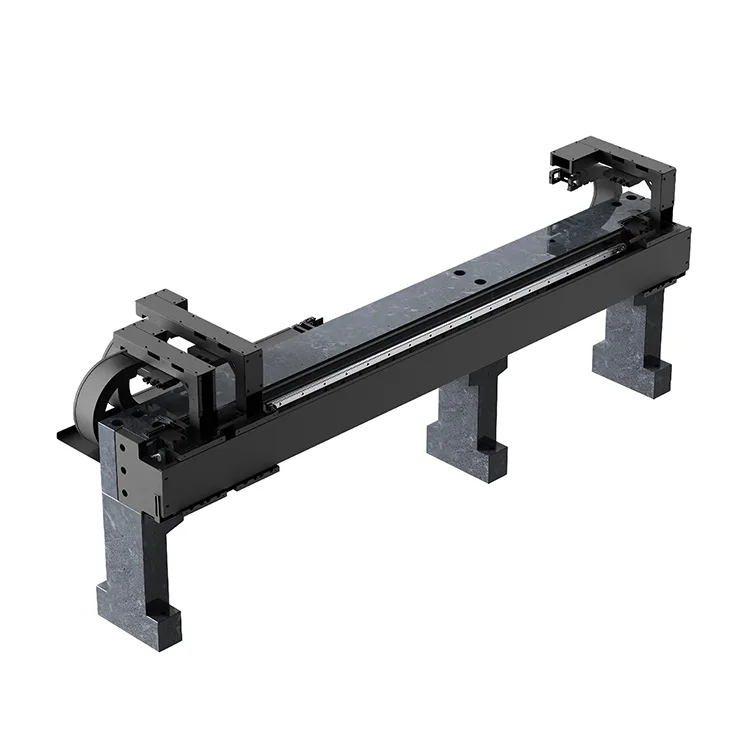
Table of Contents
- Introduction to Motion Modules
- Key Components of a Motion Module
- How Motion Modules Work
- Applications Across Industries
- Advantages of Using Motion Modules
- Selecting the Right Motion Module
- Frequently Asked Questions
Introduction to Motion Modules
Motion modules are integrated systems designed to control linear or rotary movements in automated machinery. They combine motors, drives, sensors, and controllers into a compact unit to deliver accurate and repeatable motion. By providing precise positioning and speed control, motion modules reduce mechanical complexity and increase operational efficiency.
In modern automation, motion modules play a pivotal role in industries such as robotics, packaging, CNC machining, and semiconductor manufacturing. Companies like Suzhou Deaote specialize in developing advanced motion modules tailored for high-performance requirements.
Key Components of a Motion Module
Understanding the components helps users choose the right module for their application. A typical motion module includes:
- Motor: Drives the motion, can be stepper, servo, or linear motor.
- Controller: Manages motion profiles, position, and speed.
- Feedback Sensor: Encoders or resolvers provide accurate position data.
- Drive Electronics: Converts control signals into motor power.
- Mechanical Interface: Connects module to the machinery for load transfer.
| Component | Function | Example |
|---|---|---|
| Motor | Generates movement | Brushless Servo Motor |
| Controller | Coordinates motion profile | PLC or Embedded Controller |
| Feedback Sensor | Provides position & speed data | Optical Encoder |
| Drive Electronics | Power conversion & regulation | Servo Drive Module |
| Mechanical Interface | Connects to system load | Linear Slide or Coupling |
How Motion Modules Work
Motion modules operate by translating electronic commands into mechanical movement. The process typically involves:
- The controller receives a command for speed, position, or torque.
- The drive electronics adjust voltage and current to the motor accordingly.
- The motor moves, and feedback sensors monitor actual position and speed.
- The controller continuously compares desired vs. actual position, making adjustments in real-time for precision control.
This closed-loop system ensures accurate positioning and smooth movement, which is essential in high-precision applications.
Applications Across Industries
Motion modules have become indispensable in various industries. Some common applications include:
- Robotics: Enabling precise arm movement for assembly lines.
- Packaging: Controlling conveyor belts, pick-and-place machines, and filling systems.
- CNC Machining: Offering high-speed, accurate tool positioning.
- Semiconductor Manufacturing: Managing wafer handling and processing equipment.
- Medical Equipment: Operating diagnostic and laboratory instruments requiring exact motion control.
Advantages of Using Motion Modules
Implementing motion modules brings multiple benefits:
- Precision: Accurate movement reduces errors and waste.
- Compact Design: Combines multiple functions in a single module.
- Flexibility: Adaptable to different tasks with minimal mechanical adjustments.
- Reduced Maintenance: Integrated systems reduce wear points.
- Faster Deployment: Pre-assembled modules shorten installation time.
Selecting the Right Motion Module
When choosing a motion module, consider these critical factors:
| Factor | Consideration | Impact |
|---|---|---|
| Load Capacity | Weight and type of load | Ensures module can handle operational requirements |
| Speed & Acceleration | Required motion dynamics | Affects production cycle times |
| Precision & Repeatability | Tolerance requirements | Critical for high-accuracy tasks |
| Environmental Conditions | Temperature, dust, moisture | Determines module protection level |
| Integration | Compatibility with existing control systems | Simplifies installation and operation |
Frequently Asked Questions
1. What is the difference between a servo motor and a stepper motor in motion modules?
Servo motors provide closed-loop control with higher precision and dynamic response, while stepper motors operate open-loop, making them simpler but less precise for high-speed or heavy-load applications.
2. Can motion modules be used in harsh environments?
Yes, motion modules can be designed with protective enclosures and materials to operate in dust, moisture, or extreme temperatures, depending on the industrial application.
3. How does a feedback sensor improve motion accuracy?
Feedback sensors continuously monitor the position and speed of the motor, allowing the controller to correct any deviations from the desired motion, resulting in high accuracy and repeatability.
4. Are motion modules compatible with PLC systems?
Most modern motion modules offer standard communication protocols such as EtherCAT, Modbus, or CANopen, making integration with PLC or other control systems straightforward.
Motion modules are transforming the way industries automate processes, combining precision, reliability, and efficiency. If you are looking to upgrade your systems, Suzhou Deaote offers advanced motion modules tailored to your needs. Contact us today to discover how our solutions can optimize your production line.