How Does a Heavy Door Concealed Pin Hinge Support Modern Architectural Doors?
2025-12-19
Article Abstract
Heavy Door Concealed Pin Hinges have become a defining component in contemporary architectural door systems, particularly where high load capacity, durability, and clean visual lines are required. This article provides a comprehensive examination of how these hinges function, how they are specified, and why they are increasingly adopted in commercial, industrial, and high-end residential projects. The discussion integrates technical parameters, application scenarios, installation logic, and market development, while addressing common professional questions in a structured Q&A format.
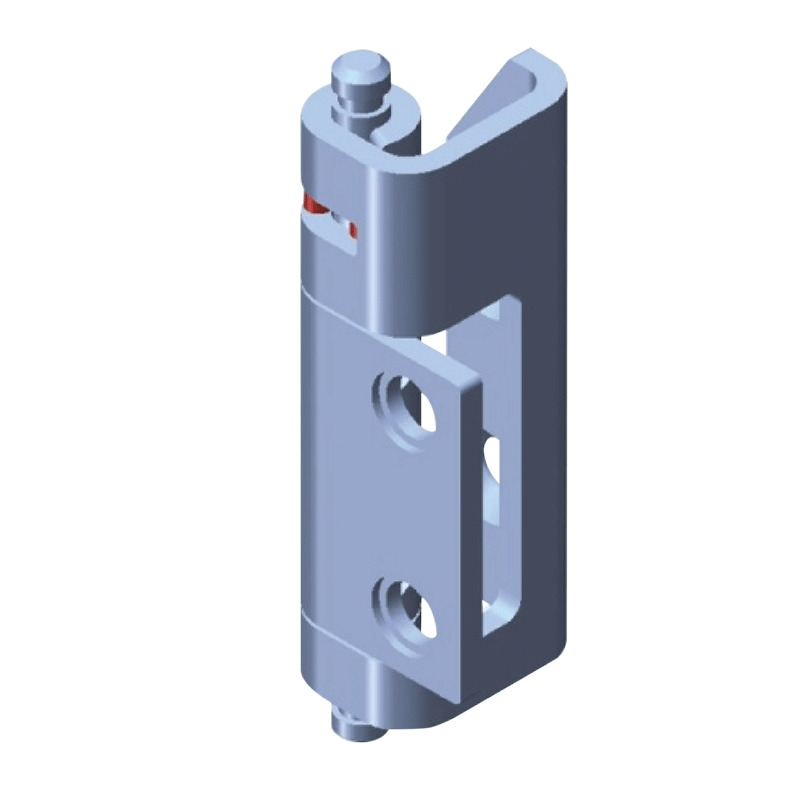
Table of Contents
- 1. Product Overview and Core Application Logic
- 2. Technical Parameters and Structural Design Analysis
- 3. Common Questions About Heavy Door Concealed Pin Hinges
- 4. Industry Outlook, Specification Trends, and Brand Perspective
Content Outline
- Definition and operating principle of concealed pin hinge systems
- Key mechanical parameters affecting performance and lifecycle
- Installation compatibility with heavy and oversized doors
- Professional FAQs addressing real-world project concerns
- Future adoption trends and manufacturing considerations
1. Product Overview and Core Application Logic
A Heavy Door Concealed Pin Hinge is a precision-engineered door hardware component designed to support substantial door weights while remaining completely hidden within the door leaf and frame. Unlike surface-mounted hinges, the concealed pin hinge integrates into routed cavities, allowing the door to pivot smoothly around a hardened internal pin mechanism.
The central purpose of this hinge category is to reconcile two historically conflicting requirements: high structural load-bearing capacity and minimal visual intrusion. In architectural environments where aesthetics, alignment accuracy, and long-term durability are non-negotiable, concealed pin hinges serve as a structural solution rather than a decorative accessory.
This article focuses on how Heavy Door Concealed Pin Hinges are specified, how their internal geometry manages stress distribution, and why they are preferred for doors exceeding standard residential weight thresholds.
2. Technical Parameters and Structural Design Analysis
The performance of a Heavy Door Concealed Pin Hinge is governed by its material composition, internal pin configuration, bearing surfaces, and dimensional tolerances. These elements collectively determine the hinge’s ability to support static loads, dynamic movement, and repeated opening cycles over extended service life.
| Parameter | Typical Specification Range | Engineering Significance |
|---|---|---|
| Load Capacity | 120 kg – 300 kg per door | Defines suitability for solid core, metal, or fire-rated doors |
| Material | Stainless steel / Alloy steel | Ensures resistance to deformation and fatigue |
| Pin Structure | Hardened steel concealed pin | Central axis for smooth rotation and load transfer |
| Opening Angle | 120° – 180° | Supports accessibility and spatial planning requirements |
| Cycle Testing | ≥ 200,000 cycles | Validates durability under frequent use conditions |
From a mechanical perspective, the concealed pin operates as a vertical load-bearing column combined with lateral shear resistance. The hinge distributes door weight along the internal pin and transfers stress into both the door leaf and the frame, reducing localized wear compared to traditional butt hinges.
Precision machining is essential, as minimal tolerance deviation can result in binding, uneven door gaps, or accelerated wear. As a result, concealed pin hinges are typically specified for projects where door alignment, acoustic sealing, and long-term dimensional stability are critical.
3. Common Questions About Heavy Door Concealed Pin Hinges
How does a concealed pin hinge support heavier doors than standard concealed hinges?
A Heavy Door Concealed Pin Hinge uses a reinforced internal pin and thicker bearing walls to distribute load vertically rather than relying on surface-mounted fasteners. This structural approach allows higher load ratings without increasing external hinge size.
How is door alignment maintained over time with concealed pin hinges?
Alignment stability is achieved through precision-fit pin geometry and hardened bearing surfaces that resist deformation. When properly installed, the hinge maintains consistent pivot alignment even after extensive cycle use.
How should installers prepare the door and frame for concealed pin hinges?
Installation requires accurately routed cavities in both the door leaf and frame, aligned to the hinge’s vertical axis. CNC routing or dedicated jigs are commonly used to ensure positional accuracy and load symmetry.
How do concealed pin hinges perform in high-traffic environments?
When specified with appropriate load ratings and materials, these hinges perform reliably in commercial buildings, hospitals, and public facilities, where frequent opening cycles and heavy doors are standard conditions.
4. Industry Outlook, Specification Trends, and Brand Perspective
The global door hardware industry continues to move toward concealed, integrated solutions that enhance architectural clarity while meeting stricter performance standards. Heavy Door Concealed Pin Hinges align with this trajectory by offering a balance of mechanical strength and design discretion.
Specification trends indicate increased demand for hinges compatible with fire-rated doors, acoustic assemblies, and oversized panels. Engineers and architects are prioritizing hardware systems that contribute to overall door performance rather than functioning as isolated components.
Manufacturers are responding by refining internal pin metallurgy, improving surface treatments, and expanding compatibility with diverse door materials, including steel, aluminum, and engineered wood composites.
Within this evolving landscape, COFIY has positioned its concealed pin hinge solutions to meet professional expectations for reliability, dimensional accuracy, and long-term service performance. By aligning manufacturing processes with international hardware standards, the brand supports a wide range of architectural and industrial door applications.
For project-specific guidance, technical documentation, or specification support related to Heavy Door Concealed Pin Hinges, interested parties are encouraged to contact us to discuss application requirements and customization options.