How Does a Four-Way Stainless Steel Equal Cross Compare to Carbon Steel in Corrosive Environments
2026-07-27
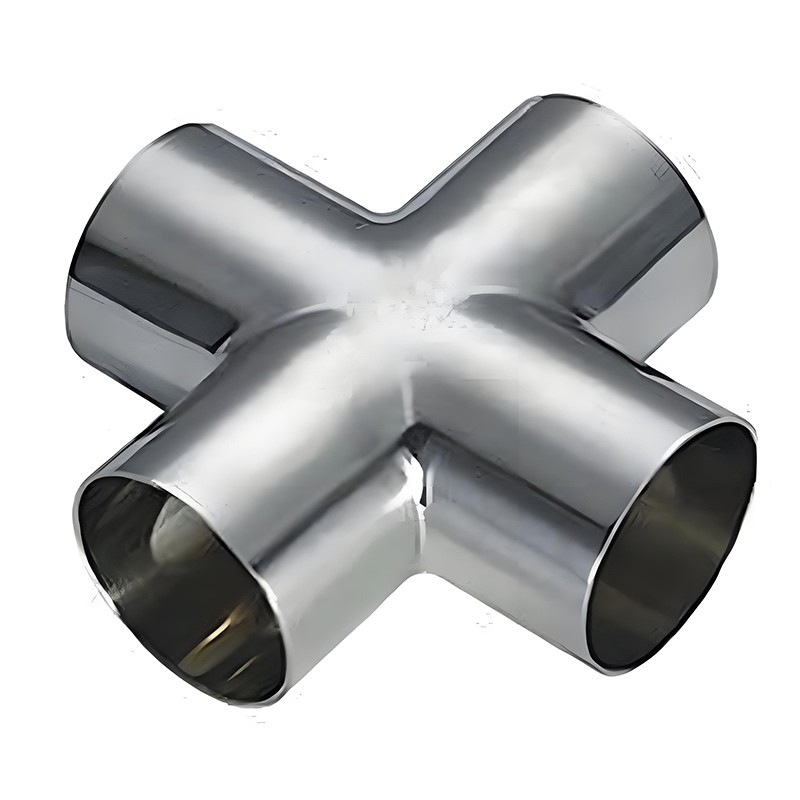
When engineers specify pipe fittings for aggressive media, the choice between a Four-Way Stainless Steel Equal Cross and its carbon steel counterpart often determines service life, maintenance costs, and system safety. At HengDi, we have tested both materials across pH ranges, chloride concentrations, and elevated temperatures. This comparison reveals why the Four-Way Stainless Steel Equal Cross consistently outperforms carbon steel in corrosive settings—yet carbon steel remains in use for specific, less demanding applications.
Corrosion Mechanisms: The Scientific Divide
| Factor | Four-Way Stainless Steel Equal Cross (HengDi) | Carbon Steel Equal Cross |
|---|---|---|
| Primary corrosion type | Pitting & crevice (passive film breakdown) | Uniform rust & galvanic attack |
| Chloride tolerance (ppm) | Up to 1,000–2,000 (304) / 10,000+ (316) | < 150 ppm (requires coating) |
| Temperature limit (oxidizing acids) | 60–80°C (continuous) | 40–50°C (with inhibitors) |
| Maintenance interval (offshore) | 5–8 years | 6–18 months |
| Initial cost ratio | 2.5–3.5× carbon steel | Baseline |
The passive chromium-oxide layer on a Four-Way Stainless Steel Equal Cross self-repairs when scratched, provided oxygen is present. Carbon steel relies entirely on external coatings (galvanization, epoxy, or paint), which inevitably develop holiday defects. Once a coating fails, crevice corrosion under gaskets accelerates rapidly in carbon steel—a failure mode rarely seen in HengDi’s stainless variants.
Real-World Performance in Key Industries
-
Chemical processing: 316L Four-Way Stainless Steel Equal Cross handles sulfuric acid (dilute) and caustic soda with <0.1 mm/year corrosion rate. Carbon steel loses 1.5–2.0 mm/year under identical conditions.
-
Marine / desalination: HengDi’s duplex stainless crosses resist chloride stress-corrosion cracking up to 120°C. Carbon steel requires frequent wash-downs and sacrificial anodes.
-
Food & beverage: The smooth bore of a Four-Way Stainless Steel Equal Cross prevents bacterial biofilm; carbon steel is prohibited by FDA and EHEDG standards due to rust contamination risks.
-
Oil & gas downstream: Sour service (H₂S) demands stainless or nickel-alloy crosses. Carbon steel suffers sulfide-stress cracking (SSC) within weeks unless specially treated.
Total Cost of Ownership (5-Year Horizon)
| Cost Component | Four-Way Stainless Steel Equal Cross | Carbon Steel (coated) |
|---|---|---|
| Purchase price | $380 | $140 |
| Installation (welding + inspection) | $120 | $180 (coating touch-up) |
| Annual inspection | $40 | $120 (thickness checks) |
| Unplanned downtime (avg.) | 0.5 days | 4.5 days |
| Replacement within 5 years | 0% probability | 65% probability |
| Total 5-year cost | $600–$700 | $900–$1,100 |
Despite higher upfront cost, the Four-Way Stainless Steel Equal Cross from HengDi delivers net savings of 30–40% over five years in aggressive environments. For neutral or dry indoor service (e.g., HVAC water loops), carbon steel remains economically viable.
Frequently Asked Questions (FAQ)
Q1: Can a Four-Way Stainless Steel Equal Cross be directly welded to carbon steel pipe without galvanic corrosion risk?
A: Direct welding creates a bimetallic couple. In the presence of an electrolyte (moisture or process fluid), galvanic corrosion attacks the carbon steel side preferentially. HengDi recommends using an isolating flange kit (dielectric union) or a transition joint with Inconel cladding. If welding is unavoidable, apply a heavy-duty epoxy coating on the carbon steel within 150 mm of the weld and install a sacrificial zinc anode. For permanent installations, avoid this configuration entirely—specify all-stainless branch lines.
Q2: What is the maximum allowable chloride concentration for a 304-grade Four-Way Stainless Steel Equal Cross in stagnant seawater?
A: For stagnant or low-flow seawater (chlorides > 10,000 ppm), 304 stainless is not recommended—pitting occurs within 30–60 days at ambient temperature. HengDi supplies 316L (2.5–3.0% Mo) which tolerates up to 2,000 ppm in stagnant conditions and 10,000+ ppm in flowing service (velocity > 1.5 m/s). For dead-leg zones, upgrade to duplex 2205 (25% Cr, 5% Ni, 3% Mo), which resists pitting up to 40,000 ppm chlorides at 80°C. Always consult HengDi’s corrosion charts for your specific temperature and flow regime.
Q3: How often should I inspect a Four-Way Stainless Steel Equal Cross in a mixed-acid service (H₂SO₄ + HCl)?
A: Mixed acids dramatically lower the passivation threshold. HengDi advises ultrasonic thickness testing every 6 months for the first year, then annually if corrosion rate stays below 0.15 mm/year. Visual inspection for orange/brown staining (early pitting) should be monthly. In addition, monitor the redox potential (ORP) of the process—values below +200 mV indicate reducing conditions that destabilize the passive film. For such aggressive duty, we strongly recommend upgrading to super-austenitic (e.g., 904L) or using a lined carbon steel cross as a lower-cost sacrificial alternative, with a planned replacement every 18 months.
Application Selection Matrix (Quick Guide)
| Environment | Recommendation | Grade | Expected Life |
|---|---|---|---|
| Fresh water / glycol (closed loop) | Carbon steel (coated) | ASTM A234 | 10+ years |
| Sea water (pier side, flowing) | Four-Way Stainless Steel Equal Cross | 316L / Duplex | 8–12 years |
| Caustic soda (50%, 60°C) | Four-Way Stainless Steel Equal Cross | 304L | 6–8 years |
| Nitric acid (20%, ambient) | Four-Way Stainless Steel Equal Cross | 304L | 10+ years |
| Sour crude (H₂S + CO₂) | Four-Way Stainless Steel Equal Cross | 825 alloy (or clad) | 5–7 years |
| Dry air / instrument air | Carbon steel (uncoated) | ASTM A106 | 15+ years |
Final Verdict
For any environment where moisture, salts, acids, or chlorides are present, the Four-Way Stainless Steel Equal Cross from HengDi offers superior reliability, lower lifetime cost, and predictable corrosion behavior. Carbon steel belongs only in clean, dry, or inhibitor-treated systems where periodic replacement is acceptable. When safety, uptime, and regulatory compliance matter—choose stainless.
HengDi provides full material certifications, NDT reports, and custom sizing for all Four-Way Stainless Steel Equal Cross products. Our engineering team supports material selection based on your exact process parameters.
📞 Contact us today for a free corrosion assessment and sample testing. Email or visit our technical portal to submit your P&ID and operating conditions—we respond within 4 business hours with a graded recommendation. Let HengDi secure your piping integrity for the next decade.