

How Does a Flower Pot Mould Improve Production Efficiency and Product Quality?
2026-06-09
Flower pots are essential products in the gardening, landscaping, nursery, and home decoration industries. As market demand continues to grow, manufacturers are seeking reliable and cost-effective production solutions that can ensure consistent quality while reducing manufacturing costs. One of the most critical factors behind successful flower pot production is the quality of the Flower Pot Mould.
A well-designed mould not only improves production efficiency but also guarantees dimensional accuracy, surface finish, durability, and long-term profitability. Whether producing small nursery pots, decorative planters, hanging baskets, or large outdoor containers, selecting the right mould is a key investment for manufacturers aiming to remain competitive.
Article Summary
This article explores how a Flower Pot Mould influences manufacturing efficiency, product quality, production costs, and business growth. You will learn about mould design considerations, material selection, common customer challenges, and the benefits of working with an experienced mould manufacturer.
Table of Contents
- What Is a Flower Pot Mould?
- Why Is a High-Quality Flower Pot Mould Important?
- Common Types of Flower Pot Moulds
- Materials Used in Flower Pot Mould Manufacturing
- Key Features of an Excellent Flower Pot Mould
- Common Challenges Faced by Manufacturers
- How the Right Mould Solves Production Problems
- Comparison of High-Quality and Low-Quality Moulds
- How to Choose the Right Flower Pot Mould Supplier
- Future Trends in Flower Pot Manufacturing
- Frequently Asked Questions
- Conclusion
What Is a Flower Pot Mould?
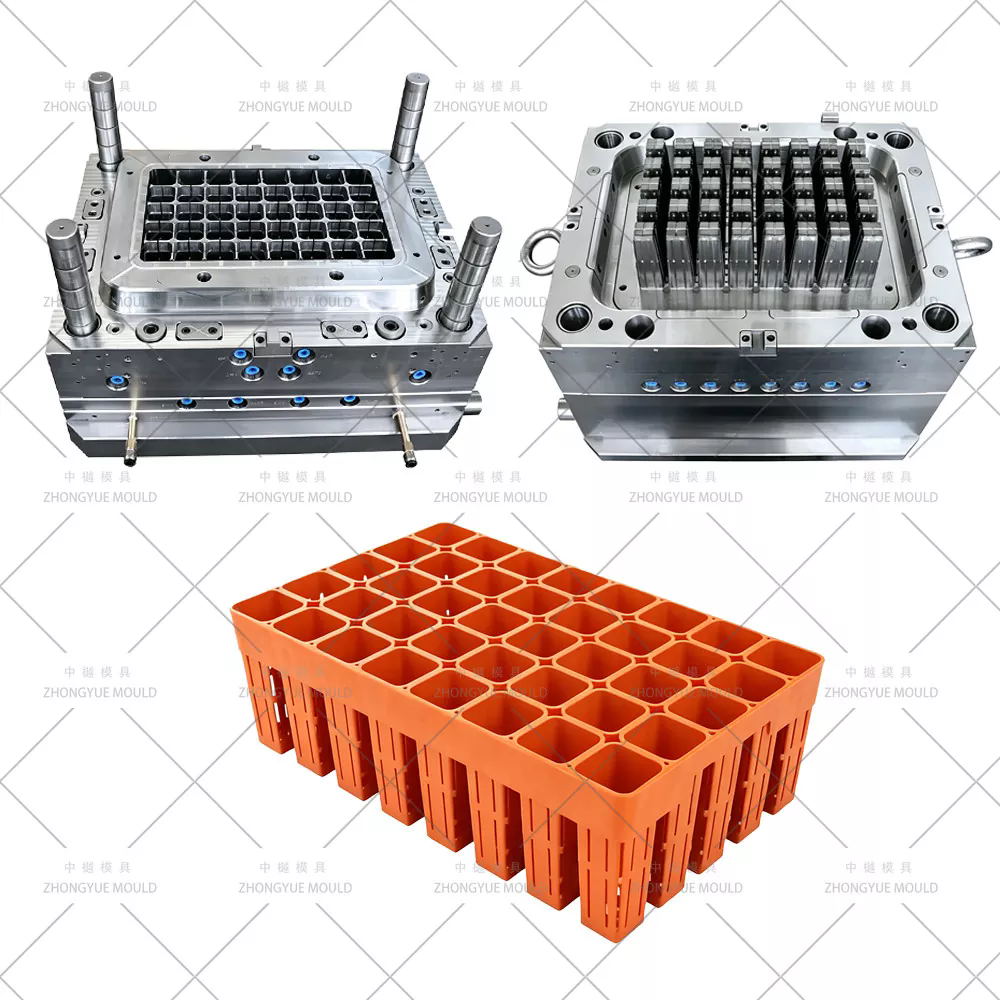
A Flower Pot Mould is a specialized injection mould used to manufacture plastic flower pots and planters in large quantities. The mould forms molten plastic into a specific shape, ensuring that every flower pot produced matches the required dimensions and design specifications.
Modern flower pot moulds can be customized for various shapes, sizes, textures, drainage systems, and decorative patterns. They are widely used in agricultural production, horticulture, commercial nurseries, and retail gardening markets.
The performance of the mould directly affects:
- Product appearance
- Production speed
- Material consumption
- Product consistency
- Mould lifespan
- Maintenance costs
Why Is a High-Quality Flower Pot Mould Important?
Many manufacturers focus primarily on injection machines while overlooking the importance of mould quality. In reality, the mould determines much of the final product's performance and production efficiency.
A high-quality Flower Pot Mould offers several significant advantages:
- Faster production cycles
- Reduced material waste
- Improved product consistency
- Longer mould service life
- Lower maintenance expenses
- Enhanced surface finish quality
- Higher customer satisfaction
When production volumes reach hundreds of thousands or even millions of units annually, even small improvements in mould performance can generate substantial cost savings.
Common Types of Flower Pot Moulds
Different market requirements demand different mould structures and designs.
| Mould Type | Application | Main Features |
|---|---|---|
| Round Pot Mould | Nursery and gardening pots | High production efficiency |
| Square Pot Mould | Commercial plant cultivation | Space-saving design |
| Decorative Planter Mould | Home and landscape markets | Complex textures and patterns |
| Hanging Basket Mould | Indoor and outdoor decoration | Special structural requirements |
| Large Planter Mould | Commercial landscaping | Heavy-duty construction |
| Multi-Cavity Pot Mould | Mass production | Higher productivity |
Each mould type requires specific engineering considerations to achieve optimal production results.
Materials Used in Flower Pot Mould Manufacturing
The material selected for mould manufacturing significantly impacts durability and performance.
Common mould steel options include:
- P20 Steel
- 718 Steel
- H13 Steel
- NAK80 Steel
- S136 Stainless Steel
The choice depends on:
- Production volume
- Plastic material type
- Expected mould lifespan
- Surface finish requirements
- Budget considerations
Premium mould steels provide better wear resistance, improved polishing capabilities, and longer service life.
Key Features of an Excellent Flower Pot Mould
A professionally engineered Flower Pot Mould should incorporate several critical design features.
| Feature | Benefit |
|---|---|
| Optimized Cooling System | Shorter cycle times |
| Precision Machining | Higher dimensional accuracy |
| Balanced Flow Design | Uniform filling performance |
| Efficient Ejection System | Reduced deformation risk |
| High-Quality Steel | Extended mould lifespan |
| Easy Maintenance Design | Reduced downtime |
These features collectively contribute to higher productivity and more stable manufacturing operations.
Common Challenges Faced by Manufacturers
Manufacturers frequently encounter various production challenges when using low-quality moulds.
- Product warping
- Uneven wall thickness
- Short mould lifespan
- Excessive flash formation
- Long production cycles
- High maintenance frequency
- Inconsistent product dimensions
- Poor surface appearance
These issues increase production costs and negatively impact customer satisfaction.
In highly competitive markets, even minor defects can result in significant financial losses and damaged business relationships.
How the Right Mould Solves Production Problems
Investing in a high-quality Flower Pot Mould addresses many operational challenges.
Key improvements include:
- Reduced rejection rates
- Improved product consistency
- Lower labor costs
- Shorter production cycles
- Enhanced product appearance
- More efficient material usage
- Higher overall equipment effectiveness
Modern mould engineering utilizes advanced CAD/CAM design technologies and precision CNC machining to ensure reliable performance throughout the mould's lifecycle.
As production efficiency improves, manufacturers can fulfill larger orders while maintaining quality standards.
Comparison of High-Quality and Low-Quality Moulds
| Factor | High-Quality Mould | Low-Quality Mould |
|---|---|---|
| Service Life | Long-term operation | Frequent repairs |
| Cycle Time | Shorter | Longer |
| Maintenance Cost | Lower | Higher |
| Product Consistency | Excellent | Variable |
| Material Waste | Minimal | Higher |
| Production Efficiency | High | Lower |
| Return on Investment | Higher | Lower |
Although premium moulds require greater initial investment, they often deliver significantly lower total production costs over time.
How to Choose the Right Flower Pot Mould Supplier
Selecting a mould supplier is a strategic decision that directly influences production success.
When evaluating suppliers, consider the following factors:
- Industry experience
- Engineering capabilities
- Mould design expertise
- Manufacturing equipment
- Quality control procedures
- After-sales service
- Project management support
- Customization capabilities
A reliable supplier should provide complete technical support from product design and mould development through testing and mass production.
Experienced manufacturers can also offer valuable recommendations to improve product structure, reduce production costs, and increase manufacturing efficiency.
Future Trends in Flower Pot Manufacturing
The flower pot industry continues to evolve as sustainability and efficiency become increasingly important.
Emerging trends include:
- Use of recycled plastic materials
- Lightweight flower pot designs
- Smart irrigation-compatible pots
- Eco-friendly manufacturing solutions
- Automated production systems
- Higher-cavity mould designs
- Advanced cooling technologies
Manufacturers who invest in advanced mould technology today will be better positioned to meet future market demands and maintain long-term competitiveness.
Frequently Asked Questions
Q1: How long does a Flower Pot Mould typically last?
The lifespan depends on steel quality, maintenance practices, and production volume. High-quality moulds can often produce hundreds of thousands or even millions of cycles.
Q2: Can a mould be customized for unique flower pot designs?
Yes. Professional mould manufacturers can create customized moulds based on drawings, samples, or specific market requirements.
Q3: Which plastic materials are commonly used for flower pots?
PP, PE, and recycled plastic materials are widely used due to their durability, cost-effectiveness, and weather resistance.
Q4: Why is cooling system design important?
An efficient cooling system reduces cycle time, improves dimensional stability, and increases overall productivity.
Q5: How can manufacturers reduce production costs?
Using a high-quality mould with optimized design, efficient cooling, and durable steel can significantly lower operational costs and reduce waste.
Conclusion
A high-performance Flower Pot Mould is far more than a production tool—it is a long-term investment that directly influences product quality, production efficiency, operating costs, and customer satisfaction. By selecting the right mould design, premium materials, and an experienced manufacturing partner, businesses can achieve greater productivity, improved profitability, and sustainable growth in an increasingly competitive marketplace.
Taizhou Zhongyue Mould Co.,Ltd. specializes in the design and manufacture of high-quality Flower Pot Mould solutions for customers worldwide. With extensive industry experience, advanced machining capabilities, and a commitment to precision engineering, the company provides customized mould solutions tailored to diverse production requirements.
If you are looking for a reliable Flower Pot Mould partner to improve production efficiency, reduce manufacturing costs, and enhance product quality, contact us today. Our professional team is ready to provide expert guidance, customized solutions, and prompt technical support to help your business succeed.
