How Does a DC Circuit Breaker Work?
2026-06-12
Abstract: DC circuit breakers are critical components in modern electrical systems, particularly in solar power, maritime applications, and industrial installations. Understanding their operation, types, and applications can help engineers and system designers improve safety, reliability, and efficiency. This article explores the principles of DC circuit breakers, their key advantages, installation considerations, and how CNKA provides tailored solutions, including ship-type customization, to meet unique client needs.
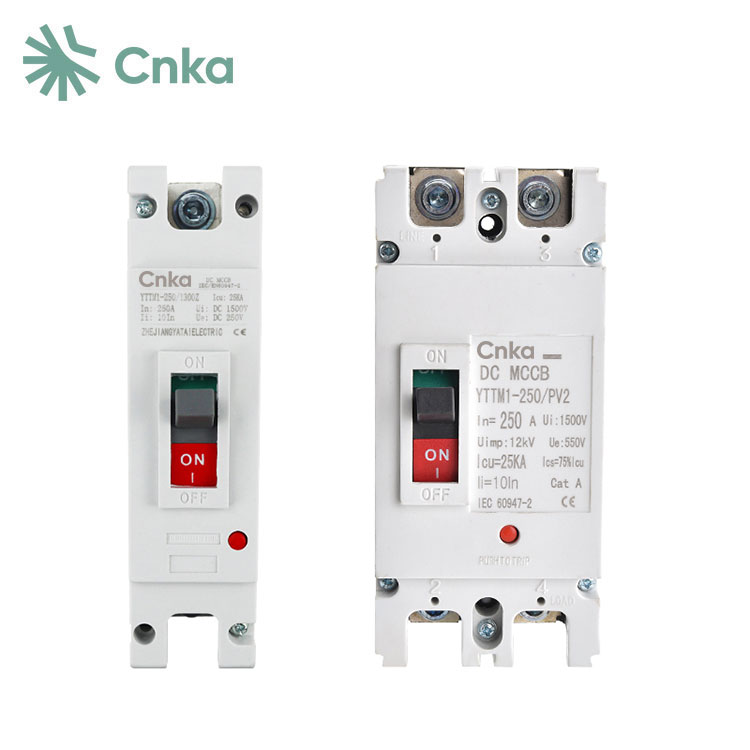
Table of Contents
- Introduction to DC Circuit Breakers
- Working Principle of a DC Circuit Breaker
- Types of DC Circuit Breakers
- Advantages of DC Circuit Breakers
- Applications in Various Industries
- Installation and Safety Considerations
- Frequently Asked Questions (FAQ)
- CNKA’s Customized DC Circuit Breaker Solutions
Introduction to DC Circuit Breakers
Direct Current (DC) circuit breakers are designed to protect DC electrical circuits from overloads, short circuits, and other fault conditions. Unlike AC breakers, DC breakers must handle continuous current flow in one direction, which makes arc suppression and rapid disconnection more challenging. With the rise of renewable energy, electric vehicles, and shipboard power systems, the demand for reliable DC circuit breakers has grown significantly.
- DC circuit breakers are essential for solar photovoltaic systems.
- They ensure the protection of battery storage and DC bus lines.
- Used in electric ships for safety and regulatory compliance.
Working Principle of a DC Circuit Breaker
The main function of a DC circuit breaker is to interrupt the flow of current in the event of a fault. The key elements include:
- Contacts: Open and close to control current flow.
- Arc Extinguishing Mechanism: Essential for DC because arcs can persist due to continuous current direction.
- Operating Mechanism: Manual, electromagnetic, or electronic triggering for rapid response.
When a fault occurs:
- The breaker detects overcurrent or short circuit conditions.
- The contacts separate, creating an arc.
- The arc is extinguished using magnetic blowout coils or arc chutes.
- Current flow stops, protecting the connected equipment.
Types of DC Circuit Breakers
DC circuit breakers can be classified based on their operating mechanism and application:
| Type | Characteristics | Common Applications |
|---|---|---|
| Electromechanical | Reliable, simple design, requires mechanical operation or spring mechanism. | Solar PV systems, small battery circuits |
| Electronic/Smart | High precision, remote monitoring, fast response, programmable trip curves. | Shipboard power systems, large industrial DC buses |
| Hybrid | Combination of mechanical and electronic systems for fast and reliable interruption. | Electric vehicles, renewable energy storage systems |
Advantages of DC Circuit Breakers
- High Safety: Protects personnel and equipment from overcurrent events.
- Fast Response: Rapid disconnection prevents damage to sensitive DC systems.
- Customizable: Supports ship-type or industrial-specific configurations.
- Longevity: Durable contacts and arc suppression extend service life.
Applications in Various Industries
DC circuit breakers are widely used in applications requiring reliable protection of DC networks:
- Solar Power Systems: Protection of PV arrays and battery banks.
- Maritime and Shipboard Systems: Ensures compliance with marine safety regulations.
- Industrial DC Buses: Prevents equipment damage in factories and data centers.
- Electric Vehicles: Protects battery management systems and traction circuits.
Installation and Safety Considerations
Proper installation ensures optimal performance and longevity:
- Locate breakers close to the source or load for effective protection.
- Ensure correct voltage and current rating to avoid nuisance tripping.
- Follow recommended wiring standards and maintain sufficient clearance.
- Regular maintenance and testing are essential, especially in maritime applications.
Frequently Asked Questions (FAQ)
Q1: Can DC circuit breakers be used in AC systems?
A: No, DC breakers are designed for unidirectional current. AC breakers have different arc extinguishing methods.
Q2: How is a DC breaker rated?
A: DC breakers are rated based on maximum voltage, current carrying capacity, and interrupting capacity.
Q3: Are DC breakers customizable?
A: Yes, CNKA offers ship-type and industrial customization to meet specific installation needs.
Q4: What maintenance is required?
A: Regular inspection of contacts, cleaning, and functional testing ensure safety and reliability.
CNKA’s Customized DC Circuit Breaker Solutions
CNKA specializes in providing high-quality DC circuit breakers with a focus on flexibility and customization. Key advantages include:
- Support for ship-type configurations, optimized for marine electrical systems.
- Custom current and voltage ratings tailored to client specifications.
- Advanced electronic options for monitoring and remote operation.
- High durability with arc-resistant materials suitable for industrial environments.
Whether your project involves renewable energy systems, industrial DC networks, or marine power distribution, CNKA can provide solutions that are safe, reliable, and fully customized to your needs. Learn more about our DC circuit breakers at CNKA DC Circuit Breakers.
Contact us today to discuss your specific requirements and explore our ship-type customization options. CNKA is committed to delivering solutions that combine safety, reliability, and efficiency for all your DC power needs.