How Does a Circulating Mechanical Bar Screen Compare to a Step Screen for Municipal Applications
2026-05-19
When designing municipal wastewater treatment facilities, selecting the right screening equipment is critical. The Circulating Mechanical Bar Screen and the step screen are two leading technologies. At FYL, we have evaluated both systems extensively to help municipalities optimize headworks performance.
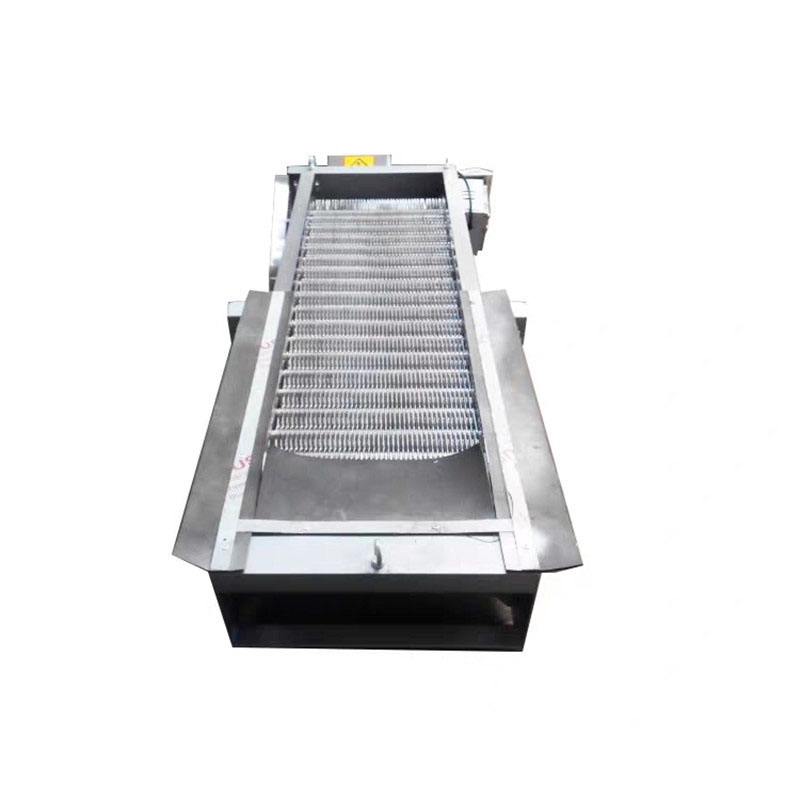
Operational Principles Compared
The Circulating Mechanical Bar Screen uses a continuous loop of rakes that travel up the bar rack, removing debris and discharging it at the top. In contrast, a step screen consists of alternating moving and fixed lamellas that “step” solids upward. Below is a direct comparison.
| Feature | Circulating Mechanical Bar Screen | Step Screen |
|---|---|---|
| Driving Mechanism | Chain-driven circulating rakes | Hydraulic or electric alternating plates |
| Head Loss | Low to moderate | Very low (self-cleaning overflow design) |
| Typical Bar Spacing | 6 mm – 50 mm | 3 mm – 20 mm |
| Capture Efficiency | 85% – 90% for coarse solids | 90% – 95% for fine solids |
| Maintenance Access | Above-water chain and sprocket | Plates require channel dewatering |
| Organic Material Retention | Moderate (wash cycle recommended) | Low (reduced organics in screenings) |
Performance in Municipal Applications
For large municipal plants with high flow variations, the Circulating Mechanical Bar Screen offers robust handling of heavy debris like rags and plastics. Its above-water mechanism allows FYL technicians to service the drive unit without entering the channel. Step screens excel in fine screening (≤6 mm) but may struggle with fibrous materials wrapping around moving plates.
Circulating Mechanical Bar Screen FAQ
Question: How often does the rake mechanism of a Circulating Mechanical Bar Screen require replacement in a municipal setting?
Answer: Under normal operating conditions with weekly inspections, the rake tines and chain pins typically last 8 to 10 years at FYL-supplied units. Replacement is recommended when wear exceeds 15% of the original pin diameter or when rake alignment deviates by more than 3 mm per meter of bar length. Municipal plants with heavy grit or aggressive debris may shorten this interval to 5–7 years, which is why FYL offers hardened steel options for abrasive environments.
Question: Can a Circulating Mechanical Bar Screen handle peak storm flows without bypassing screenings?
Answer: Yes, a properly sized Circulating Mechanical Bar Screen can manage peak flows up to 200% of average daily flow. FYL designs units with overflow weirs and high-rake density to prevent debris carryover. However, if the water velocity through the bars exceeds 1.2 m/s, some solids may be forced through. For extreme peaks, we recommend a dual-channel configuration where one screen remains operational while the other is cleaned or bypassed. Step screens generally offer better hydraulic capacity at fine bar spacings due to their open-bottom design.
Question: What is the typical energy consumption difference between a Circulating Mechanical Bar Screen and a step screen for a 50,000 m³/day plant?
Answer: A Circulating Mechanical Bar Screen in this size range consumes approximately 1.5 to 2.2 kWh per day, as the chain drive operates intermittently only during rake cycles. A step screen with hydraulically driven plates consumes about 3.0 to 4.5 kWh per day due to continuous or semi-continuous plate motion. FYL energy audits show that while step screens offer finer screening, the Circulating Mechanical Bar Screen reduces annual energy costs by roughly 400–600 at industrial electricity rates, making it a more economical choice for coarse-to-medium screening applications.
Which System to Choose?
Select a Circulating Mechanical Bar Screen from FYL when your application requires high reliability with mixed debris (rags, cans, sticks) and easy above-channel maintenance. Choose a step screen for fine screening (3–6 mm) where organic capture and low head loss are top priorities. Many municipal engineers partner with FYL to install step screens as secondary polishing units downstream of primary Circulating Mechanical Bar Screen systems.
Contact Us
For a tailored comparison of Circulating Mechanical Bar Screen models and step screens for your municipal project, contact FYL today to request a site assessment and hydraulic performance simulation. Our engineering team provides free payback analysis and OEM spare parts support.