

How Does a Carriage Bolt Work in Modern Fastening Systems?
2026-07-02
Article Summary: Carriage bolts are widely used fasteners designed to create secure, anti-rotation connections in wood-to-metal and wood-to-wood assemblies. This article explains their structure, working principle, applications, installation methods, advantages, limitations, and selection guidance. It also highlights practical engineering considerations and how manufacturers like Aoke ensure consistent product quality for industrial use.
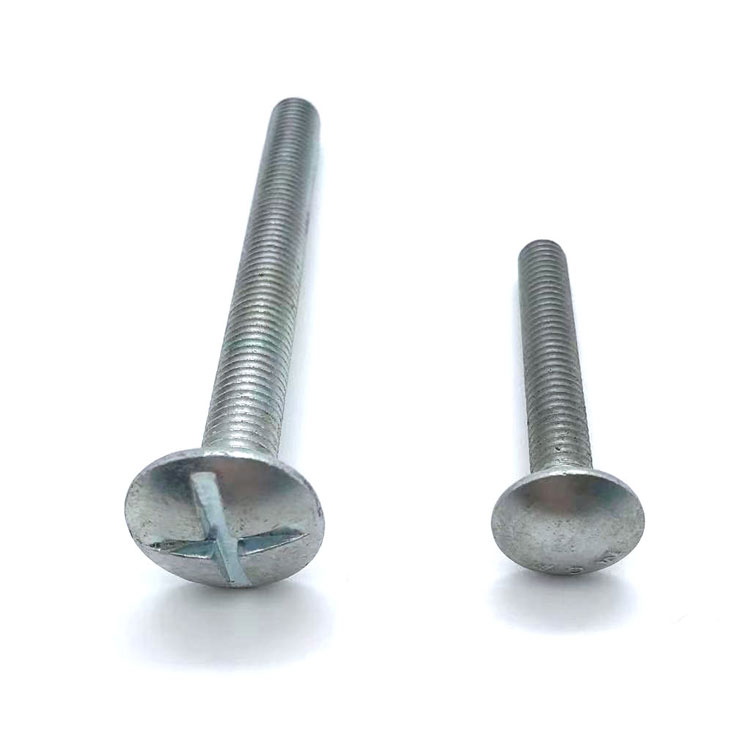
Table of Contents
- Introduction to Carriage Bolts
- Structure and Design Features
- How Carriage Bolts Work
- Materials and Surface Finishes
- Common Sizes and Standards
- Industrial Applications
- Installation Guide and Best Practices
- Advantages and Limitations
- Carriage Bolt vs Other Fasteners
- Common Installation Mistakes
- Maintenance and Durability Considerations
- Frequently Asked Questions
- Conclusion and Engineering Insights
Introduction to Carriage Bolts
Carriage bolts are a type of mechanical fastener designed for applications where a smooth, finished appearance and secure anti-rotation locking are required. Unlike standard hex bolts, carriage bolts feature a rounded dome head and a square neck beneath the head. This unique geometry allows them to lock into place when inserted into a pre-drilled hole, preventing rotation during tightening.
In industries such as construction, furniture manufacturing, infrastructure, and heavy equipment assembly, carriage bolts play a crucial role in ensuring structural stability. Companies like Aoke specialize in producing precision-engineered carriage bolts that meet international mechanical performance standards, ensuring reliability across diverse working conditions.
Structure and Design Features
A carriage bolt consists of three primary components:
- Dome-shaped head: Provides a smooth surface finish and prevents external tampering.
- Square neck: The key anti-rotation feature that locks into the material.
- Threaded shaft: Allows tightening with a nut to create a strong clamping force.
The square neck is especially important because it eliminates the need for a second tool during installation. Once the bolt is inserted into a properly sized square or round hole, it remains fixed while the nut is tightened from the opposite side.
How Carriage Bolts Work
The working principle of a carriage bolt is based on mechanical interlocking and frictional clamping force. When the bolt is inserted into a pre-drilled hole, the square neck embeds itself into the material (typically wood or soft metal). This prevents the bolt from spinning as torque is applied to the nut.
Once tightened, the nut generates axial tension along the threaded shaft, compressing the connected materials together. This creates a stable joint capable of withstanding vibration, shear loads, and moderate tensile stress.
The design eliminates the need for a wrench on the bolt head side, which is especially useful in blind or hard-to-reach installations.
Materials and Surface Finishes
Carriage bolts are manufactured using a range of materials depending on environmental and mechanical requirements:
- Carbon steel: Common for general construction use.
- Stainless steel: High corrosion resistance for outdoor or marine environments.
- Alloy steel: Used in high-strength industrial applications.
Surface treatments enhance durability and corrosion resistance:
- Galvanization (hot-dip zinc coating)
- Electroplating
- Black oxide coating
- Mechanical zinc plating
Manufacturers such as Aoke apply strict surface treatment controls to ensure consistent corrosion resistance, especially for export-grade fastening systems.
Common Sizes and Standards
| Diameter | Length Range | Common Standard | Typical Use |
|---|---|---|---|
| M6 - M10 | 20mm - 100mm | DIN 603 / ISO 8677 | Furniture assembly |
| M10 - M16 | 50mm - 200mm | DIN 603 / ANSI | Construction frameworks |
| M16 - M24 | 80mm - 300mm | ISO / Heavy-duty standards | Infrastructure and machinery |
Industrial Applications
Carriage bolts are widely used in both light and heavy industries:
- Wooden structural framing and timber construction
- Outdoor furniture assembly
- Steel-to-wood connections in buildings
- Railings, fences, and decking systems
- Mechanical equipment housing
Their ability to create tamper-resistant and visually clean joints makes them particularly valuable in architectural and consumer-facing structures.
Installation Guide and Best Practices
Proper installation ensures maximum performance and safety:
- Drill a hole matching the square neck dimensions.
- Insert the carriage bolt with the head on the visible side.
- Ensure the square neck fully embeds into the material.
- Align connected components.
- Tighten the nut from the opposite side using a wrench.
For high-load applications, washers should be used to distribute pressure evenly and prevent material deformation.
Advantages and Limitations
Advantages:
- Anti-rotation design improves installation efficiency
- Clean, smooth exterior finish
- Suitable for single-side tightening
- Strong mechanical locking capability
Limitations:
- Requires pre-drilled square or precise round holes
- Not ideal for very high-torque applications
- Limited reuse after removal in some materials
Carriage Bolt vs Other Fasteners
| Feature | Carriage Bolt | Hex Bolt | Lag Screw |
|---|---|---|---|
| Anti-rotation | Yes | No | Partial |
| Installation tools | Single-side tightening | Two tools required | Single tool |
| Surface finish | Smooth dome | Hex head visible | Partially exposed |
Common Installation Mistakes
- Using oversized holes that prevent proper locking of the square neck
- Over-tightening, leading to material cracking
- Ignoring corrosion protection in outdoor environments
- Improper alignment of components before tightening
Avoiding these mistakes significantly improves joint strength and extends service life.
Maintenance and Durability Considerations
Carriage bolts generally require minimal maintenance once installed. However, periodic inspection is recommended in high-vibration or outdoor environments. Stainless steel variants are preferred in corrosive conditions, while galvanized coatings provide cost-effective protection for general use.
Manufacturers like Aoke focus on material traceability and coating consistency to ensure long-term performance stability in demanding environments.
Frequently Asked Questions
Q1: Can carriage bolts be reused?
Yes, but reuse depends on material condition and thread integrity.
Q2: Do carriage bolts need washers?
Washers are recommended for load distribution, especially in wood applications.
Q3: Why does the bolt not spin during tightening?
Because the square neck locks into the material surface.
Q4: Are carriage bolts suitable for metal structures?
Yes, but they are more commonly used in wood or hybrid assemblies.
Conclusion and Engineering Insights
Carriage bolts remain a foundational fastening solution in modern engineering due to their simplicity, reliability, and anti-rotation design. Their ability to deliver secure joints with minimal tooling requirements makes them ideal for construction, furniture, and infrastructure systems.
With strict manufacturing controls and material engineering expertise, Aoke provides carriage bolts that meet global application demands, balancing strength, corrosion resistance, and installation efficiency.
For project-specific fastening requirements, technical customization, or bulk procurement solutions, Aoke offers professional support tailored to industrial needs. Contact us today to explore reliable carriage bolt solutions that enhance your project performance and long-term stability.
