How Does a Bottom Pumping Thermostat Differ from a Top Pumping Thermostat
2026-10-22
Cooling system architecture plays a decisive role in engine thermal management, and the placement of the thermostat is one of the most consequential design choices engineers face. A Bottom Pumping Thermostat regulates coolant flow from the lower radiator outlet, while a top-mounted unit senses temperature at the engine outlet. Each configuration influences warm-up speed, cavitation risk, and housing complexity in ways that matter to OEM designers and aftermarket suppliers alike. At JIATAI, we manufacture both configurations to precise tolerances, and this guide breaks down the engineering differences so you can specify the right component for your application.
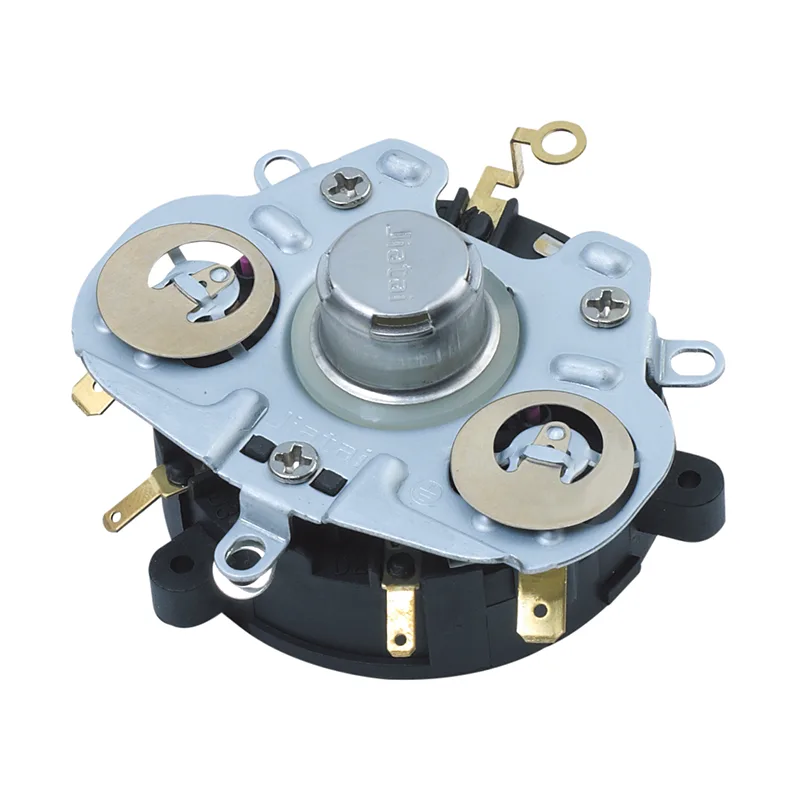
Core Functional Differences
The fundamental distinction lies in where temperature sensing and flow control occur relative to the radiator and water pump.
-
A Bottom Pumping Thermostat sits on the suction side of the water pump, opening in response to coolant temperature leaving the radiator.
-
A top-mounted thermostat sits on the discharge side, reacting to coolant exiting the engine block before it reaches the radiator.
This positional difference changes the pressure environment the valve experiences, the volume of coolant bypassed during warm-up, and the speed at which the engine reaches operating temperature.
Comparison Table: Bottom vs. Top Mounting
| Parameter | Bottom Pumping Thermostat | Top Pumping Thermostat |
|---|---|---|
| Mounting location | Lower radiator outlet / pump inlet | Engine coolant outlet / upper hose |
| Pressure at valve | Low (suction side) | Higher (discharge side) |
| Cavitation risk | Reduced | Elevated at high RPM |
| Warm-up behavior | Slower opening, stable regulation | Faster response, potential cycling |
| Housing complexity | Integrated pump housing | Separate outlet housing |
| Service accessibility | Often requires under-vehicle access | Usually top-accessible |
| Typical applications | Modern compact engines, integrated modules | Traditional longitudinal layouts |
Engineering Advantages of Bottom Placement
-
Cavitation suppression: Placing the valve on the suction side lowers local pressure fluctuations, protecting the wax element from premature fatigue.
-
Stable modulation: Coolant arriving from the radiator is already cooled, giving the Bottom Pumping Thermostat a cleaner signal for proportional opening.
-
Packaging efficiency: Integration into the pump housing reduces hose count and leak points, a priority in downsized engine bays.
-
Bypass control: Bottom-mounted designs pair naturally with internal bypass circuits, shortening warm-up in cold-start conditions.
JIATAI Manufacturing Considerations
Every JIATAI Bottom Pumping Thermostat undergoes wax-element calibration across a ±2°C tolerance band, pressure-cycle validation exceeding 100,000 cycles, and salt-spray corrosion testing to ASTM B117. Our engineering team supports custom opening temperatures from 82°C to 95°C and housing geometries for integrated pump modules.
Frequently Asked Questions
Q: What is a Bottom Pumping Thermostat and where is it installed?
A: A Bottom Pumping Thermostat is a temperature-controlled valve mounted at the lower radiator outlet, on the suction side of the water pump. It opens when coolant leaving the radiator reaches its rated opening temperature, allowing cooled coolant to re-enter the engine. This placement exposes the valve to lower pressure than a top-mounted design, which reduces wear on the wax element and improves regulation stability during high-load operation.
Q: Can a Bottom Pumping Thermostat be replaced with a top-mounted unit?
A: No. The two configurations are not interchangeable because they differ in housing geometry, hose routing, and pressure environment. A Bottom Pumping Thermostat is engineered for suction-side pressure profiles and often integrates with the pump housing, while a top-mounted unit requires a separate outlet housing. Substituting one for the other risks incorrect opening behavior, coolant leaks, and inadequate warm-up control. Always match the replacement to the original mounting configuration.
Q: What are the signs of a failing Bottom Pumping Thermostat?
A: Common symptoms include slow warm-up, fluctuating temperature gauge readings, coolant bypassing the radiator, and persistent low heater output. Because the valve sits on the suction side, a stuck-open Bottom Pumping Thermostat often causes prolonged cold-running conditions and reduced fuel efficiency, while a stuck-closed unit leads to rapid overheating. Pressure testing and temperature-scan diagnostics at the lower hose confirm the fault before replacement.
Q: Why do modern engines increasingly favor Bottom Pumping Thermostat designs?
A: Compact engine architectures demand reduced hose routing and fewer leak points, which favors integration into the pump housing. A Bottom Pumping Thermostat also delivers more stable modulation because it senses cooled coolant rather than hot discharge flow, and its low-pressure environment extends wax-element service life. These factors align with OEM goals for durability, packaging efficiency, and precise thermal management.
Q: How does JIATAI validate its Bottom Pumping Thermostat products?
A: JIATAI subjects each Bottom Pumping Thermostat to wax calibration within ±2°C, more than 100,000 pressure cycles, thermal shock testing, and ASTM B117 salt-spray exposure. Dimensional inspection verifies housing fitment against OEM drawings, and flow-bench testing confirms opening lift and bypass behavior across the rated temperature range before shipment.
Contact Us
Selecting the correct thermostat architecture protects engine durability and simplifies service. JIATAI provides engineering support, custom calibration, and volume production for Bottom Pumping Thermostat programs worldwide. Contact our team today to request samples, drawings, or a technical consultation for your next cooling system project.