

How Do You Select the Correct PCD Non Standard Reamer for a Specific Application
2026-01-12
Selecting the right tool for a high-precision, high-volume machining operation is critical to profitability and part quality. When standard tools fall short for specialized tasks, PCD Non Standard Reamers become the engineered solution. With over two decades of expertise, WDF understands that choosing the correct custom reamer is a systematic process, not a guess. This guide outlines the key technical and application factors to consider, ensuring you maximize the legendary wear resistance and superior finish of PCD tools.
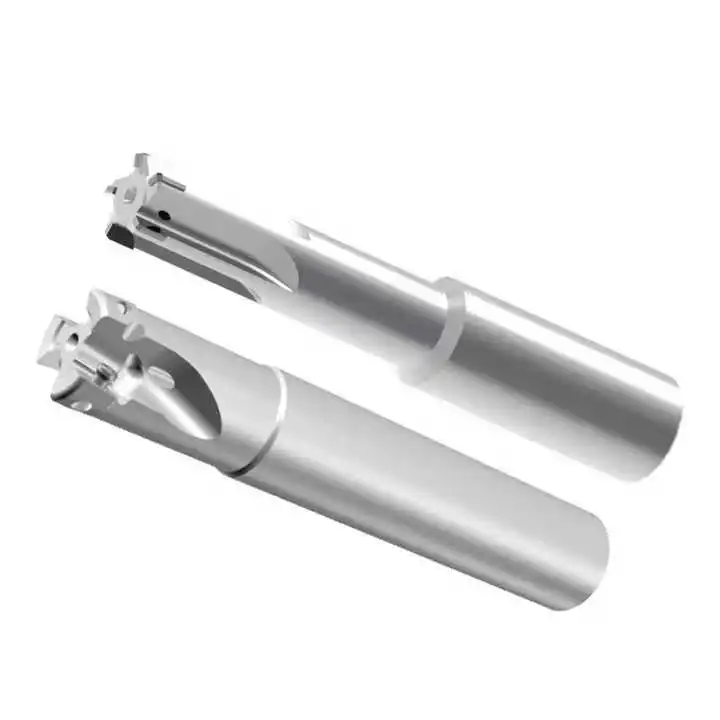
The selection process hinges on a deep analysis of your application's requirements. Follow this checklist to guide your specification:
-
Material Analysis: Identify the specific non-ferrous or composite material and its abrasiveness.
-
Tolerance & Finish Goals: Define the exact hole tolerance (e.g., H7) and required surface finish (Ra value).
-
Operation Parameters: Clarify if it's a new component machining or a rework/repair operation.
-
Machine Tool Stability: Assess the rigidity and capability of your machining center or lathe.
To further illustrate the decision-making matrix, consider the following common application scenarios:
| Application Focus | Primary Selection Driver | Recommended WDF PCD Reamer Feature |
|---|---|---|
| High-Speed Aluminum Machining | Chip evacuation & surface finish | Polished flutes with optimized helix angle |
| Carbon Fiber Reinforced Polymer (CFRP) | Minimizing delamination & tool wear | Specialized diamond geometry & sharp cutting edges |
| Silicon-Aluminum Alloys | Abrasion resistance & long tool life | Robust PCD edge preparation & wear-resistant coating |
PCD Non Standard Reamers FAQ
What is the main advantage of a PCD Non Standard Reamer over a standard carbide one?
The primary advantage is exponentially longer tool life and consistent part quality when machining abrasive materials. A WDF PCD reamer can outlast carbide by 100x or more, drastically reducing changeovers, scrap rates, and cost-per-hole.
Can PCD Non Standard Reamers be reconditioned or sharpened?
Yes, a significant benefit of PCD tools is their potential for multiple re-sharpenings. Specialist providers like WDF offer precision reconditioning services, restoring the tool to like-new performance and extending its total lifecycle value.
How long does it take to receive a custom PCD Non Standard Reamer?
Lead time depends on the design complexity. Standard custom geometries at WDF typically take 3-5 weeks, while fully novel designs may require additional engineering time. This investment is offset by the tool's unparalleled longevity and performance gains.
Selecting the correct PCD Non Standard Reamer is a technical partnership. It requires translating your application challenges into precise tool specifications. By systematically evaluating your material, tolerances, and operating conditions, you unlock the full potential of PCD technology. The team at WDF combines decades of engineering experience with state-of-the-art manufacturing to deliver not just a tool, but a guaranteed productivity solution.
Contact us today to discuss your specific application. Our engineers are ready to analyze your requirements and recommend the optimal WDF PCD Non Standard Reamer to boost your efficiency and quality.
