How Do You Properly Size a 168kW Condensing Heat Exchanger for a Multi-Zone Commercial Building
2026-08-07
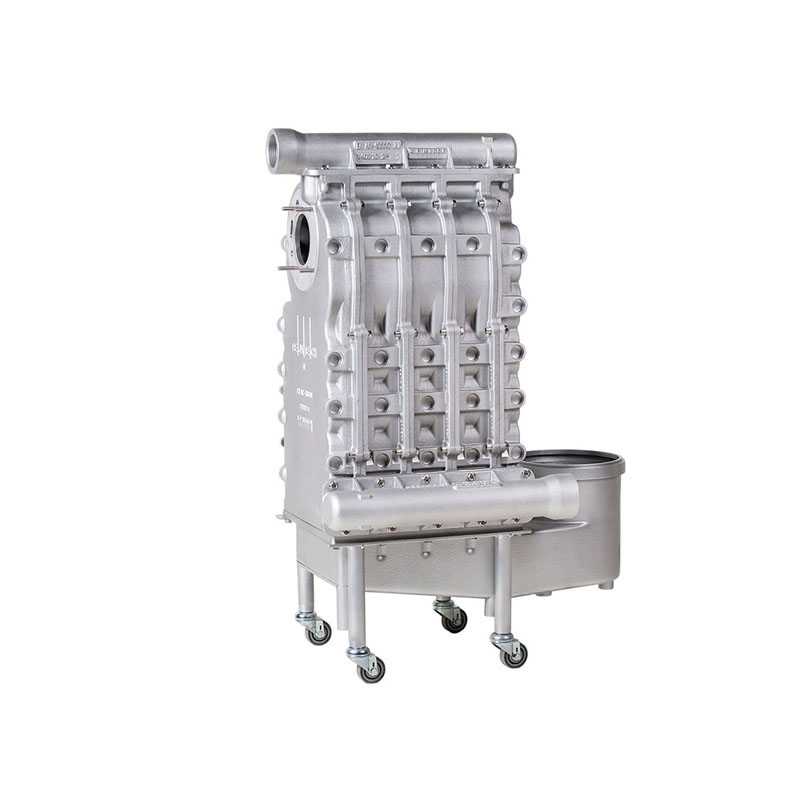
Properly sizing a 168kW Condensing Heat Exchanger for a multi-zone commercial building is one of the most misunderstood tasks in modern HVAC engineering. A wrong selection leads to short-cycling, acid condensate corrosion, and annual efficiency penalties of up to 12%. For engineers specifying Zhejiang HEC Machinery equipment, the process must consider not just peak load, but also return water temperature profiles, zone diversity, and the unit's actual modulation behaviour across all seasons.
The Central Question: Peak Load or Average Load?
Most engineers start with the building's design heat loss at -10°C outdoor conditions. That number might be 190 kW, but selecting a 168kW Condensing Heat Exchanger based solely on that figure ignores a critical fact: design conditions occur for less than 3% of annual operating hours. The real sizing decision revolves around the return water temperature that reaches the heat exchanger.
For condensing to occur, the return temperature must stay at or below 55°C—ideally 45°C for maximum efficiency (108–110% NCV). If your multi-zone system includes perimeter radiators requiring 70°C supply, those zones will return water at 60–65°C, which completely suppresses condensation. The solution lies in hydraulic separation: route the low-temperature zones (underfloor, chilled beams, or fan coils) through the 168kW Condensing Heat Exchanger primary circuit, and use a blending valve to raise temperature for high-temperature terminals only when needed.
Zone Diversity Changes Everything
A 10-zone office building rarely demands full output across all floors simultaneously. South-facing zones receive solar gain, conference rooms have intermittent occupancy, and core areas maintain stable temperatures. Applying a diversity factor between 0.75 and 0.90 is standard practice. For a building with a summed peak load of 185 kW, the actual simultaneous demand often drops to 148–155 kW—well within the operating range of a 168kW Condensing Heat Exchanger.
However, diversity works against you during morning warm-up. All zones call for maximum heat simultaneously for 60–90 minutes. During this period, the 168kW Condensing Heat Exchanger may be undersized if you applied too aggressive a diversity factor. The correct approach: size for the morning warm-up load using a 0.95 diversity factor, then verify that the same unit can modulate down to the minimum zone load (often 25–30 kW) during mild weather. Zhejiang HEC Machinery units offer a 6:1 turndown ratio, meaning a 168 kW frame can stable-fire down to approximately 28 kW, which comfortably covers most part-load scenarios.
Flow Rate and Pressure Drop – The Non-Negotiable Pair
Once the thermal load is established, flow rate determines pipe sizing and pump selection. At a 20°C ΔT (supply/return), a 168kW Condensing Heat Exchanger requires 121 litres per minute. Increase that ΔT to 25°C, and flow drops to 97 L/min—reducing pumping energy by 20%. But higher ΔT means lower return temperatures, which actually improves condensing efficiency. The trade-off is that terminal units (fan coils, radiators) may need upsizing to deliver the same heat output at lower water temperatures.
Pressure drop across the heat exchanger itself varies with flow. At 121 L/min, a typical 168kW Condensing Heat Exchanger from Zhejiang HEC Machinery exhibits 32–38 kPa pressure drop. At 97 L/min, that drops to 22–26 kPa. The table below illustrates real-world trade-offs:
| Flow Rate (L/min) | ΔT (°C) | Heat Exchanger ΔP (kPa) | Condensing Efficiency (%) | Pump Power (kW) |
|---|---|---|---|---|
| 121 | 20 | 36 | 105.5 | 1.10 |
| 108 | 22 | 29 | 107.0 | 0.85 |
| 97 | 25 | 24 | 108.2 | 0.68 |
| 85 | 28 | 19 | 108.8 | 0.55 |
The sweet spot for most multi-zone buildings is 22–25°C ΔT, balancing pump energy against efficiency gains. Zhejiang HEC Machinery provides certified pressure-drop curves for every 168kW Condensing Heat Exchanger, allowing precise pump matching without oversizing.
The Part-Load Trap
A 168kW Condensing Heat Exchanger that spends 70% of its life below 50% load must have excellent modulation. Fixed-stage or two-stage units will cycle 6–8 times per hour, consuming extra fuel for purge cycles and shortening the secondary heat exchanger's lifespan. Modulating burners with a 5:1 or 6:1 turndown are essential. Verify that the selected model from Zhejiang HEC Machinery maintains excess air below 15% even at minimum fire—many competitors increase excess air to 40% at turndown, dropping efficiency to 92% despite the unit's nameplate rating.
168kW Condensing Heat Exchanger – FAQ
Q1: Can one 168kW Condensing Heat Exchanger serve zones with very different temperature requirements, like an industrial warehouse needing 80°C supply and an office wing needing 35°C underfloor heating?
A: Yes, but not without a low-loss header or buffer tank. The warehouse zone (80°C supply) will return water at approximately 70°C, which is far above the dew point (≈55°C) required for condensation. If that return water flows directly back to the 168kW Condensing Heat Exchanger, the unit will operate in non-condensing mode permanently—defeating its purpose. The correct hydraulic design places the buffer tank between the heat exchanger and the distribution system. The 168kW Condensing Heat Exchanger sends 50°C water into the tank, and separate variable-speed pumps draw from the tank to serve each zone, with a mixing valve boosting temperature for the warehouse circuit. This allows the heat exchanger to see consistently low return temperatures (45–48°C) while each zone receives its required supply temperature. Zhejiang HEC Machinery offers pre-piped buffer tank packages sized specifically for their 168 kW frames, including all temperature sensors and mixing valves.
Q2: What is the minimum return temperature I should design for, and does too-cold return water damage the heat exchanger?
A: The minimum sustained return temperature for a 168kW Condensing Heat Exchanger is 25°C, provided the flue gas condensate is properly neutralised (pH 6–7) and the secondary heat exchanger material is stainless steel or aluminium-silicon alloy. Below 25°C, the flue gas temperature drops below the acid dew point, and sulphuric acid condensation becomes aggressive—even with low-sulphur gas. This is rarely an issue in commercial buildings because underfloor heating typically returns water at 30–35°C. However, if your design includes geothermal or lake-water cooling coils that return 15–20°C, install a bypass valve that recirculates part of the supply water to raise the return temperature entering the 168kW Condensing Heat Exchanger. Zhejiang HEC Machinery incorporates a built-in return-temperature protection logic in their control panel that automatically opens the bypass if the return sensor reads below 28°C for more than 60 seconds.
Q3: How do I verify that a 168kW Condensing Heat Exchanger is correctly sized after installation, without expensive thermal imaging or flow meters?
A: Use the flue gas temperature as your primary diagnostic indicator. At full fire with a 45°C return temperature, the flue gas exit temperature of a properly sized 168kW Condensing Heat Exchanger should read 38–45°C. If you measure 60°C or higher, one of three problems exists: the unit is oversized (short-cycling prevents steady-state condensation), the return water is too hot (above 55°C), or the secondary heat exchanger is fouled. The second quick check is burner run time per hour—at 30% outdoor load (typical spring/autumn), the burner should fire continuously for 12–18 minutes per cycle, with no more than 3 cycles per hour. If you see 6–8 cycles per hour, the 168kW Condensing Heat Exchanger is oversized for your actual zone load, and you should consider adding a thermal storage tank to increase the effective water volume. Zhejiang HEC Machinery provides a free post-installation checklist with target flue temperatures and cycle count logs for every shipped unit.
Final Recommendations
Sizing a 168kW Condensing Heat Exchanger for multi-zone duty is fundamentally a return-temperature management exercise. The peak load number matters, but less than the average return temperature across all operating hours. Every 5°C reduction in average return temperature increases annual condensing efficiency by approximately 2.5%, which translates to €1,200–€1,800 yearly savings on gas consumption for a typical 10,000 m² building.
Selecting Zhejiang HEC Machinery gives you access to factory-tested modulation curves, certified pressure-drop data at multiple flow rates, and a control strategy that actively manages return temperature through variable-speed primary pumping. Their 168kW Condensing Heat Exchanger ships with a 5-year warranty on the secondary condensing coil and includes BACnet/IP communication for seamless BMS integration.
Contact us at Zhejiang HEC Machinery for a complete sizing review. Email your zone load schedules and piping schematics to [email protected], and our thermal design team will return a full hydraulic simulation within 48 hours—including pump selection, buffer tank sizing, and a guaranteed annual efficiency projection. We also offer on-site commissioning support for the first 50 installations booked this quarter. Reach out via the contact form on our website, and one of our regional application engineers will arrange a virtual walkthrough of your mechanical room layout.