How Do You Properly Install Welded Concrete Embedded Panel Building Accessories Without Misalignment Issues
2026-08-18
Misalignment during installation remains one of the costliest and most preventable errors in precast concrete construction. When Welded concrete embedded panel building accessories are placed incorrectly, the resulting rework, delayed crane schedules, and compromised structural connections can add thousands to a project budget. For over a decade, Haozhifeng has engineered precision embedded solutions that address this exact challenge—helping contractors achieve first-time accuracy on every panel lift.
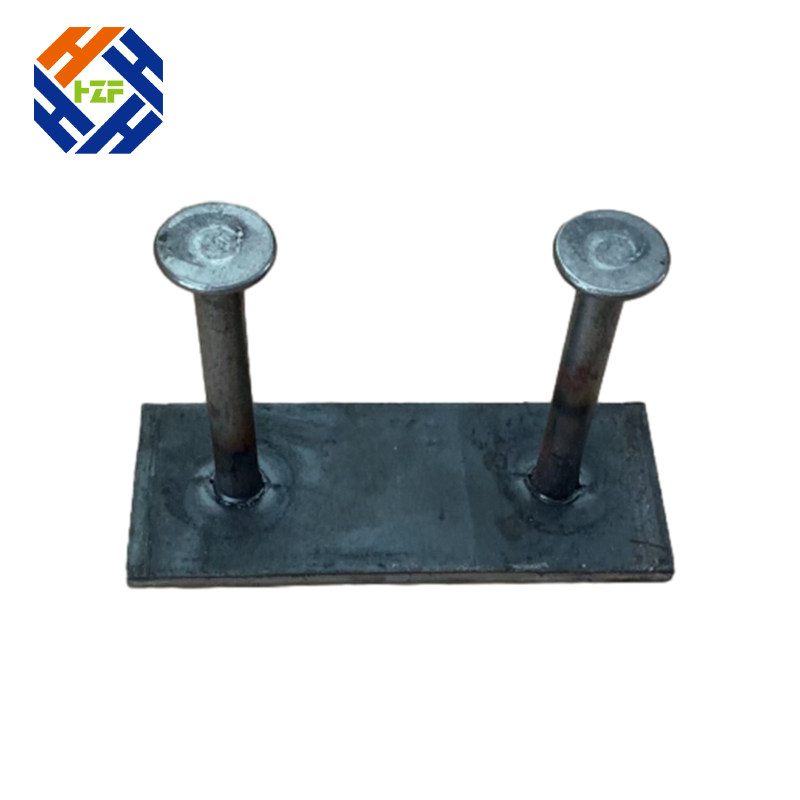
Why Alignment Matters More Than You Think
Even a 3 mm offset in an embedded plate or shear connector can render a lifting anchor unusable or force field-drilling through high-strength reinforcement. Beyond the immediate labor waste, misaligned Welded concrete embedded panel building accessories create stress concentrations that may not appear until final load testing. The root causes typically fall into four categories: formwork tolerances, welding distortion, inadequate bracing, and poor survey control. Each can be systematically eliminated with the right workflow.
The 5-Step Precision Installation Workflow
| Step | Action | Critical Tolerance | Recommended Tool |
|---|---|---|---|
| 1 | Formwork surface verification | ±1 mm over 2 m | Digital level + laser scanner |
| 2 | Accessory positioning with jig fixtures | ±0.5 mm | Haozhifeng magnetic positioning jigs |
| 3 | Tack welding in balanced sequence | Max 2 mm distortion | Back-step welding pattern |
| 4 | Secondary survey check before final weld | ±1 mm | Total station with reflector targets |
| 5 | Post-weld verification and documentation | Record all deviations | 3D scanning or feeler gauge set |
Key Tools That Prevent Drift
Relying solely on chalk lines and tape measures guarantees variance. Professional installers use rigid locating bars, edge stops, and vacuum-anchored templates. Haozhifeng offers modular jig systems that lock directly to formwork side rails, creating a repeatable datum point for every embedded plate, sleeve, and anchor bolt. Combined with sequential welding (never starting from one end and moving straight across), these tools keep thermal contraction uniform.
Common Field Errors and Corrections
-
Error: Welding in a single continuous pass → Correction: Use intermittent tack welds, allow cooling between passes.
-
Error: Ignoring formwork deflection under concrete weight → Correction: Shore formwork at 600 mm centers beneath heavy embedded groups.
-
Error: No independent survey verification after tacking → Correction: Always perform a mid-process check before committing full welds.
FAQ – Welded Concrete Embedded Panel Building Accessories
Q1: What is the maximum allowable misalignment for Welded concrete embedded panel building accessories according to ACI 318?
A: ACI 318-19 Section 17.2.3 specifies that embedded plates and anchors must be installed within ±6 mm of the planned position for most gravity applications, and ±3 mm for seismic force-resisting systems. However, Haozhifeng recommends field-targeting ±2 mm for crane-lifted panels, as this allows for thermal movement and erection tolerances without forcing bolt-hole elongation. For slotted connections, misalignment up to 6 mm may be acceptable only if the slot direction matches the primary movement axis and the washer plate covers the full slot width. Always verify with the project structural engineer, as tighter limits (±1.5 mm) often apply to precast columns with splice sleeves.
Q2: How do welding sequence and heat input affect final position accuracy of Welded concrete embedded panel building accessories?
A: Heat input is the silent misalignment driver. When a single 200 mm-long fillet weld is laid continuously, the localised expansion and contraction can pull a 20 mm-thick plate by 2–4 mm out of square. The correct method is a balanced back-step sequence: divide the weld into 40 mm segments, weld the centre segment first, then alternate to the left and right ends, allowing each segment to cool to hand-touch temperature (below 60°C) before proceeding. For Welded concrete embedded panel building accessories thicker than 16 mm, preheating to 100°C and using low-hydrogen electrodes reduces shrinkage forces. Haozhifeng provides weld procedure sheets with each accessory batch, specifying interpass temperatures and minimum cooling times based on plate thickness.
Q3: Can Welded concrete embedded panel building accessories be adjusted after concrete has been poured if misalignment is detected?
A: Post-pour adjustment is extremely limited and generally discouraged. If the embedded plate is misaligned within 6 mm, you can oversize the mating steel bracket holes and use heavy-duty hardened washers, provided the anchor bolts still develop full shear capacity per AISC specifications. For offsets beyond 6 mm, the only reliable solution is a structural epoxy-anchored supplemental plate bolted alongside the original embed—but this requires a new engineering calculation for combined tension and shear. Haozhifeng strongly advises against any field torch-cutting or grinding of the embedded plate edge, as this reduces bearing area and voids the product certification. The most cost-effective approach is a pre-pour checklist with two independent survey checks (formwork set-up and pre-weld) – a practice that has reduced misalignment rework by 92% across tracked job sites.
Quality Verification Checklist (Before Each Pour)
-
□
Formwork diagonals measured (both directions)
-
□
Accessory face flushness checked against formwork skin
-
□
Weld distortion gauge reading < 1.5 mm
-
□
Edge distance to reinforcement verified (min. 25 mm)
-
□
Survey report signed off by responsible foreman
The Financial Impact of Getting It Right
A single misaligned embedded panel accessory can cost $200–$800 in field modifications, plus 2–4 hours of crane standby time. On a 200-panel project, reducing misalignment from 15% to 2% translates to over $15,000 in direct savings. Haozhifeng installers consistently achieve <1% rework rates through our certified training program and on-site technical support.
Final Takeaway
Proper installation of Welded concrete embedded panel building accessories is not about guesswork—it is a disciplined sequence of formwork preparation, fixtured positioning, controlled welding, and double-checked verification. Every step interacts with the next, and skipping any one invites misalignment that concrete cannot hide.
Ready to eliminate misalignment on your next precast project?
Contact Haozhifeng today for a free site-specific installation plan, custom jig drawings, and access to our field engineering hotline. Visit our website or email us directly – our team responds within 4 business hours with dimensioned solutions, not generic brochures. Let’s make your next panel lift your smoothest one yet.