How Do You Minimize Runout During the Precision Grinding of Short Shafts
2026-02-26
In the world of mechanical manufacturing, achieving minimal runout is the hallmark of excellence. When dealing with Short Shaft Machining With Precision, even a micron of deviation can lead to catastrophic failure in high-speed applications. Runout—the error where the rotating shaft does not spin exactly on its main axis—must be controlled meticulously to ensure longevity and performance.
At Zhihexing, we understand that the difference between a good component and a great one lies in the details. To minimize runout during grinding, manufacturers must focus on three critical pillars: workpiece setup, wheel selection, and machine stability.
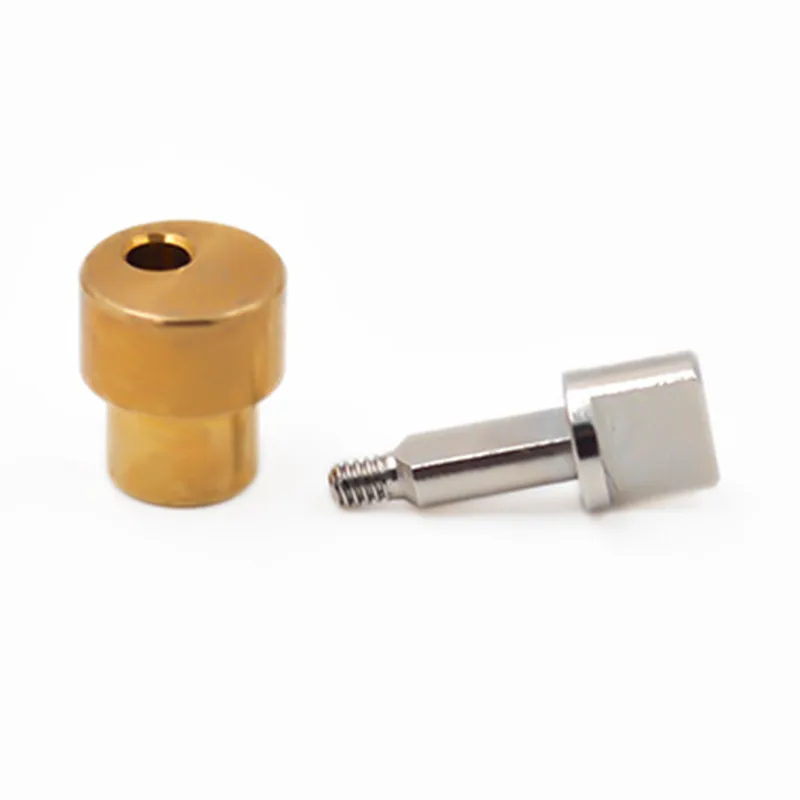
Key Strategies for Runout Reduction
To effectively reduce runout, engineers employ a combination of preparation and execution techniques. Below is a breakdown of the primary causes of runout and the methods used to counteract them.
| Cause of Runout | Impact on Short Shafts | Mitigation Technique |
|---|---|---|
| Poor Centering | Eccentric rotation leading to uneven material removal. | Use live centers with high precision; ensure center holes are clean and lapped. |
| Wheel Imbalance | Vibration marks (chatter) on the shaft surface. | Static and dynamic balancing of the grinding wheel before mounting. |
| Chucking Pressure | Distortion of the short shaft, causing taper. | Utilize pressure-controlled chucks or collets to avoid deforming the part. |
| Thermal Expansion | Diametrical growth during the pass, causing inaccuracies. | Apply ample high-pressure coolant to maintain thermal stability. |
The Technical Workflow for Zero Runout
Achieving perfection in Short Shaft Machining With Precision requires a systematic workflow. Zhihexing recommends the following sequence to ensure concentricity:
-
Preparation of Centers: The shaft ends must have accurately ground center holes. These act as the locating datum for all subsequent operations.
-
Wheel Dressing: The grinding wheel must be sharp and true. A dull wheel increases cutting pressure, which can deflect the short shaft.
-
Reduced Spark-Out Passes: Utilizing spark-out passes (grinding without infeed) allows the spring pressure of the machine system to relax, removing elastic deflection and reducing runout naturally.
FAQ: Short Shaft Machining With Precision
To further clarify the complexities of this process, here are answers to frequently asked questions regarding Short Shaft Machining With Precision.
How does the L/D ratio affect my ability to control runout in short shafts?
While short shafts are inherently stiffer than long ones, they present a unique challenge. Because the length is minimal, the margin for angular error in the machine center is almost zero. Any misalignment between the headstock and tailstock centers results in a significant taper relative to the shaft's length. Therefore, using a cylindrical grinder with impeccable alignment is mandatory for Short Shaft Machining With Precision. The component must be treated as a stiff body; if the centers are misaligned, the shaft cannot bend to compensate, leading to uneven stock removal and excessive runout.
Can heat treatment prior to grinding eliminate runout issues?
Heat treatment relieves internal stresses, but it does not guarantee zero runout. In fact, heat treatment often distorts the part. The key to Short Shaft Machining With Precision lies in the "grinding allowance." If too much material is left for grinding after heat treatment, the uneven stock removal causes the grinding wheel to cut intermittently, deflecting the shaft. At Zhihexing, we recommend a "stable grinding allowance"—usually 0.2mm to 0.3mm on diameter—to ensure the cutting forces are consistent, thereby preventing the wheel from pushing the shaft out of alignment during the finishing passes.
What is the most effective method to check runout without removing the shaft from the machine?
The most effective in-process method is to use a capacitive displacement sensor or a high-precision dial indicator placed against the finished diameter while the shaft is still rotating between centers. However, for true Short Shaft Machining With Precision, you must distinguish between total indicated runout and lobing. A simple contact gauge might read a lobe as a runout error. We recommend using a V-block and indicator setup post-process, or a laser micrometer during the process, to capture the full harmonic signature of the shaft to ensure the runout is truly geometric and not a surface texture anomaly.
Conclusion
Minimizing runout is a discipline that requires precision equipment and expert knowledge. By controlling the center condition, balancing the abrasive wheel, and managing thermal effects, you can achieve superior results.
If your projects demand the highest standards of accuracy, partner with Zhihexing. Our expertise in Short Shaft Machining With Precision ensures that every component meets exacting tolerances. Contact us today to discuss your specific requirements and discover how we can optimize your manufacturing process.