How Do You Clean and Maintain a Plastic Round Ball Shape Rattan Flower Pot Mould After Use
2026-10-20
Proper care of your Plastic Round Ball Shape Rattan Flower Pot Mould directly affects the surface finish of every concrete or plaster planter you cast, and it determines how many production cycles you can get from a single mould. At ZHONGYUE, we have supplied rotomoulded and injection-moulded planter moulds to nurseries, precast workshops and hobby casters for years, and the same maintenance principles apply whether you run one mould or one hundred. This guide explains the cleaning routine, storage practice and inspection schedule that keep your Plastic Round Ball Shape Rattan Flower Pot Mould performing at its best.
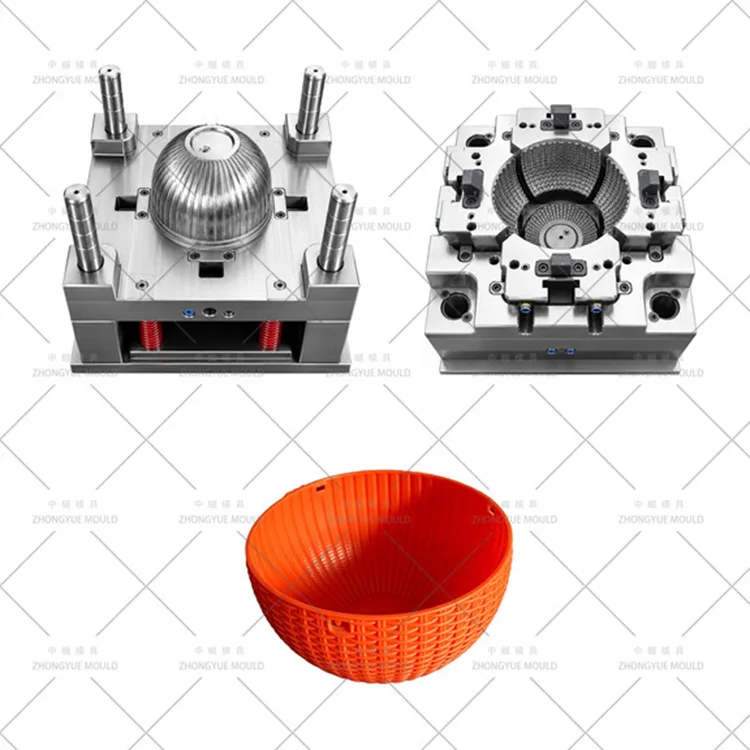
Why Cleaning Matters More Than You Think
Residual release agent, cement film and fine sand left on the cavity wall transfer to the next casting. Over time this builds a chalky layer that dulls the rattan texture, causes surface pitting and makes demoulding harder. A clean mould also releases more predictably, which reduces the risk of edge chipping on the ball-shaped body.
Step-by-Step Cleaning Routine
| Step | Action | Frequency |
|---|---|---|
| 1 | Rinse with clean water immediately after demoulding, before residue cures | Every cycle |
| 2 | Remove cement film with a soft nylon brush and pH-neutral detergent | Every cycle |
| 3 | Flush the split line and bolt holes to clear trapped grit | Every cycle |
| 4 | Wipe dry with a lint-free cloth; air-dry fully in shade | Every cycle |
| 5 | Apply a thin, even release agent coat | Before each casting |
| 6 | Deep clean with diluted mild detergent and inspect the cavity | Weekly |
| 7 | Check wall thickness, cracks and deformation | Monthly |
Key Maintenance Practices
-
Never use metal scrapers, wire brushes or abrasive pads. They scratch the polished cavity and permanently mark every future planter.
-
Avoid solvent-based cleaners. Harsh chemicals can soften the plastic surface of your Plastic Round Ball Shape Rattan Flower Pot Mould and blur the rattan pattern.
-
Store upright or on a padded rack in a cool, dry place away from direct sunlight. UV exposure accelerates embrittlement.
-
Do not stack heavy moulds on top of each other without protective inserts; the ball shape deforms under sustained point loads.
-
Keep release agent thin. Excess agent pools at the bottom of the sphere and creates surface defects.
-
Record cycle counts. Tracking usage helps you plan replacement before surface quality drops.
Seasonal and Long-Term Storage
For storage longer than one month, clean and dry the mould completely, apply a light release film, wrap it in breathable sheeting and keep it off concrete floors. ZHONGYUE recommends inspecting stored moulds every quarter and re-coating them if the cavity looks dull.
FAQ
Q: Can I use a high-pressure washer to clean my Plastic Round Ball Shape Rattan Flower Pot Mould?
A: No. High-pressure jets can force water into the split line, erode the sealing edge and lift the surface texture; use low-pressure water with a soft brush instead.
Q: How often should I replace the release agent on my Plastic Round Ball Shape Rattan Flower Pot Mould?
A: Reapply a thin coat before every casting, and always after cleaning; if demoulding becomes stiff or the surface looks patchy, strip and re-coat the cavity immediately.
Q: What should I do if white cement residue has hardened inside my Plastic Round Ball Shape Rattan Flower Pot Mould?
A: Soak the cavity with clean water for 20–30 minutes to soften the residue, then lift it with a soft nylon brush and pH-neutral detergent; never chip it off with a tool.
Q: How do I know when my Plastic Round Ball Shape Rattan Flower Pot Mould needs to be retired?
A: Replace it when you see deep scratches, cracks at the split line, noticeable wall thinning or a persistent loss of rattan pattern detail after cleaning.
Consistent cleaning, gentle handling and routine inspection will extend the working life of your Plastic Round Ball Shape Rattan Flower Pot Mould well beyond the average, and ZHONGYUE is here to support that process with technical guidance and replacement parts. Contact us today to discuss your mould maintenance schedule, request a spare cavity or place a new order — our team will help you protect your investment and keep production running smoothly.