How Do You Choose the Right Unequal Angle Steel for Structural Support
2026-10-12
Selecting the proper Unequal Angle Steel is a decision that directly affects load capacity, safety margins, and long-term project costs. At Energet Solar, we supply structural steel to fabricators, contractors, and engineering teams who need reliable material backed by verifiable mill documentation. This guide walks through the variables that matter most when specifying Unequal Angle Steel for structural applications.
Start With the Load Path
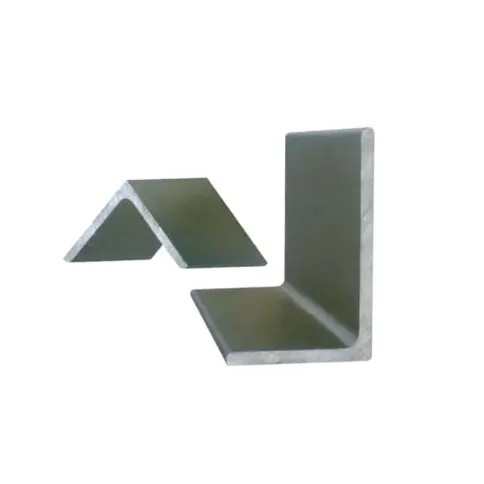
Before opening a mill catalog, define how force moves through the connection. Unequal Angle Steel is asymmetric, meaning its two legs carry different geometric properties about each axis. The long leg typically resists bending along the primary axis, while the short leg provides stability against local buckling. If the load direction is unclear, no size selection will be defensible.
Key Selection Criteria
| Criterion | What to Evaluate | Practical Impact |
|---|---|---|
| Leg dimensions | Long leg vs. short leg ratio | Governs bending resistance and fit-up |
| Thickness | Uniform or tapered | Affects weldability and section strength |
| Material grade | ASTM A36, A572 Gr.50, A992 | Determines yield strength and ductility |
| Length | Stock or custom cut | Influences splicing and transport |
| Surface finish | Mill finish, galvanized, painted | Corrosion protection and lifecycle cost |
Match the Section to the Connection
A common mistake is treating Unequal Angle Steel as a generic substitute for equal angle. In bolted connections, the outstanding leg may govern block shear or net section rupture. In welded T-joints, heat input must be balanced against the thinner leg to avoid distortion. Energet Solar recommends reviewing the governing building code — AISC 360, Eurocode 3, or IS 800 — before locking a section size.
Verify Mill Certificates and Traceability
Structural accountability requires documented chemistry and mechanical testing. Every shipment of Unequal Angle Steel from Energet Solar is accompanied by mill test reports confirming yield strength, tensile strength, elongation, and heat number. This traceability protects the engineer of record and satisfies third-party inspection requirements.
Consider Fabrication and Cost
Heavier sections are not automatically safer. Oversizing Unequal Angle Steel increases weight, weld volume, and handling cost without improving the governing limit state. A value-engineered choice balances section modulus against fabrication labor, coating area, and erection sequencing.
Unequal Angle Steel FAQ
What is the difference between equal angle and unequal angle steel?
Equal angle steel has two legs of identical width, while Unequal Angle Steel has legs of different widths, allowing the designer to concentrate material where bending stress is highest.
How do you calculate the weight of unequal angle steel?
Weight is calculated by summing the cross-sectional area of both legs, subtracting the overlapping corner, multiplying by the material density, and then multiplying by the length; standard tables from Energet Solar simplify this for common sizes.
Which industries use unequal angle steel most frequently?
Unequal Angle Steel is widely used in transmission towers, solar mounting structures, bridge diaphragms, trailer frames, and industrial racking where asymmetric loading is expected.
Final Recommendations
Choose Unequal Angle Steel by confirming the load path, verifying the governing code, checking mill traceability, and validating fabrication economics. Rushing this step invites oversized connections, unnecessary weight, and inspection delays. Energet Solar supports engineers and procurement teams with certified material, cut-to-length service, and responsive technical documentation. Contact us today to request a quotation, mill certificate sample, or section property table for your next structural package.