How Do You Calculate the Load Capacity of a Cold-Formed U-Channel
2026-10-12
Determining the load capacity of a Cold-Formed U-Channel is one of the most important steps in any structural design, and getting it right protects both budgets and lives. At Rongheng, we have supplied cold-formed steel sections to contractors, fabricators, and engineers worldwide, and we know that accurate capacity calculations depend on geometry, material grade, and bracing conditions working together. This guide walks through the method engineers actually use, with the formulas, tables, and practical checks that turn a section property sheet into a safe allowable load.
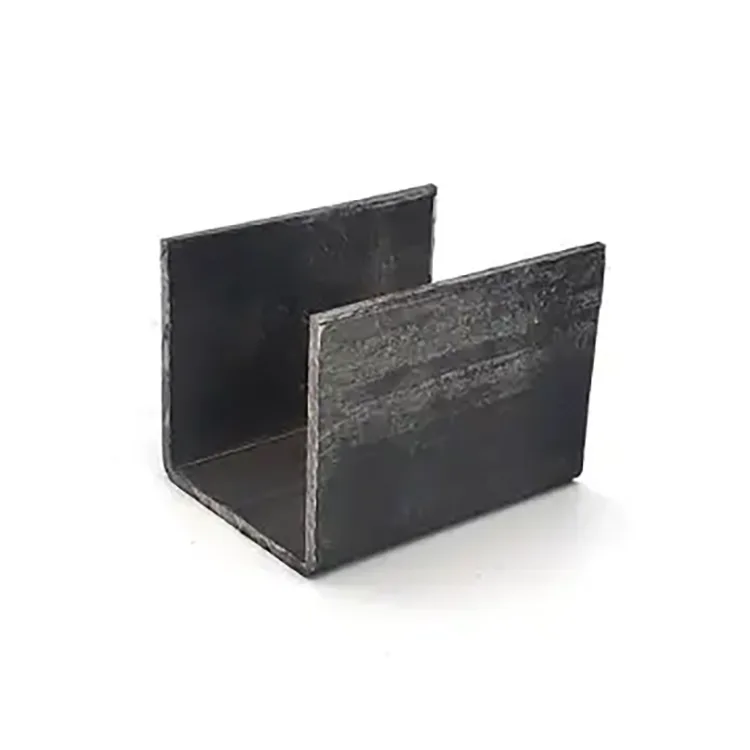
Step 1: Gather the Section and Material Properties
Before any calculation, collect the essentials. For a Cold-Formed U-Channel, the governing properties are:
| Property | Symbol | Why It Matters |
|---|---|---|
| Web depth | h | Controls local buckling |
| Flange width | b | Affects lateral stability |
| Thickness | t | Drives gross area and inertia |
| Yield strength | Fy | Sets the upper stress limit |
| Moment of inertia | Ix, Iy | Determines deflection |
| Section modulus | Sx | Determines bending stress |
Rongheng provides mill certificates and section property tables for every Cold-Formed U-Channel we produce, so engineers can begin with verified data rather than nominal values.
Step 2: Determine the Governing Limit State
A Cold-Formed U-Channel fails in one of several modes, and the lowest result governs. Check each of the following:
-
Yielding — gross section reaches Fy.
-
Local buckling — web or flange buckles before yield.
-
Lateral-torsional buckling — unbraced length is excessive.
-
Shear — web crippling or shear yielding at supports.
-
Deflection — serviceability limit, often the real constraint.
Step 3: Apply the Core Formulas
For a simply supported Cold-Formed U-Channel under uniform load:
-
Moment: M = wL² / 8
-
Bending stress: fb = M / Sx
-
Allowable stress: Fallow = 0.60Fy (ASD) or φFy (LRFD)
-
Deflection: δ = 5wL⁴ / (384EIx)
The section is adequate when fb ≤ Fallow and δ ≤ L/240 (or the project-specified limit).
Step 4: Adjust for Effective Width and Bracing
Thin-walled sections lose stiffness as compression elements buckle. AISC and AISI standards require an effective width reduction for slender webs and flanges. Unbraced spans also reduce capacity dramatically.
| Unbraced Length | Relative Capacity |
|---|---|
| Fully braced | 100% |
| L/2 braced | ~85% |
| Unbraced | ~55% |
Rongheng recommends confirming the effective section modulus with our engineering team when spans exceed 6 feet or loads are cyclic.
Step 5: Verify with a Worked Example
Assume a Cold-Formed U-Channel with Sx = 1.20 in³, Ix = 2.40 in⁴, Fy = 50 ksi, L = 8 ft, and a deflection limit of L/240.
-
Allowable stress: 0.60 × 50 = 30 ksi
-
Allowable moment: 30 × 1.20 = 36 kip-in
-
Allowable uniform load (bending): w = 8M / L² = 8(36) / 64 = 4.5 kip/ft
-
Allowable uniform load (deflection): w = 384EIδ / 5L⁴ ≈ 2.1 kip/ft
Deflection governs, so the safe working load is 2.1 kip/ft. This is why Rongheng always asks for the deflection criterion before quoting a section.
FAQ: Cold-Formed U-Channel Questions Engineers Ask Most
What is the difference between a Cold-Formed U-Channel and a hot-rolled channel?
A Cold-Formed U-Channel is brake-pressed or roll-formed from thin steel strip, typically 0.5–3 mm thick, giving a high strength-to-weight ratio and tight dimensional tolerance, while a hot-rolled channel is thicker, heavier, and produced at high temperature with different residual stress patterns.
How does unbraced length affect the load capacity of a Cold-Formed U-Channel?
As unbraced length increases, the section is free to twist and displace laterally, so lateral-torsional buckling reduces the allowable moment; capacity can drop by 40% or more when a Cold-Formed U-Channel is left fully unbraced over a long span.
Can I increase capacity by nesting two Cold-Formed U-Channels back to back?
Yes, nesting or back-to-back assembly increases the effective section modulus and stiffness, often doubling capacity, but the connection between the two Cold-Formed U-Channel members must be designed to transfer shear so they act as a composite unit.
Conclusion
Calculating the load capacity of a Cold-Formed U-Channel is a disciplined process: collect verified properties, identify the governing limit state, apply the formulas, adjust for effective width and bracing, and confirm with a worked check. Rongheng supports this work with certified material, published section data, and responsive technical assistance for every project.
Contact us today to request section property tables, mill certificates, or a custom Cold-Formed U-Channel quote for your next project.