Article Summary: Transmission line fittings are small but critical components that determine how securely conductors, insulators, towers, cables, and protective devices work together. The right fittings must withstand mechanical tension, electrical loads, wind, vibration, temperature changes, ice, corrosion, and other operating stresses while maintaining reliable electrical contact. This article explains how Transmission Line Fittings work, the major types available, how to select them for different projects, common installation problems, and practical methods for improving long-term transmission line reliability.
What Are Transmission Line Fittings?
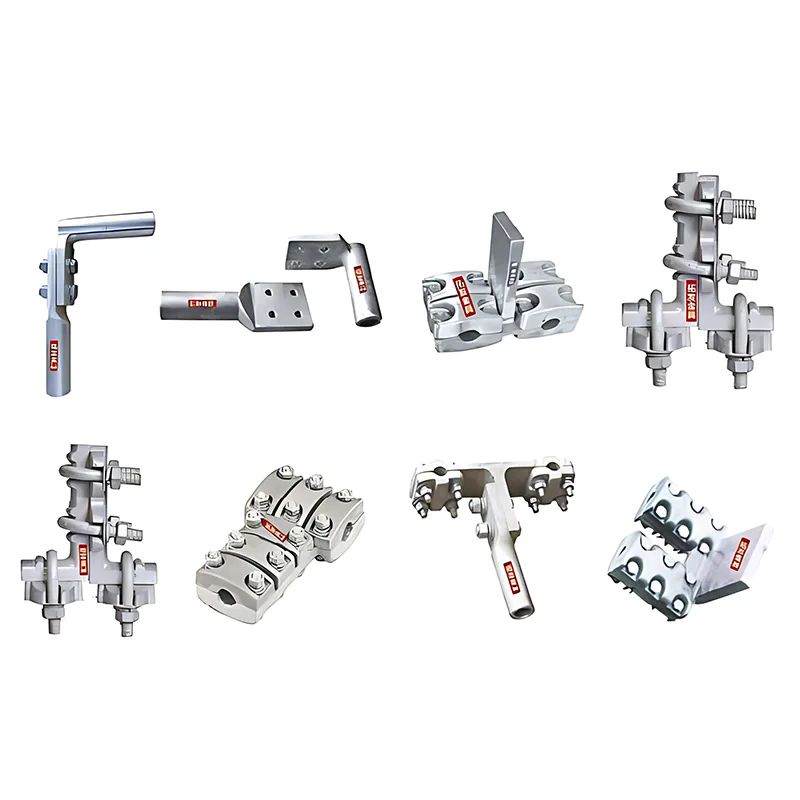
Transmission line fittings are engineered components used to connect, support, secure, protect, and control conductors and related equipment in overhead and high-voltage power transmission systems. Although these components are often much smaller than towers, conductors, or transformers, their performance has a direct effect on the mechanical integrity and electrical continuity of a transmission line.
A transmission system is exposed to continuously changing loads. Conductors experience their own weight, wind pressure, thermal expansion, vibration, and sometimes ice accumulation. At the same time, electrical connections must maintain low contact resistance and stable current-carrying performance. Transmission line fittings provide the physical interface that allows these different elements to operate as one coordinated system.
Depending on the application, fittings may be manufactured from aluminum alloys, galvanized steel, stainless steel, copper, aluminum-steel combinations, composite insulating materials, or other engineered materials. Surface treatment and structural design are selected according to the expected electrical, mechanical, and environmental conditions.
For utilities, EPC contractors, grid operators, and equipment distributors, choosing an appropriate fitting is therefore more than a matter of matching dimensions. The fitting must be compatible with the conductor, voltage level, tower configuration, installation method, environmental conditions, and expected mechanical loads.
Why Are Transmission Line Fittings Important?
The reliability of a transmission line depends on the interaction of many components. A conductor may have excellent electrical characteristics, but poor-quality fittings can introduce excessive contact resistance, mechanical damage, corrosion, or connection failure.
Well-designed Transmission Line Fittings help address several major operating concerns:
-
Mechanical security: Fittings hold conductors and associated components in their intended positions.
-
Electrical continuity: Proper connection surfaces help maintain reliable current flow.
-
Conductor protection: Proper clamps and protective devices reduce mechanical damage caused by vibration and movement.
-
Load distribution: Engineered fittings distribute mechanical forces more effectively across connection points.
-
Environmental resistance: Suitable materials and coatings help withstand moisture, salt, pollution, temperature changes, and other conditions.
-
Installation efficiency: Standardized and well-designed structures can simplify field assembly and reduce installation errors.
-
Long-term maintenance: Reliable fittings reduce the frequency of corrective work and unplanned outages.
The importance of fittings becomes particularly obvious at tension towers, line terminals, corners, conductor joints, branch connections, and areas exposed to strong wind or severe vibration. These locations often experience higher mechanical or electrical stress and therefore require careful component selection.
What Types of Transmission Line Fittings Are Used?
Transmission line fittings are not a single product category. Different components perform different functions, and a complete transmission project may require several fitting types.
1. Suspension Clamps
Suspension clamps support conductors from insulator strings on suspension or tangent towers. They must provide sufficient mechanical support without damaging the conductor surface.
A good suspension clamp should accommodate normal conductor movement while limiting excessive stress concentration. Depending on the line design, conventional suspension clamps, preformed structures, and specialized configurations may be used.
2. Tension Clamps
Tension clamps are installed where conductors must be securely terminated or where substantial longitudinal conductor forces are transferred to the supporting structure. They are commonly used at tension towers, terminal towers, and certain corner locations.
Compression, wedge, and preformed designs may be selected according to conductor construction and project requirements. The fitting must be capable of transmitting the required mechanical load without slipping or damaging the conductor.
3. Connection and Link Fittings
Connection fittings provide interfaces between insulators, tower hardware, clamps, and other line components. Examples include clevises, eyes, U-shaped connection components, plates, and other linkage hardware.
Dimensional compatibility is particularly important because an apparently minor mismatch can complicate assembly or introduce undesirable mechanical loading.
4. Splicing Fittings
Splicing fittings connect two conductor sections and are used during new construction, conductor replacement, line extension, or repair work. The connection must provide both mechanical strength and electrical continuity.
Typical designs include compression sleeves, preformed splices, parallel-groove configurations, and repair sleeves. Selection should consider conductor material, diameter, construction, installation equipment, and required mechanical performance.
5. T-Connector Fittings
T-connectors create branch connections from a main conductor without requiring the entire conductor to be interrupted. They are useful in substations, overhead networks, branch circuits, and other situations where power needs to be diverted from a main line.
The contact surfaces and clamping structure should be designed to provide stable electrical contact while preventing excessive mechanical stress on the conductors.
6. Protective Fittings
Protective fittings help control conductor vibration, electrical stress, and mechanical wear. Common examples include vibration dampers, armor rods, spacers, grading rings, and shielding components.
These fittings are especially important on long-span lines and high-voltage or extra-high-voltage systems where wind-induced vibration, conductor movement, and electric-field concentration can become significant design concerns.
7. Cable Fittings
Cable fittings are used for cable termination, connection, fixing, grounding, and transition between different sections of a power system. They may be required in underground transmission systems, cable corridors, substations, and transition structures.
8. Insulated Fittings
Insulated fittings incorporate materials with appropriate dielectric properties to provide electrical isolation while retaining sufficient mechanical strength. They can be useful in compact distribution and transmission configurations where electrical clearance and insulation coordination require special attention.
How Do Fittings Handle Mechanical Loads?
Mechanical loading is one of the most important considerations when selecting Transmission Line Fittings. A fitting may experience static and dynamic forces throughout its service life.
Typical mechanical influences include:
-
Conductor self-weight
-
Longitudinal conductor tension
-
Wind pressure
-
Ice and snow accumulation
-
Conductor vibration
-
Thermal expansion and contraction
-
Short-circuit electrodynamic forces
-
Installation and maintenance loads
One major challenge is that these forces do not always remain constant. Wind direction and speed change, conductor temperature varies with current and weather, and vibration can create repeated stress cycles. Consequently, a fitting should not only withstand a single maximum load; it should also be suitable for repeated loading during its expected service life.
For tension applications, the fitting must transfer conductor force securely. For suspension applications, the design should provide adequate support while accommodating the normal movement of the conductor. In vibration-prone areas, additional protective fittings may be necessary to reduce fatigue-related damage.
Correct load distribution is also essential. A poorly matched clamp can create localized pressure that damages strands or weakens the conductor near the connection point. For this reason, conductor diameter, construction, material, and installation method should always be considered together.
How Do Fittings Maintain Electrical Performance?
Transmission line fittings have both mechanical and electrical responsibilities. A fitting that securely holds a conductor but produces excessive electrical resistance can still become a weak point in the system.
Electrical performance depends on factors such as:
-
Contact area between conductive surfaces
-
Contact pressure
-
Material compatibility
-
Surface condition
-
Corrosion resistance
-
Conductor temperature
-
Current-carrying capacity
-
Installation accuracy
When contact resistance increases, localized heating can occur. Continuous heating may accelerate oxidation, material degradation, and connection deterioration. In severe cases, this can lead to a progressive failure mechanism in which higher resistance produces more heat and additional degradation.
Material selection is therefore critical. Aluminum and copper components, for example, may require suitable transition designs to reduce problems associated with dissimilar-metal contact. Surface treatments can also improve resistance to oxidation and environmental corrosion.
High-voltage systems introduce additional considerations. The shape and geometry of fittings can influence electric-field distribution. In higher-voltage applications, appropriately designed grading or shielding components may be used to reduce electrical stress and help control corona-related effects.
How Should Fittings Be Selected for Harsh Environments?
Transmission infrastructure is often installed outdoors for decades. The environmental conditions at the installation site should therefore be considered before choosing a fitting.
Coastal and Salt-Laden Areas
Salt spray and high humidity can accelerate corrosion of metallic components. Fittings for coastal projects may require suitable corrosion-resistant materials, protective coatings, and careful attention to drainage and surface protection.
Industrial and Polluted Areas
Industrial pollutants can accumulate on insulators and conductive surfaces. In such locations, fitting design and material selection should consider contamination, moisture, and electrical flashover risks.
Cold and Icing Regions
Ice accumulation increases the mechanical loading on conductors and supporting components. The fitting system should be evaluated for the additional weight and for possible changes in conductor movement.
High-Wind Regions
Strong winds can cause conductor vibration and galloping. Appropriate suspension systems, vibration dampers, spacers, and other protective fittings can help control these movements.
High-Temperature Applications
Conductors expand as their temperature rises. Fitting selection should account for the expected operating temperature and conductor movement so that connections remain secure throughout normal thermal cycles.
How Can You Select the Right Transmission Line Fittings?
Choosing the correct fitting requires more than selecting a visually similar component. A reliable procurement process should begin with the technical characteristics of the transmission system.
-
Identify the conductor type. Confirm the conductor material, construction, outside diameter, strand arrangement, and relevant mechanical characteristics.
-
Determine the fitting function. Decide whether the component is required for suspension, tension, splicing, branching, connection, protection, insulation, or cable termination.
-
Confirm voltage requirements. Higher-voltage systems may require specialized designs for electrical-field control and insulation coordination.
-
Calculate mechanical loads. Consider conductor tension, span length, wind, ice, temperature, and other project-specific forces.
-
Evaluate environmental exposure. Consider salt, humidity, industrial pollution, ultraviolet exposure, temperature extremes, and icing.
-
Check material compatibility. Avoid unsuitable combinations of dissimilar metals and select appropriate surface treatments.
-
Verify dimensional compatibility. Confirm bolt sizes, conductor diameters, insulator interfaces, tower hardware, and installation clearances.
-
Review installation requirements. Determine whether hydraulic compression tools, torque-controlled bolts, preformed components, or other equipment is required.
-
Confirm applicable standards. The fitting should be evaluated against the standards and technical specifications applicable to the project and destination market.
-
Consider lifecycle cost. Purchase price is only one factor. Reliability, installation time, maintenance requirements, replacement frequency, and downtime should also be considered.
This process helps prevent a common procurement mistake: selecting a component based only on dimensions while overlooking load capacity, conductor compatibility, environmental exposure, or installation requirements.
How Can Installation Problems Be Prevented?
Even a high-quality fitting can perform poorly if it is incorrectly installed. Field installation should therefore follow the manufacturer's technical documentation and the project's approved procedures.
Important practices include:
-
Inspect fittings before installation for deformation, corrosion, contamination, or missing components.
-
Verify that the fitting model matches the specified conductor and application.
-
Keep conductive contact surfaces clean and free from inappropriate contamination.
-
Use the correct compression die and approved compression sequence for compression-type fittings.
-
Apply specified bolt torque when bolted connections are used.
-
Avoid excessive bending or twisting of conductors during assembly.
-
Check clearances around energized components.
-
Install protective fittings in their specified positions.
-
Document critical installation measurements and inspection results.
For large transmission projects, installation quality control should be incorporated into the project workflow rather than treated as a final inspection activity. Early verification makes it easier to identify dimensional mismatches and prevent costly rework.
How Can Service Life Be Extended?
Transmission line fittings are designed for long-term outdoor service, but periodic inspection remains important. Preventive maintenance can identify early signs of deterioration before they become major failures.
During inspection, maintenance teams should look for:
-
Visible corrosion or coating deterioration
-
Loose bolts or hardware
-
Conductor strand damage near clamps
-
Unusual discoloration caused by heating
-
Cracks, deformation, or abnormal wear
-
Signs of excessive conductor movement
-
Damaged vibration dampers or spacers
-
Abnormal connection temperatures detected during suitable inspection activities
Thermal inspection can be particularly useful for identifying abnormal heating at electrical connections. Mechanical inspection is equally important because repeated vibration and environmental exposure may gradually affect hardware even when there is no obvious electrical problem.
Replacing a deteriorated fitting during planned maintenance is generally easier and less disruptive than dealing with an unexpected connection failure during peak operating conditions.
Transmission Line Fittings Selection Guide
|
Fitting Type
|
Main Function
|
Typical Installation Position
|
Key Selection Considerations
|
|
Suspension Clamp
|
Supports conductors
|
Suspension or tangent towers
|
Conductor diameter, mechanical load, movement, vibration
|
|
Tension Clamp
|
Secures and terminates conductors
|
Tension towers and line terminals
|
Conductor construction, tensile load, installation method
|
|
Splicing Fitting
|
Joins conductor sections
|
Repair and connection locations
|
Electrical continuity, mechanical strength, conductor compatibility
|
|
T-Connector
|
Creates branch connections
|
Branches and substations
|
Conductor size, contact area, clamping force
|
|
Link Fitting
|
Connects line components
|
Insulator and tower assemblies
|
Dimensions, load rating, interface compatibility
|
|
Vibration Damper
|
Controls conductor vibration
|
Long spans and wind-exposed lines
|
Span conditions, conductor characteristics, vibration behavior
|
|
Armor Rod
|
Protects conductor strands
|
Suspension and clamp areas
|
Conductor diameter, material, clamp configuration
|
|
Grading or Shielding Fitting
|
Controls electrical-field concentration
|
High-voltage line assemblies
|
Voltage level, geometry, insulation coordination
|
Article Outline
-
Definition and role of Transmission Line Fittings
-
Importance of mechanical and electrical reliability
-
Major fitting categories and their functions
-
Mechanical load management
-
Electrical performance and contact reliability
-
Environmental adaptability
-
Fitting selection methodology
-
Installation quality control
-
Maintenance and service-life management
-
Practical fitting comparison
-
Frequently asked questions
-
Conclusion and supplier considerations
Frequently Asked Questions About Transmission Line Fittings
What is the main purpose of Transmission Line Fittings?
The primary purpose is to connect, support, secure, protect, or terminate conductors and associated transmission-line components. Different fittings perform different functions, so a complete line may require several types.
How do I know which fitting is compatible with my conductor?
Start with the conductor material, outside diameter, construction, tensile characteristics, and application. The fitting should be specifically matched to the conductor specification rather than selected only by appearance or approximate size.
Are transmission line fittings suitable for high-voltage applications?
Yes. Specialized fittings are widely used in high-voltage transmission systems. However, the design must be appropriate for the voltage level, mechanical loading, insulation arrangement, electrical-field conditions, and applicable technical requirements.
Why is corrosion resistance important for transmission fittings?
Many fittings remain outdoors for extended periods and are exposed to moisture, pollution, salt, temperature changes, and other environmental factors. Corrosion can reduce mechanical strength and degrade electrical contact, making appropriate material and surface treatment important.
What is the difference between suspension and tension clamps?
A suspension clamp primarily supports a conductor at a suspension point while accommodating controlled movement. A tension clamp is designed to secure the conductor and transfer significant longitudinal mechanical force at locations such as tension towers and terminals.
Why are vibration dampers used on transmission lines?
Wind can cause repeated conductor vibration, particularly on long spans. Vibration dampers help reduce harmful oscillations and associated fatigue or wear around conductor attachment points.
Can transmission line fittings be customized?
Depending on the manufacturer and project requirements, customized fittings may be possible. Customization can involve dimensions, materials, surface treatment, connection configuration, conductor compatibility, or special installation requirements. Technical drawings and complete project specifications should be provided before production.
What information should I provide when requesting a quotation?
Useful information includes conductor type and size, voltage level, fitting category, application location, mechanical load requirements, environmental conditions, quantity, applicable standards, drawings, and delivery destination. More complete technical information allows a supplier to recommend a more suitable configuration.
How often should transmission line fittings be inspected?
Inspection intervals depend on the line's operating environment, voltage level, asset-management policy, local regulations, and historical performance. Lines exposed to severe wind, salt, pollution, icing, or heavy vibration may require more frequent inspection.
What should I do if a fitting shows signs of overheating or damage?
Do not ignore abnormal heating, visible deformation, severe corrosion, or conductor damage. The affected section should be assessed by qualified personnel according to the applicable safety procedures, and replacement or corrective action should be determined based on the actual condition.
Conclusion
Transmission line fittings are fundamental to the safe and dependable operation of modern power networks. Their role extends far beyond simply holding conductors in place. They must transfer mechanical forces, maintain reliable electrical connections, protect conductor surfaces, accommodate environmental movement, and remain stable under demanding outdoor conditions.
The best fitting solution begins with a clear understanding of the conductor, voltage level, mechanical loading, installation position, environmental exposure, and applicable technical requirements. Suspension clamps, tension clamps, splicing fittings, T-connectors, link fittings, cable fittings, vibration-control products, and electrical protection components each address different operational requirements.
For utilities and engineering contractors, selecting the correct fitting can reduce installation difficulties, minimize maintenance requirements, improve connection reliability, and support longer equipment service life. Equally important, careful installation and periodic inspection help ensure that the expected performance of the fitting is maintained throughout the transmission system's operating period.
Huixing Zhongdian (Beijing) Electric Co., Ltd. provides transmission-line and power-fitting solutions for different power infrastructure applications. By considering product configuration, conductor compatibility, mechanical requirements, electrical performance, and operating environment together, customers can develop a more dependable fitting solution for both new transmission projects and system upgrades.
Looking for the Right Transmission Line Fittings?
If you are planning a transmission line project, replacing existing fittings, or looking for a suitable solution for a specific conductor and operating environment, the right technical support can make procurement much easier. Share your conductor specifications, voltage level, application requirements, drawings, and expected quantity with Huixing Zhongdian (Beijing) Electric Co., Ltd. for a more suitable product recommendation.