How Do Solid Rivets Provide Reliable Fastening Solutions for Industrial Applications?
2026-07-08
Article Summary
Solid rivets are one of the oldest yet most dependable mechanical fastening solutions used across aerospace, automotive, construction, machinery, and metal fabrication industries. With excellent strength, vibration resistance, and long-term durability, solid rivets continue to play an essential role where permanent and secure connections are required.
This article explains how solid rivets work, why manufacturers choose them over other fastening methods, how to select the right type, and what common challenges customers face during application. It also introduces how Nuote Metals Technology Co.,Ltd. supports global customers with high-quality solid rivet manufacturing solutions designed for demanding industrial environments.
Table of Contents
- What Are Solid Rivets and How Do They Work?
- Why Are Solid Rivets Still Widely Used in Modern Manufacturing?
- Where Are Solid Rivets Commonly Applied?
- How to Select the Right Solid Rivets for Your Project?
- What Problems Can Solid Rivets Help Solve?
- How Are High-Quality Solid Rivets Manufactured?
- Solid Rivets Compared with Other Fastening Methods
- Frequently Asked Questions About Solid Rivets
Article Outline
- Understanding the structure and working principle of solid rivets
- Exploring performance advantages in industrial environments
- Analyzing application industries and customer requirements
- Providing guidance for choosing suitable solid rivets
- Explaining manufacturing processes and quality considerations
- Answering common questions from buyers and engineers
What Are Solid Rivets and How Do They Work?
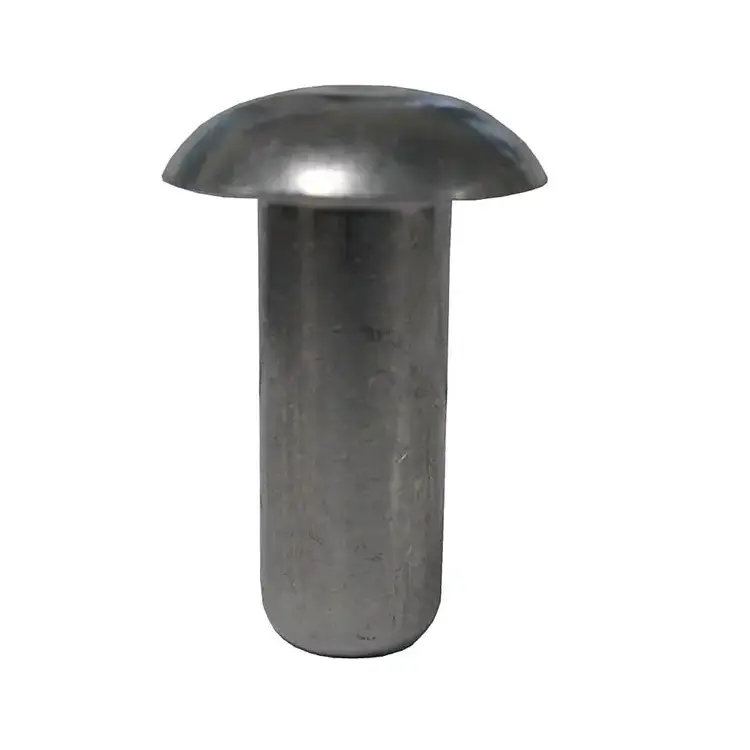
Solid rivets are permanent mechanical fasteners made from a solid metal shaft with a pre-formed head on one end. During installation, the opposite end of the rivet is deformed through hammering, pressing, or automated riveting equipment to create a second head. This process securely locks two or more components together.
Unlike removable fasteners such as bolts and screws, solid rivets create a strong connection that can withstand continuous stress, vibration, and harsh operating conditions. Their simple structure provides excellent reliability, making them suitable for applications where safety and durability are critical.
The basic structure of a solid rivet includes:
- Head: The formed end that holds materials together.
- Body or Shank: The cylindrical section inserted through the prepared holes.
- Tail: The unfinished end that is shaped during installation.
The permanent connection created by solid rivets makes them especially valuable in industries where failure prevention is a priority.
Why Are Solid Rivets Still Widely Used in Modern Manufacturing?
Although modern fastening technologies continue to develop, solid rivets remain popular because they provide unique performance benefits that many alternative solutions cannot completely replace.
| Key Advantage | Customer Benefit |
|---|---|
| High Mechanical Strength | Provides stable connections capable of handling heavy loads and repeated stress. |
| Excellent Vibration Resistance | Reduces loosening risks in machinery and transportation applications. |
| Long Service Life | Maintains connection performance under demanding working conditions. |
| Reliable Permanent Joining | Creates secure assemblies without frequent maintenance requirements. |
| Wide Material Compatibility | Can be produced with different metals for various environments. |
For industries requiring dependable fastening performance, solid rivets provide a practical solution that balances strength, durability, and cost efficiency.
Where Are Solid Rivets Commonly Applied?
Solid rivets are widely used in industries where structural integrity and long-term reliability are essential. Their ability to maintain performance under pressure makes them suitable for many engineering applications.
- Aerospace Industry: Used for aircraft structures, panels, and components requiring lightweight but strong fastening.
- Automotive Manufacturing: Applied in vehicle structures and metal assemblies requiring stable connections.
- Construction Industry: Used for steel structures, bridges, and heavy-duty frameworks.
- Machinery Production: Suitable for industrial equipment exposed to vibration and mechanical stress.
- Rail Transportation: Provides durable fastening solutions for railway structures and components.
- Metal Fabrication: Supports customized joining requirements for different fabricated products.
Different industries require different specifications, including size, material, surface treatment, and dimensional accuracy. Selecting the correct solid rivet is essential for achieving the best performance.
How to Select the Right Solid Rivets for Your Project?
Choosing suitable solid rivets requires careful consideration of application conditions, material requirements, and installation methods. Incorrect selection may reduce connection strength or affect product reliability.
- Consider Material Compatibility: Choose rivet materials that match the connected components to prevent corrosion and ensure long-term stability.
- Check Size Requirements: Diameter and length should match the thickness of the materials being joined.
- Evaluate Working Environment: Applications exposed to moisture, chemicals, or extreme temperatures may require specialized materials or coatings.
- Confirm Installation Method: Different installation equipment may require specific rivet designs.
- Focus on Manufacturing Quality: Accurate dimensions and consistent performance are essential for industrial production.
Professional suppliers can help customers identify suitable solutions based on application requirements and production standards.
What Problems Can Solid Rivets Help Solve?
Many manufacturers face challenges such as loose connections, frequent maintenance, and reduced product reliability when using unsuitable fastening methods. Solid rivets address these issues through their permanent joining structure.
- Reducing Fastener Loosening: Solid rivets maintain strong connections even under continuous vibration.
- Improving Product Safety: Reliable fastening helps protect structural components from unexpected failures.
- Lowering Maintenance Requirements: Permanent installation reduces the need for regular tightening or replacement.
- Enhancing Production Efficiency: Standardized rivet solutions support consistent manufacturing processes.
For companies requiring stable and durable fastening performance, solid rivets remain a trusted industrial choice.
How Are High-Quality Solid Rivets Manufactured?
Producing reliable solid rivets requires advanced manufacturing technology, strict quality control, and careful material selection. A professional manufacturer must control every stage from raw material inspection to final product testing.
- Material Preparation: High-quality metal materials are selected according to customer requirements.
- Cold Heading or Forming Process: The basic rivet shape is created through precision forming technology.
- Machining and Surface Treatment: Additional processing improves dimensional accuracy and corrosion resistance.
- Quality Inspection: Finished rivets are tested for size accuracy, strength, and appearance.
- Packaging and Delivery: Products are safely packaged to maintain quality during transportation.
Nuote Metals Technology Co.,Ltd. focuses on providing precision solid rivets manufactured according to industrial requirements. With professional production capabilities and attention to quality details, the company delivers reliable fastening products for customers worldwide.
Solid Rivets Compared with Other Fastening Methods
| Fastening Type | Characteristics |
|---|---|
| Solid Rivets | Permanent connection, high strength, excellent vibration resistance. |
| Bolts and Screws | Removable and convenient for maintenance but may require tightening. |
| Welding | Creates strong joints but may require more complex equipment and processes. |
| Adhesive Bonding | Suitable for lightweight applications but may have environmental limitations. |
The best fastening method depends on product requirements, operating conditions, and production goals. Solid rivets remain a preferred choice when permanent strength and reliability are required.
Frequently Asked Questions About Solid Rivets
1. What materials are commonly used for solid rivets?
Solid rivets can be manufactured from materials such as aluminum, steel, stainless steel, copper, and other metal alloys depending on application requirements.
2. Are solid rivets stronger than screws?
Solid rivets can provide excellent shear strength and vibration resistance, making them suitable for permanent structural connections. The best choice depends on the specific application.
3. Can solid rivets be customized?
Yes. Professional manufacturers can customize dimensions, materials, finishes, and specifications according to customer requirements.
4. Are solid rivets suitable for heavy-duty applications?
Yes. Their strong permanent connection makes them widely used in aerospace, construction, transportation, and industrial equipment applications.
5. How can customers ensure solid rivet quality?
Customers should choose experienced manufacturers with strict quality control systems, advanced production equipment, and professional technical support.
Conclusion
Solid rivets continue to be an important fastening solution for industries requiring dependable, long-lasting, and high-strength connections. Their excellent durability, resistance to vibration, and stable performance make them suitable for demanding applications worldwide.
By selecting the right specifications and working with an experienced supplier, manufacturers can improve product reliability and reduce maintenance challenges. Nuote Metals Technology Co.,Ltd. provides professional solid rivet solutions designed to meet diverse industrial needs.
For high-quality solid rivets with reliable performance and customized manufacturing support, please contact us today and discover the right fastening solution for your application.