How Do Sealed Deep Groove Ball Bearings Prevent Contamination?
2026-11-17
A plant maintenance engineer replaces the same conveyor bearing three times in a year. The bearing is not overloaded, the alignment is correct, and the grease is the specified grade. When the failed bearing is cut open, the raceway shows dark tracks and the grease is gritty. The problem is not the load. It is the contamination that entered the bearing from the wash down water and the flour dust in the plant air. Sealed Deep Groove Ball Bearings are designed to stop this entry, but the seal type, the seal material, and the installation handling all determine whether the protection actually works. This guide explains the mechanism and the checks that keep the protection intact.
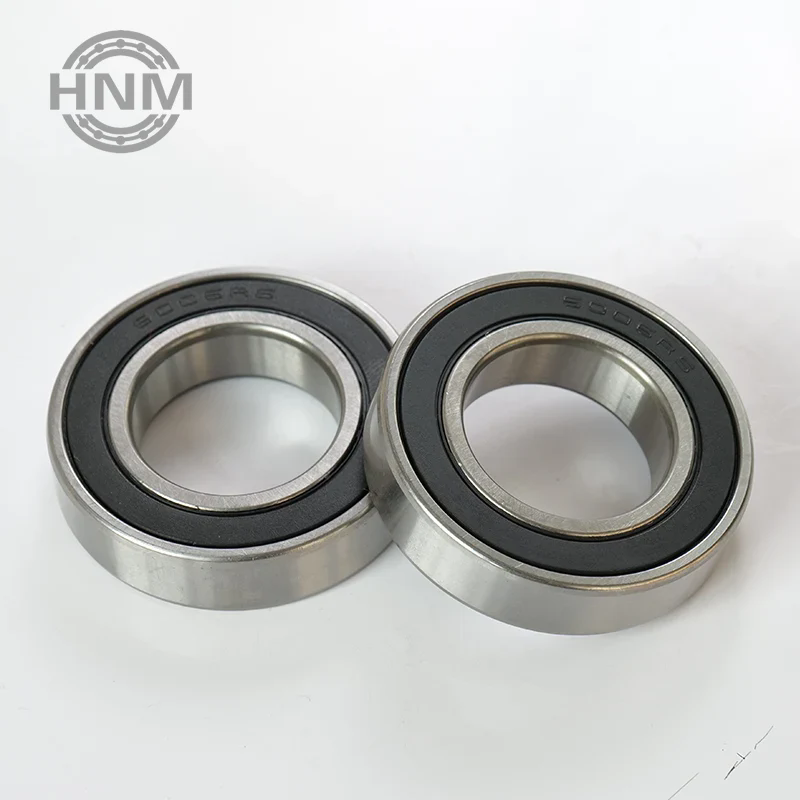
1. Why Does Dust and Wash Water Destroy an Open Bearing While a Sealed Bearing Survives?
An open bearing has no barrier between the rolling contact and the surrounding air. A particle that is smaller than the internal clearance can enter the raceway and become trapped between the ball and the race. Once trapped, the particle acts as a third body and creates a indentation that grows into a spall. Water has a similar effect. It washes the grease out of the raceway and leaves a thin film that cannot support the load, and it promotes corrosion on the race surface. In our factory, we produce Deep Groove Ball Bearings with three protection configurations, open, shielded, and sealed, and we match the configuration to the environment. Cixi Hengji Bearing Co., Ltd. has been manufacturing bearings for over 12 years.
A sealed bearing interrupts the path. The seal closes the gap between the inner ring and the outer ring, so the particle cannot reach the raceway and the water cannot wash the grease out. The seal is not a perfect barrier, but it reduces the ingress rate by two to three orders of magnitude compared with an open bearing. That reduction is the difference between a bearing that lasts a few months and one that lasts several years.
2. How Do Contact Seals and Non Contact Seals Differ in the Way They Block Contamination?
There are two main seal designs for a Deep Groove Ball Bearings. The contact seal, often marked 2RS, has a rubber lip that presses against the inner ring. The lip creates a physical barrier that blocks both particulate and liquid ingress. The non contact seal, often marked 2RZ or ZZ, has a metal or rubber shield that sits close to the inner ring without touching it. The gap is small, typically 0.1 to 0.3 millimeters, and it blocks large particles but allows fine dust and water vapor to pass. The contact seal has a higher starting torque and a lower speed limit because of the friction at the lip. The non contact seal has a lower torque and a higher speed limit but a lower protection level. The table below compares the two designs.
| Seal type | Ingress protection | Starting torque | Speed limit | Typical environment |
| Contact seal (2RS) | High (dust and splash water) | Higher | Lower | Wash down areas, dusty plant air |
| Non contact seal (2RZ / ZZ) | Moderate (large particles only) | Lower | Higher | Clean indoor machinery, high speed shafts |
| Open (no seal) | None | Lowest | Highest | Oil bath or recirculating oil systems |
Maintenance engineer's note: The most common specification error we see is a non contact shield installed in a wash down area. The shield blocks the visible dust but allows the water mist to enter, and the bearing fails after a few months. In our factory, we recommend the contact seal for any application where water or fine dust is present, and we reserve the non contact shield for clean, high speed applications. Cixi Hengji Bearing Co., Ltd. reviews the environment with the customer before recommending a seal type.
3. Why Does the Seal Material and Grease Compatibility Decide Whether the Protection Lasts?
The seal material must resist the operating temperature and the chemical environment. Nitrile rubber (NBR) is the standard material for general purpose bearings and covers temperatures from minus 40 to 120 degrees Celsius. Fluorocarbon rubber (FKM) is used for higher temperatures up to 200 degrees Celsius and for resistance to some oils and chemicals. Silicone rubber is used for very low temperatures but has low mechanical strength. The seal material must also be compatible with the grease. A grease that contains a high proportion of ester base oil can soften the NBR lip over time, and the seal loses its contact pressure. A grease with a mineral base oil is compatible with NBR and is the safer choice for general purpose seals. The table below shows the compatibility of common seal materials.
| Seal material | Temperature range | Oil resistance | Grease compatibility |
| NBR | -40 to 120 degrees C | Good for mineral oil | Mineral grease, lithium soap |
| FKM | -20 to 200 degrees C | Excellent for synthetic oil | Synthetic grease, high temperature |
| Silicone | -60 to 180 degrees C | Moderate | Limited; avoid ester base oil |
In our factory, the grease is selected together with the seal. A high temperature bearing with an FKM seal is filled with a synthetic grease that is compatible with FKM and that has a high dropping point. A general purpose bearing with an NBR seal is filled with a lithium soap mineral grease. The seal and the grease are tested as a pair, not separately. Cixi Hengji Bearing Co., Ltd. provides the grease and seal specification with each sealed Deep Groove Ball Bearings lot.
4. Which Installation and Handling Errors Break the Seal Protection?
The seal is a delicate component. A seal that is damaged during handling cannot protect the bearing, even if the design is correct. There are four common errors. The first is dropping the bearing. A drop can deform the seal lip or the shield and can create a gap. The second is mounting the bearing by applying force through the outer ring when the inner ring is the interference fit. The force can distort the seal. The third is using a hammer or a drift instead of a proper press or an induction heater. The impact can crack the seal and can brinell the raceway. The fourth is leaving the bearing in its packaging on a dirty floor before installation. Dust can accumulate on the seal and can be pushed into the bearing during mounting. In our factory, we recommend that the bearing be kept in its original packaging until the moment of installation, and that the mounting force be applied only to the ring that is being fitted. We also recommend an induction heater for any bearing with an interference fit above 0.02 millimeters, because the heater avoids the impact that damages the seal.
The installation error is often invisible. The bearing is mounted, the machine runs, and the failure appears weeks later. By then the seal damage is difficult to trace. For this reason, our installation guide includes a visual check of the seal before mounting and a record of the mounting method. The check is simple: the seal lip should be uniform around the circumference, and there should be no gap between the seal and the inner ring. If the lip is distorted or if the gap is visible, the bearing should not be used.
5. How Should Buyers Verify the Contamination Protection of a Sealed Bearing Purchase?
The buyer should verify four items. The first is the seal designation. The bearing should be marked 2RS for a contact seal or 2RZ for a non contact seal, and the marking should match the purchase order. The second is the seal material. The supplier should state whether the seal is NBR, FKM, or another material, and the material should match the temperature and the chemical environment. The third is the grease. The supplier should state the grease type and the fill amount. The fourth is the packaging. The bearing should be individually wrapped and should be protected from dust and moisture during transport. In our factory, we provide the seal designation, the seal material, and the grease specification on the box label and on the inspection certificate. We also provide a sample of the seal material on request so that the buyer can verify the compatibility with the grease and the environment. Cixi Hengji Bearing Co., Ltd. can supply the bearing with a specific grease and seal combination for a project, and we can provide the test report for the combination.
We recommend that the buyer open one bearing from each lot and inspect the seal before the lot is released to the assembly line. The inspection should include the lip uniformity, the gap between the seal and the inner ring, and the absence of grease leakage on the outside of the seal. A bearing with grease on the outside of the seal may have been overfilled or may have a damaged seal, and it should be rejected.
Frequently Asked Questions About Sealed Deep Groove Ball Bearings and Contamination
Sealed Deep Groove Ball Bearings prevent contamination by closing the gap between the inner and outer rings with a seal that blocks dust and water. The protection level depends on the seal design, the seal material, and the grease compatibility. The seal can be damaged during handling and installation, so the mounting method must be controlled. The buyer should verify the seal designation, the seal material, the grease, and the packaging before the lot is released. When the design and the handling are correct, the sealed bearing delivers the long life that the application requires.