How do Roller Guide Rails improve industrial motion systems?
2026-06-30
Abstract
Roller Guide Rails are precision-engineered linear motion components designed to enhance load handling, reduce friction, and improve positioning accuracy in industrial systems. This article explores how Roller Guide Rails work, why they are essential in modern automation, and how they solve common operational challenges such as wear, misalignment, and inefficiency. It also highlights key selection criteria, application scenarios, and maintenance strategies, with insights into solutions provided by RIHOO, a professional manufacturer in the field of industrial linear motion systems.
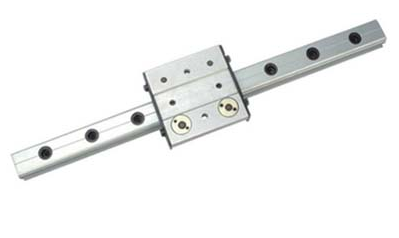
Table of Contents
- 1. Overview of Roller Guide Rails
- 2. Core Components and Working Principle
- 3. Key Benefits in Industrial Systems
- 4. Industrial Applications
- 5. Selection Criteria
- 6. Installation and Maintenance
- 7. Common Pain Points and Engineering Solutions
- 8. Why Choose RIHOO Roller Guide Rails
- 9. Frequently Asked Questions
- 10. Conclusion
1. Overview of Roller Guide Rails
Roller Guide Rails are linear motion systems that use rolling elements—typically cylindrical or needle rollers—to guide movement along a fixed rail path. Unlike sliding guide systems, which rely on surface contact and lubrication, roller-based systems minimize friction by converting sliding motion into rolling motion.
This structural difference significantly improves load efficiency and operational smoothness, especially in high-load, high-speed, or precision-critical environments such as CNC machining, automation assembly lines, and heavy-duty transport systems.
2. Core Components and Working Principle
A typical Roller Guide Rail system consists of three main components:
- Guide Rail: A hardened steel track that defines the motion path.
- Roller Carriage: A housing unit containing precision rollers.
- Rolling Elements: Cylindrical rollers that distribute load and enable smooth motion.
When a load is applied, the rollers rotate between the rail and carriage surfaces. This rolling action dramatically reduces friction coefficients compared to sliding systems. As a result, motion becomes smoother, energy consumption decreases, and wear is significantly reduced.
3. Key Benefits in Industrial Systems
Roller Guide Rails offer multiple advantages that directly address common industrial inefficiencies:
- High Load Capacity: Suitable for heavy machinery and dynamic loads.
- Low Friction Operation: Reduced energy consumption and heat generation.
- Improved Precision: Stable linear motion with minimal deviation.
- Extended Service Life: Reduced wear compared to sliding systems.
- High Rigidity: Maintains structural stability under stress.
These benefits make Roller Guide Rails a preferred choice in industries requiring both durability and precision.
4. Industrial Applications
Roller Guide Rails are widely used across multiple sectors due to their adaptability and performance stability.
- CNC machining centers and milling equipment
- Automated production lines
- Heavy-duty conveyor systems
- Industrial robots and manipulators
- Precision measurement instruments
- Packaging and logistics systems
In each application, Roller Guide Rails ensure consistent motion control, which is critical for maintaining product quality and production efficiency.
5. Selection Criteria
Choosing the correct Roller Guide Rail system depends on operational requirements. The following table summarizes key selection factors:
| Factor | Description | Impact on Performance |
|---|---|---|
| Load Capacity | Maximum weight system must support | Ensures structural safety and durability |
| Precision Level | Required positioning accuracy | Critical for machining and robotics |
| Speed Requirement | Movement velocity during operation | Affects lubrication and roller design |
| Environmental Conditions | Dust, temperature, humidity exposure | Determines sealing and material choice |
| Maintenance Frequency | Service intervals required | Impacts lifecycle cost |
6. Installation and Maintenance
Proper installation is essential to maximize performance and service life. Misalignment during setup can lead to uneven wear or reduced precision.
Installation guidelines include:
- Ensure rail mounting surfaces are flat and clean
- Use precision alignment tools during assembly
- Apply recommended torque values for fasteners
- Verify parallelism between dual rail systems
Maintenance practices include:
- Regular lubrication of rolling elements
- Inspection for debris accumulation
- Monitoring wear patterns
- Periodic re-alignment checks
7. Common Pain Points and Engineering Solutions
Industrial users often face challenges when using traditional sliding guide systems. Roller Guide Rails provide targeted solutions:
- Excessive Wear: Rolling motion reduces surface abrasion.
- High Energy Consumption: Lower friction reduces drive force requirements.
- Inconsistent Precision: Stable rolling motion improves repeatability.
- Frequent Maintenance: Longer service intervals reduce downtime.
By addressing these issues, Roller Guide Rails improve operational continuity and reduce total lifecycle cost.
8. Why Choose RIHOO Roller Guide Rails
RIHOO specializes in high-performance linear motion solutions designed for industrial-grade applications. Its Roller Guide Rails are engineered with precision machining, advanced heat treatment processes, and strict quality control standards.
Key advantages of RIHOO solutions include:
- High dimensional accuracy for precision industries
- Optimized load distribution design
- Enhanced durability under continuous operation
- Customizable configurations for diverse machinery
- Reliable global supply capability
By integrating RIHOO Roller Guide Rails into production systems, manufacturers can achieve higher throughput, improved reliability, and reduced operational downtime.
9. Frequently Asked Questions
Q1: What makes Roller Guide Rails different from ball guide systems?
Roller systems use cylindrical rolling elements, which provide higher load capacity and rigidity compared to ball-based systems.
Q2: Are Roller Guide Rails suitable for high-speed applications?
Yes, they are designed for both high-speed and heavy-load environments, provided proper lubrication is maintained.
Q3: How often should maintenance be performed?
Maintenance frequency depends on operating conditions, but periodic inspection every 3–6 months is commonly recommended.
Q4: Can Roller Guide Rails be customized?
Yes, manufacturers like RIHOO offer customized solutions based on load, size, and environmental requirements.
Q5: What industries benefit most from Roller Guide Rails?
CNC machining, automation, robotics, logistics, and heavy manufacturing industries benefit significantly.
10. Conclusion
Roller Guide Rails are a critical component in modern industrial motion systems, offering a combination of precision, durability, and efficiency that traditional systems cannot easily match. By reducing friction and improving load distribution, they enhance machine performance while lowering operational costs.
With advanced engineering and manufacturing expertise, RIHOO provides reliable Roller Guide Rail solutions tailored to demanding industrial environments. Whether for automation, machining, or heavy-duty applications, these systems deliver long-term stability and performance consistency.
For customized solutions, technical consultation, or product inquiries, contact us today at RIHOO and explore how Roller Guide Rails can optimize your industrial systems.