

How Do Rod Ends Work in Mechanical and Industrial Applications?
2026-01-30
Article Summary
Rod ends are essential mechanical components widely used in industrial equipment, automotive systems, agricultural machinery, and automation assemblies. They allow controlled angular movement while maintaining reliable load transmission. This article explains how rod ends function, why they are critical in motion systems, how to choose the right type, and how common operational problems can be avoided. The content focuses on practical engineering concerns such as durability, alignment, load capacity, and service life.
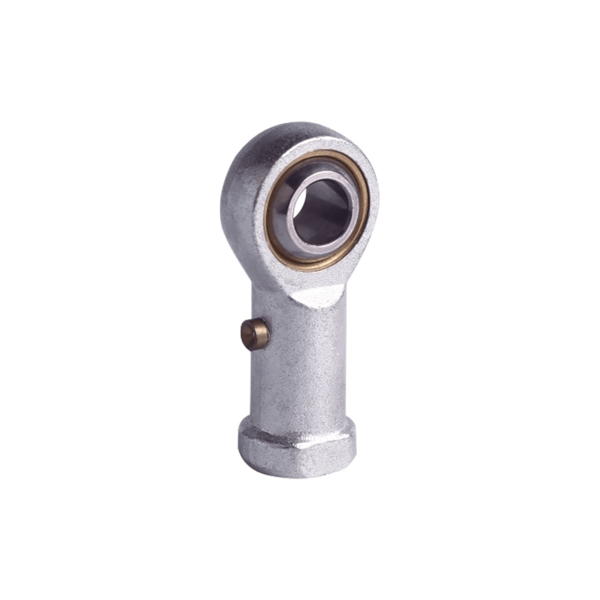
Table of Contents
- Article Outline
- Understanding Rod Ends
- Core Structure and Working Principle
- Main Types of Rod Ends
- Key Technical Parameters
- Industrial Application Scenarios
- How to Select the Right Rod Ends
- Frequently Asked Questions
- Conclusion and Contact Us
Article Outline
- Definition and functional purpose of rod ends
- Mechanical structure and movement mechanism
- Material options and performance impact
- Load handling and environmental considerations
- Selection logic for industrial users
Understanding Rod Ends
Rod ends, also known as spherical rod ends or Heim joints, are mechanical joints that consist of a threaded shank and a spherical bearing housed within a head. Their primary role is to connect linkages while accommodating misalignment and angular movement. In many industrial systems, perfect alignment is difficult to maintain due to vibration, thermal expansion, or dynamic loads. Rod ends address this challenge by allowing flexibility without compromising structural integrity.
In production environments, improper joint selection often leads to premature wear, noise, or system failure. Understanding how rod ends function is critical for reducing downtime and improving mechanical reliability.
Core Structure and Working Principle
A rod end consists of three main elements: the spherical ball, the race or liner, and the housing with an integrated threaded shank. The spherical ball rotates within the race, allowing angular motion along multiple axes. This design enables rod ends to absorb misalignment while transmitting tensile or compressive forces.
The threaded shank allows easy integration into rods, linkages, or actuator systems. During operation, loads are transferred from the connected component through the ball to the housing, distributing stress evenly across the contact surface.
Main Types of Rod Ends
- Male Rod Ends: External threads for direct installation into internally threaded components
- Female Rod Ends: Internal threads for use with external threaded rods
- Metal-to-Metal Rod Ends: Designed for high load and high temperature environments
- Self-Lubricating Rod Ends: Equipped with PTFE liners for maintenance-free operation
- Corrosion-Resistant Rod Ends: Stainless steel or coated options for harsh environments
Key Technical Parameters
| Parameter | Description |
|---|---|
| Thread Size | Determines compatibility with rods or housings |
| Static Load Rating | Maximum load the rod end can withstand without deformation |
| Dynamic Load Rating | Load capacity during continuous motion |
| Misalignment Angle | Maximum angular movement allowed |
| Material | Carbon steel, alloy steel, or stainless steel options |
Industrial Application Scenarios
Rod ends are used across multiple industries due to their versatility. In automation systems, they ensure smooth motion transfer in linear actuators. In agricultural machinery, they absorb vibration and misalignment caused by uneven terrain. Automotive suspension systems rely on rod ends for precise steering control. Industrial equipment manufacturers often choose rod ends to improve reliability in systems exposed to repetitive stress and fluctuating loads.
Companies such as Dongzhou supply rod ends designed to meet the demands of global industrial standards, focusing on dimensional accuracy and long-term performance.
How to Select the Right Rod Ends
Selecting the correct rod end requires evaluating load direction, movement frequency, environmental exposure, and installation constraints. Oversizing can increase costs, while undersizing leads to early failure. Engineers should consider whether maintenance-free liners are required or if periodic lubrication is acceptable.
Environmental factors such as moisture, chemicals, or extreme temperatures should guide material selection. Stainless steel or coated rod ends are often preferred in corrosive environments.
Frequently Asked Questions
What causes premature wear in rod ends?
Premature wear is commonly caused by excessive load, improper alignment beyond the allowable angle, or contamination from dust and moisture entering the bearing surface.
Are self-lubricating rod ends suitable for heavy-duty applications?
Yes, self-lubricating rod ends with reinforced liners can handle significant loads while reducing maintenance requirements, provided they are selected within the correct load ratings.
How often should rod ends be inspected?
Inspection frequency depends on application severity. In high-load or high-vibration environments, regular inspection helps detect looseness, surface wear, or corrosion before failure occurs.
Conclusion and Contact Us
Rod ends play a critical role in maintaining stability, flexibility, and load control in mechanical systems. Understanding how they work and selecting the appropriate type can significantly improve equipment reliability and operational efficiency. For industrial buyers seeking consistent quality and engineering support, Dongzhou provides a wide range of rod ends designed for demanding applications.
If you are evaluating rod ends for your next project or need technical assistance in product selection, contact us today to discuss your requirements and find a reliable solution tailored to your application.
