How Do Operating Conditions Affect the Service Life of Mobile Crane Hydraulic Cylinders?
2026-11-20
The service life of Mobile Crane Hydraulic Cylinders depends on much more than their initial material quality or rated working pressure. Load intensity, operating frequency, hydraulic oil cleanliness, ambient temperature, pressure fluctuations, installation alignment, and maintenance practices all influence how quickly internal components wear. A cylinder working under frequent heavy loads on a dusty construction site faces different demands from one operating occasionally in a controlled industrial environment. Understanding these conditions helps crane operators, fleet managers, and equipment manufacturers reduce unexpected downtime and maintain consistent lifting performance.
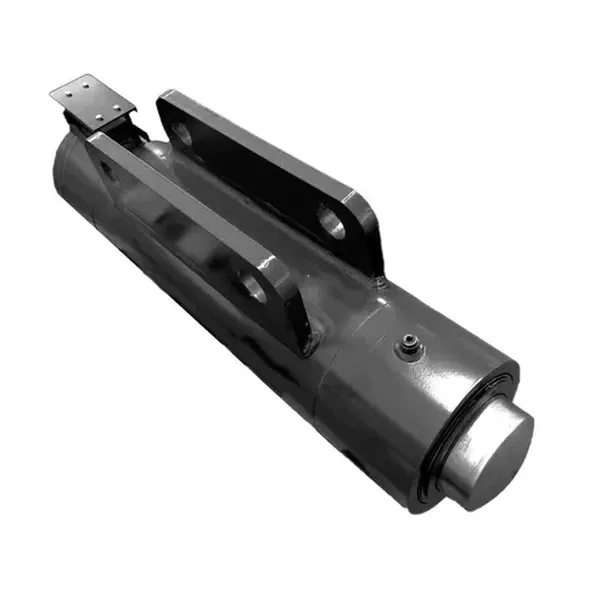
For mobile crane applications, reliable cylinder performance requires a combination of suitable structural design and correct operating practices. Raydafon Technology Group Co.,Limited provides customized hydraulic cylinder solutions featuring thickened cylinder barrels, high-strength alloy steel components, hard-chrome-treated piston rods, precision sealing arrangements, buffer structures, and multi-stage telescopic configurations. These construction features address common service demands in lifting equipment, but actual durability still depends on whether the cylinder is correctly selected, installed, operated, and maintained for its working environment.
How Do Load Intensity and Operating Frequency Influence Cylinder Wear?
Load conditions are among the most important factors affecting hydraulic cylinder durability. Every lifting operation places mechanical and hydraulic demands on the cylinder. When a mobile crane raises a load, the hydraulic system generates pressure to move the piston and transfer force through the boom structure. The cylinder experiences changing loads as the boom angle, extension length, lifting radius, and suspended load change. Repeated exposure to high loads can gradually contribute to fatigue in structural components, wear in moving interfaces, and deterioration of sealing elements.
Crane operators should distinguish between occasional high-load operation and continuous operation near the equipment's permitted limits. A cylinder designed for a specified application should not routinely be exposed to loads or pressures beyond its approved operating range. Repeated overloads can increase stress on the barrel, piston rod, mounting points, pins, and welded connections. Even when no immediate deformation is visible, repeated stress cycles may contribute to fatigue damage over time.
Operating frequency also matters. A crane used for frequent loading and unloading may complete many more extension and retraction cycles than equipment used intermittently. Each cycle involves movement between sealing surfaces, changes in hydraulic pressure, and repeated loading of the cylinder assembly. As operating hours and cycle counts increase, seals, guide rings, rod surfaces, and other moving components experience cumulative wear.
Several operating practices can help control unnecessary mechanical stress:
- Follow the crane load chart and avoid exceeding the permitted lifting capacity for the current boom configuration and working radius.
- Avoid sudden starts, abrupt stops, and unnecessary rapid changes in boom movement.
- Use the recommended operating sequence when extending or retracting telescopic boom sections.
- Check for unusual vibration, jerky movement, drifting, or changes in cylinder response.
- Investigate recurring pressure spikes instead of treating them as normal operating behaviour.
- Keep mounting pins, brackets, and connection points in suitable condition to prevent additional mechanical loading.
The relationship between lifting load and cylinder stress is also influenced by boom geometry. The force required at the cylinder attachment point is not necessarily equal to the weight of the suspended load. Boom angle, pivot locations, lever arms, and the position of the load determine how forces are transferred through the crane structure. As a result, the same load may create different cylinder demands under different boom configurations. Equipment owners should follow the crane manufacturer's operating instructions rather than estimating cylinder loading from suspended weight alone.
Raydafon offers cylinder configurations for different lifting equipment requirements, including customized bore, stroke, and interface arrangements. Our product selection process considers the intended equipment and installation conditions instead of relying on a general-purpose cylinder specification. Our engineering team can review application information to help identify a suitable configuration, while final operating limits must be confirmed through the approved technical documentation for the selected model.
Why Do Temperature, Hydraulic Oil, and Contamination Affect Service Life?
Temperature and hydraulic fluid condition have a direct influence on the performance of a hydraulic system. Mobile cranes often work outdoors, where cylinders and hydraulic components are exposed to seasonal temperature changes, direct sunlight, cold starts, rain, dust, and other environmental conditions. These factors affect oil viscosity, seal behaviour, lubrication, and the ability of the hydraulic system to respond consistently.
When hydraulic oil becomes too hot, its viscosity can decrease. Lower viscosity may reduce the thickness of the lubricating film between moving surfaces and increase the risk of internal leakage, depending on the fluid and system design. Excessive heat can also accelerate oil oxidation and shorten the service life of seals and other elastomeric components. If the system repeatedly operates at elevated temperatures, operators should investigate the cause rather than simply continuing to work.
Cold conditions create a different set of challenges. Hydraulic oil becomes more viscous as temperature falls, increasing resistance to flow and potentially making cylinder movement slower or less responsive. Starting a crane under very cold conditions without following the recommended warm-up procedure may place additional demands on pumps, valves, seals, and other hydraulic components. The appropriate fluid grade and temperature limits should be determined by the crane and hydraulic system manufacturers.
Hydraulic oil contamination is another major cause of premature wear. Fine particles can enter the system through damaged seals, contaminated replacement oil, unclean filling equipment, poorly protected hose connections, or maintenance activities. These particles may damage precision surfaces, accelerate seal wear, and interfere with hydraulic valve operation. Water contamination can also contribute to corrosion and fluid degradation.
Good fluid management should include the following measures:
- Use hydraulic oil that meets the equipment manufacturer's specified viscosity and performance requirements.
- Keep filling containers, funnels, hoses, and service equipment clean before adding or replacing oil.
- Inspect hydraulic filters and replace them according to the specified service schedule or condition indicators.
- Check for water contamination, abnormal oil colour, unusual odours, and visible particles.
- Protect disconnected hydraulic ports and hose ends from dust and moisture during maintenance.
- Investigate repeated overheating, foaming, or abnormal pressure behaviour before returning the crane to demanding service.
External contamination can damage a cylinder even when the hydraulic oil itself is clean. Dust, sand, dried mud, and abrasive construction debris may collect around the exposed piston rod. When the rod retracts, contaminants can reach the rod sealing area and cause premature wear. A damaged rod surface can then create a continuing leakage problem because the seal repeatedly passes over the same damaged area.
Our product configurations include hard-chrome-treated piston rods, precision sealing arrangements, and dust-exclusion components. The hard-chrome surface is intended to improve wear resistance and protect the rod during repeated movement. Dust rings help reduce the entry of external contaminants, while the sealing arrangement controls hydraulic fluid leakage. These features support service reliability, but they do not eliminate the need for regular cleaning, inspection, and suitable hydraulic oil management.
For equipment operating in coastal areas, mining sites, or environments with chemical exposure, buyers should also consider corrosion protection and material compatibility. The correct protection depends on the actual environment, cleaning chemicals, moisture exposure, and storage conditions. A general surface treatment should not be assumed to provide unlimited protection against every corrosive substance.
How Do Cylinder Design, Installation, and Manufacturing Quality Affect Durability?
Operating conditions determine much of the demand placed on a cylinder, but its design and manufacturing quality determine how well it can withstand that demand. Barrel dimensions, material properties, piston rod strength, internal surface finish, weld integrity, and sealing geometry all contribute to long-term performance. A cylinder may experience premature failure if one of these elements is unsuitable, even when the hydraulic system operates within its normal pressure range.
A thickened cylinder barrel can provide additional structural support when designed for the required pressure and load conditions. The actual pressure capacity, however, depends on more than wall thickness. Internal diameter, material grade, manufacturing tolerances, end connections, ports, and welding details must also be considered. Buyers should request the model-specific working pressure and supporting technical documentation rather than interpreting a general description of a reinforced barrel as a confirmed pressure rating.
High-strength alloy steel is used in demanding hydraulic cylinder applications because appropriate grades can provide useful strength and toughness. Material selection should be based on the intended stress level, fatigue requirements, temperature, and manufacturing process. Heat treatment and material quality control also affect the final mechanical properties. The exact grade and mechanical characteristics should be verified for the selected cylinder model.
Piston rod stability deserves particular attention in long-stroke applications. When a rod extends, its unsupported length increases, which can raise the risk of buckling under compressive loading. Rod diameter, material properties, end support conditions, alignment, and applied force all influence stability. A rod that appears adequate based only on its tensile strength may not be suitable for a long-stroke crane application if its buckling resistance has not been checked.
Installation alignment is equally important. A hydraulic cylinder is primarily designed to transfer force along its intended axis. Misaligned mounting points, worn pins, damaged brackets, or unsuitable support geometry can introduce side loads. These additional forces may cause uneven wear on the piston and guide components, damage the rod surface, and accelerate seal deterioration. Operators should pay attention to unusual movement, abnormal noise, and visible changes in mounting connections.
Raydafon Technology Group Co.,Limited describes its cylinder manufacturing features as including precision inner-wall treatment, multi-pass welding, precision sealing arrangements, and buffer structures. These details address different aspects of cylinder performance. Accurate internal surfaces support consistent seal contact, while properly controlled welding helps maintain the integrity of structural joints. Buffer structures help manage piston movement near the end of the stroke and reduce damaging impact when correctly matched to the application.
The following table summarizes the product construction information available for evaluation. These are confirmed design features and customization options, not a complete model-specific dimensional or pressure specification.
| Product parameter or feature | Available product information | Relevance to service life |
| Cylinder barrel | Thickened barrel construction | Supports structural strength when matched to the design pressure and dimensions. |
| Main structural material | High-strength alloy steel components | Provides a material basis for strength and durability under demanding service conditions. |
| Piston rod surface | Hard-chrome-treated piston rod | Helps improve surface wear resistance during repeated movement. |
| Sealing arrangement | Precision seals and double-lip sealing design | Helps control leakage and maintain sealing performance. |
| Contamination protection | Dust rings | Helps limit the entry of external contaminants around the rod. |
| Internal surface treatment | Precision cylinder inner-wall treatment | Supports suitable contact conditions for piston seals and guides. |
| Movement control | Buffer structure | Helps reduce end-of-stroke impact under suitable operating conditions. |
| Welding process | Multi-pass welding | Supports the construction of structural joints when performed under controlled procedures. |
| Cylinder configuration | Multi-section telescopic options | Provides extended working stroke within restricted installation space. |
| Customization | Bore, stroke, and interface configurations | Allows the cylinder to be matched to equipment geometry and application requirements. |
Telescopic cylinder design introduces additional considerations. Each stage has its own moving and sealing interfaces, and the effective hydraulic area may change as the stages extend. The stage sequence, overlap length, guidance arrangement, and individual dimensions influence stability and wear. A multi-stage configuration should therefore be assessed as a complete assembly rather than treated as a single conventional cylinder with an extended stroke.
Our factory can discuss customized cylinder dimensions and connection arrangements based on equipment drawings and application requirements. The technical information needed for a proper assessment includes the required stroke, bore and rod dimensions, working pressure, mounting points, crane model, operating environment, and expected duty cycle. The available product information does not establish one universal pressure rating, temperature limit, or service-life figure for every configuration, so these values should be confirmed against the final technical drawing and model documentation.
What Maintenance Practices Help Extend Hydraulic Cylinder Service Life?
Preventive maintenance is essential because many cylinder problems develop gradually before they become visible as major failures. A small oil leak, a damaged rod surface, unusual movement, or a change in operating speed may indicate an underlying issue. Regular inspection allows operators and maintenance teams to identify these signs before they cause more extensive damage to the cylinder or the wider hydraulic system.
Daily checks should focus on visible condition and abnormal behaviour. Operators should inspect exposed piston rods for scratches, corrosion, dents, and contamination. They should also look for oil leakage around the rod gland, cylinder connections, and hydraulic hoses. Unusual noise, jerky movement, drifting, or a change in lifting response should be reported and investigated. These checks are particularly useful for cranes working in construction, port handling, and other environments where equipment is exposed to dust, moisture, and frequent operating cycles.
Periodic maintenance should go beyond visual inspection. The hydraulic oil condition, filter condition, mounting pins, connection points, and cylinder movement should be reviewed according to the equipment manufacturer's service schedule. If a crane experiences repeated overheating, pressure instability, or seal leakage, the underlying cause should be identified before simply replacing the affected component. Otherwise, the same failure may occur again.
A practical maintenance checklist can be organized as follows:
| Inspection item | What to check | Recommended response |
| Piston rod | Scratches, corrosion, dents, and surface contamination | Clean the surface and arrange technical inspection if damage is found. |
| Rod gland and seals | Oil leakage, damaged sealing areas, and abnormal wear | Identify the leakage source and replace components when required. |
| Hydraulic oil | Contamination, water, abnormal colour, and fluid condition | Test or replace fluid according to the equipment maintenance requirements. |
| Hydraulic filters | Condition indicators, blockage, and service history | Clean or replace filters according to the specified procedure. |
| Mounting connections | Pin wear, loose fasteners, damaged brackets, and alignment | Correct the connection issue before continued heavy-duty operation. |
| Cylinder movement | Jerky motion, drifting, abnormal noise, or slow response | Inspect the cylinder and hydraulic circuit to identify the cause. |
| Telescopic stages | Uneven extension, abnormal movement, and visible damage | Check stage alignment, guidance, and sealing condition. |
Maintenance intervals should be based on the crane manufacturer's instructions, actual operating hours, duty cycle, environmental exposure, and inspection findings. A crane working multiple shifts in a dusty industrial yard may need closer monitoring than equipment used occasionally in a cleaner environment. Calendar-based servicing alone may not reflect the actual wear experienced by a heavily used cylinder.
When a cylinder requires repair or replacement, the cause of the original problem should be investigated. Replacing a seal without checking rod damage, contamination, excessive side loading, or pressure spikes may only provide temporary relief. Similarly, replacing a cylinder without confirming mounting dimensions, stroke, connection details, and hydraulic compatibility can create new operational problems.
For maintenance teams and equipment buyers, the most effective approach combines correct cylinder selection, clean hydraulic fluid, controlled loading, suitable operating procedures, and regular inspection. These measures cannot prevent every component failure, but they can reduce avoidable wear and help identify developing problems before they lead to unplanned downtime.
Conclusion
The service life of Mobile Crane Hydraulic Cylinders is shaped by the interaction between operating loads, cycle frequency, temperature, hydraulic oil cleanliness, contamination, installation alignment, structural design, and maintenance quality. High-strength materials and suitable sealing arrangements provide an important foundation, but their benefits depend on correct application and consistent service practices. Buyers should evaluate the cylinder's actual working conditions, confirm model-specific technical ratings, and avoid relying on general product descriptions as substitutes for engineering documentation.
Raydafon Technology Group Co.,Limited supplies customized hydraulic cylinder solutions for mobile cranes and other heavy equipment applications. Our product options include thickened barrels, high-strength alloy steel components, hard-chrome-treated piston rods, precision seals, buffer structures, and multi-stage telescopic designs. Contact our team with your crane model, working pressure, required stroke, mounting dimensions, operating environment, and technical drawings to discuss a cylinder configuration suited to your equipment and service requirements.
Frequently Asked Questions
How often should mobile crane hydraulic cylinders be inspected?
Mobile crane hydraulic cylinders should receive routine visual checks during normal equipment inspections, with more detailed examinations performed according to the crane manufacturer's maintenance schedule and actual duty cycle. Daily checks can identify visible oil leakage, rod damage, corrosion, abnormal movement, and loose mounting connections. Periodic inspections should also consider hydraulic oil condition, filter performance, seal wear, and cylinder alignment. Cranes operating frequently in dusty, wet, or corrosive environments may require closer monitoring. The correct inspection interval should be based on operating hours, working conditions, and equipment maintenance requirements rather than one universal schedule.
Can contaminated hydraulic oil shorten the service life of a crane cylinder?
Yes. Contaminated hydraulic oil can carry abrasive particles and moisture through the hydraulic circuit. Particles may damage precision surfaces, increase seal wear, and interfere with valves, while water contamination can contribute to corrosion and fluid degradation. Over time, these conditions may cause internal leakage, inconsistent movement, and reduced operating reliability. Using the specified hydraulic fluid, maintaining clean filling practices, monitoring filter condition, and checking oil quality help reduce contamination-related damage. If repeated contamination occurs, the source should be identified instead of relying only on frequent oil replacement.
Why does a hydraulic cylinder develop oil leakage even when its barrel is not damaged?
Oil leakage does not always indicate a damaged cylinder barrel. Common causes include worn rod seals, damaged piston seals, scratches or corrosion on the piston rod, contamination around the sealing area, excessive side loading, and pressure conditions outside the component's intended limits. Leakage may also occur at static seals, ports, or hydraulic connections. A proper inspection should identify the exact leakage location and examine the rod surface, seal condition, alignment, and hydraulic operating conditions. Replacing a seal without correcting the underlying cause may result in repeated leakage.