

How Do Heavy Industrial Hydraulics Improve Power, Precision, and Reliability in Large-Scale Machinery?
2026-03-11
Article Summary
Heavy Industrial Hydraulics play a critical role in powering modern industrial machinery. From steel manufacturing equipment to mining machines and construction systems, hydraulic technology delivers immense force with precise control. This article explains how heavy industrial hydraulic systems function, their core components, advantages, common challenges, and how manufacturers can select the right solution for demanding applications. It also explores maintenance practices and performance optimization strategies that ensure long-term reliability and productivity.
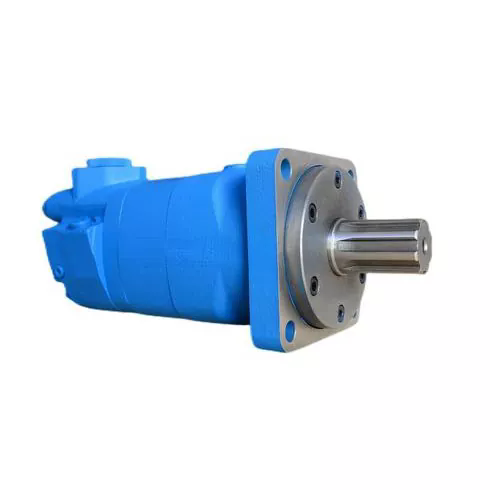
Table of Contents
- Article Outline
- Understanding Heavy Industrial Hydraulics
- How Heavy Industrial Hydraulics Work
- Key Components of Industrial Hydraulic Systems
- Major Applications in Heavy Industries
- Advantages for Industrial Machinery
- Common Challenges and Solutions
- How to Choose the Right Hydraulic System
- Frequently Asked Questions
- Conclusion
Article Outline
| Section | Description |
|---|---|
| Introduction | Overview of heavy industrial hydraulic technology |
| Working Principle | Fundamental physics and hydraulic energy transmission |
| Core Components | Pumps, cylinders, valves, and power units |
| Industrial Applications | How hydraulics are used across multiple industries |
| Advantages | Performance and operational benefits |
| Challenges | Typical system problems and engineering solutions |
| Selection Guide | How to choose suitable heavy industrial hydraulic equipment |
| FAQ | Answers to common industry questions |
Understanding Heavy Industrial Hydraulics
Heavy Industrial Hydraulics refers to high-pressure hydraulic systems designed to power large machinery used in manufacturing plants, mining operations, steel processing, marine equipment, and infrastructure construction. These systems convert mechanical energy into hydraulic pressure, allowing machines to generate powerful force while maintaining smooth and precise motion.
Industrial hydraulic systems are widely used in heavy equipment such as presses, rolling mills, injection molding machines, cranes, and material handling systems. Their ability to produce extremely high force in compact mechanical assemblies makes them indispensable in industrial automation and heavy manufacturing. :contentReference[oaicite:0]{index=0}
Unlike mechanical transmission systems, hydraulics use incompressible fluid—typically hydraulic oil—to transmit force efficiently across the system. This allows operators to lift, press, bend, or move extremely heavy loads with remarkable precision.
How Heavy Industrial Hydraulics Work
The operating principle of hydraulic systems is based on fluid power and pressure transmission. Mechanical energy from a motor or engine is converted into hydraulic energy through a pump. The pressurized hydraulic fluid is then directed through valves and pipelines to actuators such as cylinders or hydraulic motors.
These actuators convert hydraulic energy into mechanical movement that performs the required industrial operation.
- Pressure creates force
- Flow rate determines speed
- Hydraulic valves control direction
- Hydraulic cylinders produce linear motion
Heavy-duty industrial hydraulic systems typically operate at pressures significantly higher than standard systems, enabling machines to deliver greater force and handle demanding manufacturing tasks. :contentReference[oaicite:1]{index=1}
Key Components of Industrial Hydraulic Systems
A heavy industrial hydraulic system consists of several essential components working together to generate and control power.
| Component | Function |
|---|---|
| Hydraulic Pump | Converts mechanical energy into hydraulic pressure |
| Hydraulic Power Unit | Central system that supplies energy to the entire hydraulic circuit |
| Hydraulic Cylinders | Create linear motion for lifting, pressing, or pushing loads |
| Control Valves | Regulate fluid direction, pressure, and flow rate |
| Hydraulic Fluid | Transfers energy while also providing lubrication and cooling |
| Filtration System | Removes contaminants and protects components |
The hydraulic power unit functions as the heart of the system, generating and regulating hydraulic energy while distributing it to various actuators across industrial machinery. :contentReference[oaicite:2]{index=2}
Major Applications in Heavy Industries
Heavy industrial hydraulic systems are used in a wide range of industries that require powerful motion control and reliable operation under extreme loads.
Typical industry applications include:
- Steel mill equipment and rolling machines
- Hydraulic press systems
- Mining machinery
- Marine cranes and shipyard lifting systems
- Construction machinery
- Industrial automation equipment
- Oil and gas drilling equipment
In steel manufacturing, for example, hydraulic systems control processes such as rolling, lifting, and material handling, ensuring precise force application and continuous operation in demanding environments. :contentReference[oaicite:3]{index=3}
Similarly, heavy machinery like excavators and cranes rely on hydraulics to generate massive lifting force while maintaining smooth and controllable motion.
Advantages of Heavy Industrial Hydraulic Systems
Hydraulic technology offers several advantages compared with mechanical or electric power transmission systems.
- Extremely high force output
- Precise motion control
- Compact power density
- Reliable performance in harsh environments
- Overload protection through pressure control
- Smooth and stable operation
Another key advantage is energy efficiency. Modern hydraulic systems use variable displacement pumps and intelligent control technology that adjust power output based on real operating demand, reducing energy consumption and improving system efficiency. :contentReference[oaicite:4]{index=4}
For large industrial operations, these advantages translate into improved productivity, reduced downtime, and better equipment longevity.
Common Challenges and Engineering Solutions
Despite their advantages, heavy industrial hydraulic systems must operate under extreme conditions, which can lead to several operational challenges.
| Problem | Possible Cause | Recommended Solution |
|---|---|---|
| Overheating | High friction or inefficient flow | Install cooling systems and optimize flow control |
| Slow movement | Low hydraulic flow rate | Check pump performance and valve restrictions |
| Pressure loss | Leaks or worn seals | Replace seals and inspect pipelines |
| Contamination | Dirty hydraulic fluid | Improve filtration and maintenance schedules |
Proper maintenance is critical because contamination, overheating, and fluid degradation are among the most common causes of hydraulic system failure. :contentReference[oaicite:5]{index=5}
How to Choose the Right Heavy Industrial Hydraulic System
Selecting the appropriate hydraulic solution requires evaluating several key engineering factors.
Important considerations include:
- Operating pressure requirements
- Flow rate and speed requirements
- Load capacity
- Duty cycle and working environment
- Energy efficiency and cooling needs
- System integration with existing machinery
Industrial manufacturers increasingly rely on customized hydraulic solutions designed for specific equipment and production processes. Companies like Yushan Intelligent develop advanced heavy industrial hydraulic systems that provide stable power transmission, precise control, and reliable long-term operation for demanding industrial environments.
Frequently Asked Questions
Q1: What industries use heavy industrial hydraulics the most?
Industries such as mining, steel manufacturing, construction, marine engineering, and energy production rely heavily on industrial hydraulic systems because they require high force and precise motion control.
Q2: Why are hydraulic systems preferred over mechanical systems?
Hydraulic systems provide higher power density, smoother operation, and better control compared with mechanical transmissions. They can also handle heavy loads with relatively compact components.
Q3: What maintenance is required for industrial hydraulic systems?
Routine maintenance includes hydraulic fluid inspection, filtration replacement, leak detection, temperature monitoring, and regular inspection of pumps, valves, and seals.
Q4: How long do industrial hydraulic systems typically last?
With proper maintenance and correct operation, industrial hydraulic systems can operate reliably for many years, often exceeding the lifespan of mechanical drive systems.
Conclusion
Heavy Industrial Hydraulics remain one of the most powerful and reliable technologies for large-scale industrial machinery. Their ability to generate immense force, maintain accurate motion control, and operate continuously under heavy loads makes them essential in modern manufacturing and engineering sectors.
Advanced hydraulic engineering continues to improve system efficiency, reliability, and energy performance. Manufacturers seeking high-performance hydraulic solutions often work with experienced suppliers such as Yushan Intelligent, whose heavy industrial hydraulic systems are designed to meet the demanding requirements of large-scale industrial applications.
If your organization is looking to enhance machinery performance, improve operational efficiency, or upgrade existing hydraulic systems, the right engineering partner can make a significant difference. Contact us today to explore customized heavy industrial hydraulic solutions and discover how advanced hydraulic technology can power your industrial operations.
