

How Do Fire Ratings Affect the Specification of Heavy Timber Structural Connectors
2026-03-23
When specifying Heavy Timber Structural Connectors for mass timber or post-and-beam projects, fire ratings are not merely a code requirement—they are a defining factor in material selection, connection design, and overall structural safety. At S-SEN, the approach to fire-rated connections begins with a fundamental understanding that in heavy timber construction, the connector must perform not only under gravity and lateral loads but also under the extreme conditions of a fire event. Unlike light-frame steel connectors that may lose strength rapidly when exposed to heat, Heavy Timber Structural Connectors intended for fire-rated assemblies must be engineered to maintain structural integrity for a specified duration, typically one or two hours, in alignment with building type and occupancy.
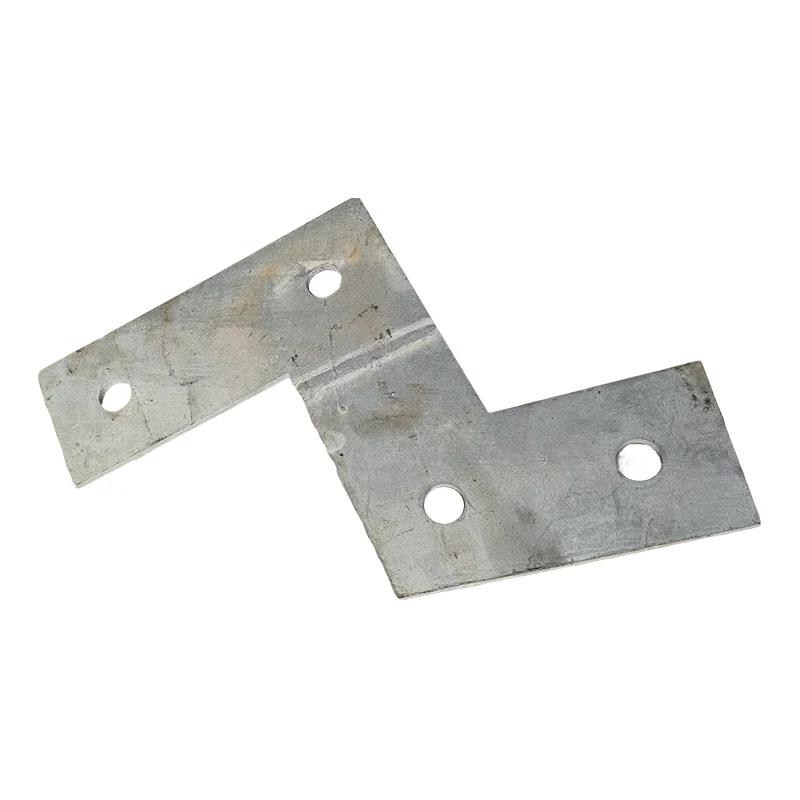
Fire Rating Fundamentals for Heavy Timber Connections
Fire ratings for heavy timber structures are governed by building codes such as the IBC, which permit exposed timber members under certain conditions. However, the connectors used to join these members often become the thermal weak link. Steel connectors conduct heat directly into the timber, accelerating charring and potentially leading to premature connection failure. This necessitates a specification process that evaluates connector geometry, steel thickness, embedment depth, and protective measures.
| Fire Rating Consideration | Impact on Heavy Timber Structural Connectors |
|---|---|
| Steel section size | Larger steel sections can act as heat sinks; careful sizing reduces thermal conductivity into timber |
| Concealment vs. exposure | Exposed connectors may require intumescent coatings or steel profiles that delay heat transfer |
| Embedment depth | Deeper embedment can provide additional thermal mass and extend time to critical wood char depth |
| Connection type | Face-mount connectors often perform differently than concealed hangers under elevated temperatures |
Key Factors in Specifying for Fire Performance
When engineering with Heavy Timber Structural Connectors in fire-rated assemblies, several technical factors guide the final specification. S-SEN emphasizes a performance-based approach, ensuring that each connector contributes to the assembly’s overall fire resistance without compromising load capacity.
-
Steel Thickness and Thermal Mass
Thicker steel sections can delay temperature rise at the wood-steel interface. Specifiers often require a minimum steel gauge based on the required fire rating. -
Char Layer Accommodation
Connections must account for the sacrificial char layer that forms on timber during a fire. Connectors that intrude into the char zone may lose embedment strength if not properly detailed. -
Corrosion Protection and Fire Exposure
Fire-rated environments do not eliminate corrosion risks. Coatings that withstand both fire exposure and long-term moisture are essential.
Common Challenges and Solutions
The intersection of fire safety and structural efficiency presents recurring challenges in the specification process. Solutions often involve collaboration between the engineer, the fabricator, and the connector manufacturer. S-SEN addresses these challenges through precision-engineered Heavy Timber Structural Connectors designed to meet both UL-certified assemblies and project-specific performance criteria.
Heavy Timber Structural Connectors FAQ
What fire rating can I expect from standard heavy timber structural connectors without additional protection?
Standard steel Heavy Timber Structural Connectors without fire protection are typically not rated for fire resistance unless they are part of a tested assembly. In many cases, unprotected steel connectors can lead to premature failure in a fire scenario because they conduct heat into the timber, accelerating the char rate. To achieve a one-hour or two-hour fire rating, the connectors must be either concealed within the timber mass, protected with fire-rated enclosures, or specifically tested as part of an engineered assembly. S-SEN offers solutions that integrate with fire-rated designs, allowing specifiers to meet code requirements without compromising connection strength.
How does connector concealment affect the fire rating of a heavy timber connection?
Connector concealment plays a critical role in fire performance. When Heavy Timber Structural Connectors are fully concealed within a timber member—such as with hidden knife plates or internally mounted brackets—the surrounding timber mass acts as natural thermal insulation, slowing heat transfer to the steel. This configuration often allows the connection to achieve fire ratings comparable to the timber member itself. Conversely, surface-mounted connectors are exposed directly to heat and flame, requiring additional fire protection measures such as intumescent coatings or protective wraps to achieve the same rating.
Are heavy timber structural connectors required to be tested as part of a UL assembly for code compliance?
In most jurisdictions, Heavy Timber Structural Connectors used in fire-resistance-rated construction must be part of a tested assembly, typically listed under UL or equivalent certification. Simply selecting a connector with a certain steel thickness does not guarantee compliance. Instead, the entire assembly—including the timber members, connectors, fasteners, and any fire-protective materials—must be tested together. S-SEN provides documentation and engineering support to help specifiers select connectors that align with listed assemblies, ensuring both code compliance and reliable fire performance.
Best Practices for Specification
To achieve reliable fire performance without over-engineering, specifiers should adopt a systematic approach:
-
Define the required fire rating early in the design phase
-
Coordinate with the connector manufacturer to confirm compatibility with tested assemblies
-
Specify connector geometry that minimizes thermal bridging
-
Incorporate appropriate detailing to protect connections in exposed applications
-
Verify that fasteners used with the connectors are also rated for fire exposure
Conclusion
Fire ratings are not an afterthought in heavy timber construction—they are central to the safe and compliant specification of Heavy Timber Structural Connectors. By understanding how steel thickness, concealment, embedment depth, and tested assemblies influence fire performance, engineers and specifiers can make informed decisions that balance safety, aesthetics, and structural efficiency. S-SEN is committed to delivering Heavy Timber Structural Connectors engineered for the demands of modern fire-rated mass timber projects, supported by technical expertise and tested solutions.
For assistance with your next fire-rated heavy timber project, contact us to discuss specifications, review tested assemblies, or request technical support tailored to your design requirements.
