How Do Filling Slot Bearings Increase Radial Load Capacity?
2026-10-20
A bearing application engineer is reviewing a design for a heavy-duty conveyor roller. The shaft diameter is 40 mm, and the available radial space limits the bearing outer diameter to 80 mm. A standard Deep Groove Ball Bearings with a 40 mm bore and an 80 mm outer diameter has a dynamic load rating of 30.7 kN. The calculated radial load is 34 kN. The engineer needs a bearing with a higher radial capacity in the same envelope. The solution is a filling slot bearing. The filling slot allows more balls to be loaded into the raceway, which increases the load rating to 42 kN. The engineer selects the filling slot bearing. This guide explains how the filling slot works and why it increases radial load capacity.
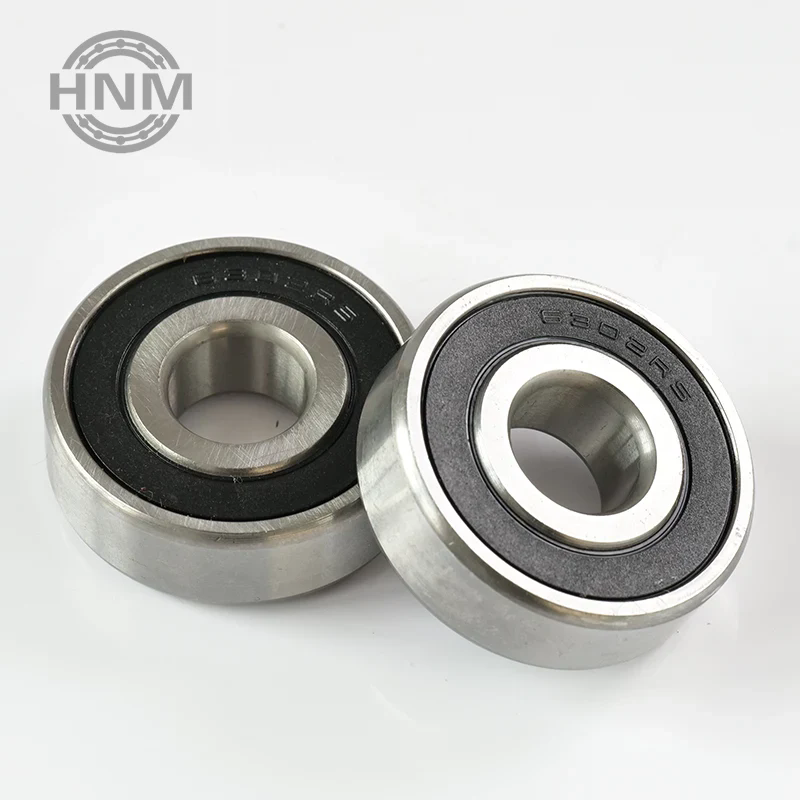
1. How Does the Filling Slot Increase the Number of Balls?
A standard deep groove ball bearing is assembled by eccentric displacement. The inner ring is offset, and the balls are inserted one by one through the gap between the rings. The number of balls is limited by the size of the gap. A filling slot bearing has a notch, or slot, machined into the inner and outer rings. The slot allows the balls to be inserted directly into the raceway. The number of balls can be increased by 20 to 40 percent compared to a standard bearing. The table below shows the ball count and load rating for a 40 mm bore bearing with and without a filling slot.
| Bearing type | Ball count | Dynamic load rating (kN) | Static load rating (kN) | Radial capacity increase |
| Standard deep groove | 8 | 30.7 | 19.0 | Baseline |
| Filling slot | 11 | 42.0 | 26.0 | +37% |
| Filling slot (maximum fill) | 12 | 45.5 | 28.5 | +48% |
In our factory, we manufacture filling slot Deep Groove Ball Bearings with ball counts up to 40 percent higher than standard bearings. The additional balls are distributed evenly around the raceway. The load rating is calculated according to ISO 281 using the increased ball count and the raceway geometry. Cixi Hengji Bearing Co., Ltd. has been manufacturing deep groove ball bearings for over 12 years.
2. How Does the Additional Ball Count Increase Radial Load Capacity?
The radial load capacity of a ball bearing is determined by the number of balls that are in the load zone at any given time. In a standard bearing, the load zone is approximately 120 to 150 degrees. Only the balls in this zone carry the load. The load on each ball is higher when there are fewer balls. In a filling slot bearing, the additional balls increase the number of load-carrying balls in the zone. The load is distributed over more contact points, which reduces the stress on each ball and raceway. The table below shows the load distribution for a standard bearing and a filling slot bearing under the same radial load.
| Parameter | Standard bearing (8 balls) | Filling slot bearing (11 balls) |
| Balls in load zone | 3 – 4 | 5 – 6 |
| Maximum ball load (N) | 8,500 | 6,200 |
| Contact stress (MPa) | 1,850 | 1,520 |
| Fatigue life factor | 1.0 | 1.37 |
Application engineer's note: The load capacity increase is not just about the number of balls. The additional balls also reduce the maximum contact stress, which extends the fatigue life. A filling slot bearing with 37 percent more dynamic load rating can achieve a fatigue life that is 2.5 times longer than a standard bearing under the same load. This is why filling slot bearings are used in heavy-duty applications such as conveyor rollers, crushers, and industrial gearboxes.
3. What Are the Limitations of Filling Slot Bearings?
Filling slot bearings have two limitations. The first is reduced axial load capacity. The filling slot interrupts the raceway shoulder on one side of the bearing. This means that the bearing cannot carry axial loads in the direction of the slot. The axial load capacity is typically 50 to 70 percent lower than a standard deep groove ball bearing. The second limitation is the installation orientation. The filling slot must be positioned on the side of the bearing that does not carry axial load. If the bearing is installed with the slot on the loaded side, the axial capacity is further reduced. The table below compares the axial and radial capacities of standard and filling slot bearings.
| Load type | Standard bearing | Filling slot bearing | Limitation |
| Radial load (kN) | 30.7 | 42.0 | None |
| Axial load (kN) | 12.0 | 5.5 | Reduced by 54% |
| Combined load | Good | Limited | Requires careful orientation |
| Installation orientation | Any | Slot away from axial load | Must be marked |
In our factory, we mark the filling slot on the outer ring with a laser-etched line and an arrow. The arrow indicates the direction of the slot, so the installer can position it correctly. We also provide an installation guide that explains how to orient the bearing for combined load applications. Cixi Hengji Bearing Co., Ltd. recommends that filling slot bearings be used only in applications where the radial load is dominant and the axial load is low or intermittent.
4. When Should You Choose a Filling Slot Bearing Over Other Solutions?
The choice between a filling slot bearing and other solutions depends on the load type, the available space, and the cost. The table below compares the filling slot bearing with other options for increasing radial load capacity.
| Solution | Radial capacity increase | Space requirement | Relative cost | Best application |
| Filling slot bearing | +30 – 50% | Same envelope | +10 – 20% | Radial load dominant, limited space |
| Larger standard bearing | +30 – 50% | Larger envelope | +20 – 30% | Space available |
| Double row bearing | +50 – 80% | Wider envelope | +40 – 60% | Combined load, higher capacity |
| Roller bearing | +100 – 200% | Different envelope | +50 – 100% | Very high radial load |
The filling slot bearing is the best choice when the radial load is dominant, the envelope cannot be increased, and the axial load is low. If the axial load is significant, a standard bearing or a double row bearing is a better choice. If the radial load is very high and the space allows, a roller bearing is more suitable. In our factory, we provide a selection guide that helps the application engineer choose the right bearing type for each load condition. Cixi Hengji Bearing Co., Ltd. manufactures all four types and can provide comparative load ratings for each option.
Frequently Asked Questions About Filling Slot Bearings and Radial Load Capacity
Summary for Bearing Application Engineers
Filling slot bearings increase radial load capacity by allowing more balls to be loaded into the raceway. The additional balls distribute the load over more contact points, which reduces the maximum contact stress and extends the fatigue life. The radial load capacity increases by 30 to 50 percent compared to a standard deep groove ball bearing in the same envelope. The trade-off is reduced axial load capacity and the need for correct installation orientation. Filling slot bearings are the best choice for applications with dominant radial loads, limited space, and low axial loads. Cixi Hengji Bearing Co., Ltd. has been manufacturing deep groove ball bearings for over 12 years and provides full application support for filling slot bearing selection.
Cixi Hengji Bearing Co., Ltd. manufactures filling slot Deep Groove Ball Bearings with 20 to 40 percent more balls than standard bearings. We provide load ratings, installation guides, and calculation worksheets for all of our products.