How Do Deep Groove Ball Bearings with Shield Solve Real-World Sealing Problems?
2025-12-10
When I first started refining motion systems for compact machinery, I kept running into the same trade-off—protect the raceway from dust without adding friction that robs speed. Over time, I learned to rely on Deep Groove Ball Bearings with Shield because they hit that balance with minimal fuss. Working with Hengji Bearing across several builds, I noticed how a well-designed shield keeps contaminants at bay while preserving RPM headroom, and that single tweak often turns a “good enough” mechanism into a quiet, durable workhorse.
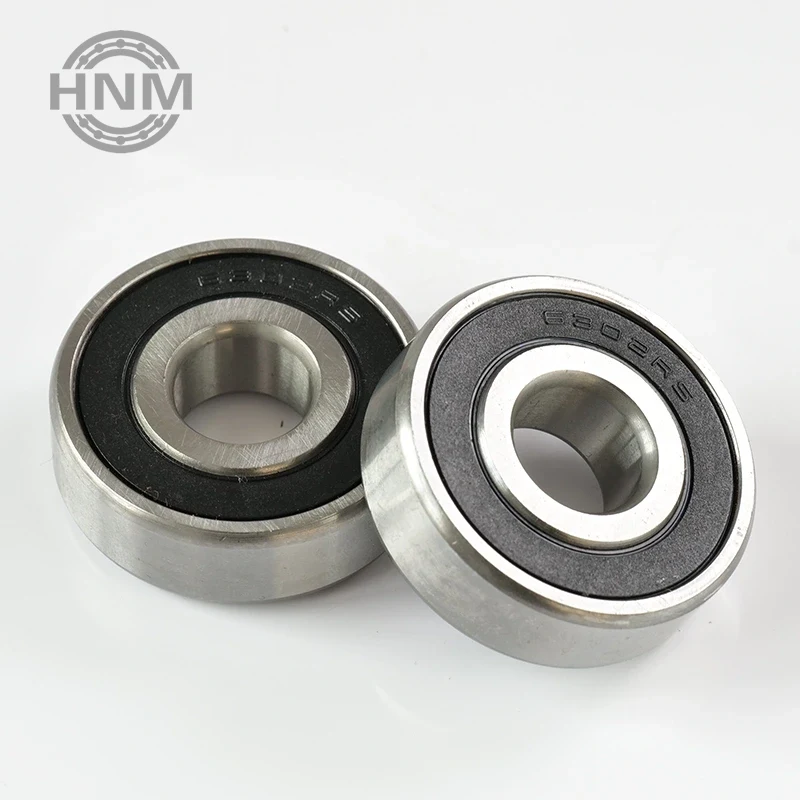
Why do shielded designs reduce downtime?
Shields act like a slim, precise barrier that blocks larger particles from entering while avoiding the contact drag typical of contact seals. In practice, that means longer relubrication intervals, fewer line stops, and a cleaner raceway. For assembly lines that hate surprises, Deep Groove Ball Bearings with Shield are an easy win because they protect what matters without demanding constant attention.
- Lower ingress risk in dusty workshops or packaging halls
- Stable torque profile for consistent motor current draw
- Less lubricant splash-out at higher speeds
- Quieter running thanks to cleaner raceway conditions
What applications actually benefit the most?
Anywhere mixed contamination and moderate to high speed coexist. I reach for Deep Groove Ball Bearings with Shield in small electric motors, HVAC fans, food packaging conveyors (non-wash zones), instrument drives, and belt idlers. If the environment is splashy or regularly washed down, a sealed variant may be wiser; if it’s primarily dusty with airflow, shields shine.
- Compact motors and gearmotors where efficiency matters
- Fan units and blowers that spin for long duty cycles
- Light conveyors and sorters handling cardboard dust
- Laboratory instruments that prefer low drag and low noise
How do I pick the right shield configuration?
Selection is simpler when I frame it around speed, noise, and cleanliness targets. With Hengji Bearing, I match clearance, grease type, and shield style to the duty cycle, then lock in a part number that keeps the torque curve predictable. The table below sums up the decision points I check before placing an order for Deep Groove Ball Bearings with Shield.
| Decision Point | What I Check | Practical Tip |
|---|---|---|
| Speed Range | Motor RPM and duty cycle | Use low-bleed grease to protect high RPM stability |
| Noise Targets | dB limits near the bearing | Choose precision grade and verified vibration class |
| Contaminants | Dust size and airflow direction | Select double shields for bidirectional exposure |
| Clearance | Thermal rise at steady state | CN for cool, C3 for warmer housings or press fits |
| Lubrication | Grease base oil viscosity | Balance low torque with film strength at load |
| Fit & Tolerance | Shaft/housing interference | Avoid over-tight fits that heat and thin the film |
Where do shields outperform seals on efficiency?
In high-speed or lightly loaded systems, contact seals can waste power and raise temperature. That’s exactly where Deep Groove Ball Bearings with Shield keep things efficient. Because shields are non-contact, I get lower torque, faster run-in, and less heat—ideal for battery-powered devices and 24/7 fans that must sip energy.
What common mistakes shorten bearing life?
I see three patterns: over-packing grease, ignoring fit tolerances, and placing the bearing where dust blasts directly at the shield gap. With Hengji Bearing, I specify the grease fill at the factory, confirm tolerances against the catalog, and add a simple deflector if airflow is harsh. Small, cheap mitigations often double practical life for Deep Groove Ball Bearings with Shield.
- Over-lubrication that churns and heats under speed
- Too-tight press fits that collapse radial clearance
- Unshielded airflow jets that drive fines toward the raceway
How do double shields compare with single shields?
Single shields make sense when the clean side faces a sealed compartment or when I want easier relube from one side. Double shields are my default for general duty because they resist contamination from both directions and keep grease where it belongs. Either way, Deep Groove Ball Bearings with Shield preserve that sweet spot of protection and efficiency that keeps lines moving.
What signals tell me it is time to upgrade?
If current draw creeps up, noise bands shift at steady RPM, or you see unexpected film thinning on teardown, a higher precision grade, better grease, or double-shield configuration will help. I also consider an upgrade when seasonal dust appears—shielded deep groove designs respond quickly without redesigning the whole housing.
Why does supplier consistency matter?
Consistency keeps torque, noise, and life predictable from lot to lot. That’s the main reason I standardize with Hengji Bearing for Deep Groove Ball Bearings with Shield: process control shows up as repeatable performance, and repeatable performance translates into fewer surprises on site.
What should I do next if I want reliable results?
Share your RPM, load, duty cycle, operating temperature, and any dust or airflow details. I can recommend a clearance, grease, and shield setup that fits without bloating your BOM. If you are ready to move, reach out and contact us with your application notes—let’s spec a shielded deep groove bearing that simply runs.
Ready to optimize your assembly with Deep Groove Ball Bearings with Shield? Tell me your constraints, and contact us to get a tailored recommendation and a fast quotation. Your line deserves quiet efficiency; your customers will hear the difference.