How Do Deep Drawn Services Improve Manufacturing Efficiency?
2026-03-12
Summary: Deep drawn services have become a cornerstone in modern manufacturing, offering significant advantages in efficiency, material utilization, and product quality. This article explores the deep drawing process, applications, key benefits, and answers common questions, helping manufacturers and engineers make informed decisions.
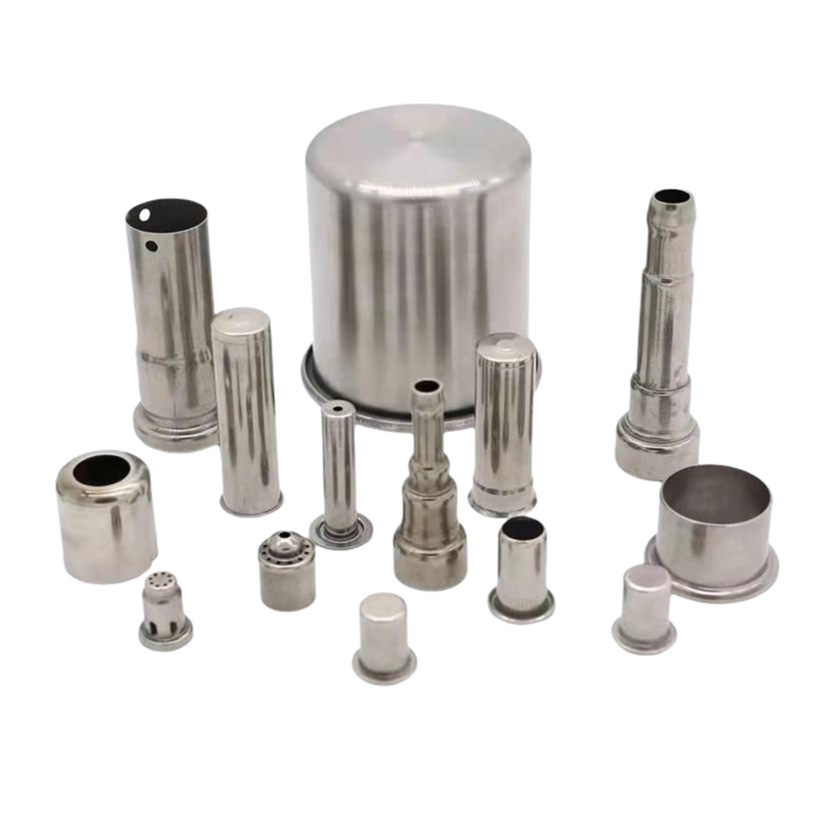
Table of Contents
- Introduction to Deep Drawn Services
- The Deep Drawing Process Explained
- Key Benefits of Deep Drawn Components
- Applications Across Industries
- Technical Parameters and Considerations
- Frequently Asked Questions
- Conclusion
Introduction to Deep Drawn Services
Deep drawn services involve forming sheet metal into complex shapes using a punch and die system. Unlike traditional stamping or bending, deep drawing allows for high-aspect-ratio components with minimal material waste. This process is widely used in automotive, electronics, medical, and consumer product industries.
Manufacturers increasingly rely on deep drawn techniques to meet demands for precision, repeatability, and high production volumes. Companies like Youlin provide tailored deep drawn solutions that address specific engineering challenges.
The Deep Drawing Process Explained
The deep drawing process generally includes the following steps:
- Blank Preparation: Flat sheet metal is cut to the required size, ensuring uniform thickness and material quality.
- Punching and Forming: The sheet is placed over a die, and a punch presses the material into the desired shape.
- Trimming and Finishing: Excess material is trimmed, and surface finishing ensures dimensional accuracy and aesthetics.
Deep drawing can be performed in single or multiple stages depending on the depth and complexity of the part. Multi-stage deep drawing reduces the risk of material tearing and ensures higher dimensional accuracy.
Key Benefits of Deep Drawn Components
- High Precision: Produces consistent, dimensionally accurate components.
- Material Efficiency: Minimizes scrap, optimizing cost savings.
- Enhanced Strength: Work hardening during drawing improves structural integrity.
- Complex Shapes: Enables production of cylindrical, box-shaped, or irregular geometries not feasible with traditional stamping.
- Surface Finish: Smooth surfaces reduce post-processing requirements.
Applications Across Industries
Deep drawn services have versatile applications, including:
| Industry | Typical Components | Key Advantages |
| Automotive | Fuel tanks, engine components, brackets | Durability, precise tolerances, material savings |
| Medical | Surgical instruments, implant casings | High precision, clean surface finishes |
| Electronics | Enclosures, connectors, heat sinks | Complex geometries, reliable performance |
| Consumer Goods | Cookware, lighting components | Material efficiency, consistent quality |
Technical Parameters and Considerations
Before selecting deep drawn services, manufacturers must consider:
- Material Type: Stainless steel, aluminum, copper, and other alloys perform differently under deep drawing.
- Sheet Thickness: Determines punch force and number of drawing stages.
- Tooling Design: Precision die and punch design ensures minimal defects and optimal material flow.
- Surface Treatment: Lubrication and coatings reduce friction, prevent scratches, and extend die life.
- Tolerances: Achievable tolerances depend on material properties and drawing depth.
Frequently Asked Questions
Q1: What materials can be used for deep drawing?
Deep drawing can be performed with various metals, including stainless steel, aluminum, brass, copper, and certain alloys. Each material has unique properties that influence formability and the number of drawing stages required.
Q2: How does deep drawing reduce production costs?
By minimizing scrap, reducing post-processing, and enabling high-volume production, deep drawing offers cost savings. The durability and repeatability of parts also reduce the need for quality rework.
Q3: Can deep drawing create complex shapes?
Yes, multi-stage deep drawing can produce intricate geometries such as cylindrical tubes, square cups, or asymmetric enclosures, which are difficult or impossible with standard stamping.
Q4: What industries benefit most from deep drawn services?
Automotive, medical, electronics, and consumer products industries gain the most due to the need for precise, high-quality, and durable components.
Conclusion
Deep drawn services are an essential solution for manufacturers seeking efficiency, precision, and high-quality components. With the right materials, tooling, and process optimization, deep drawing addresses complex production challenges while reducing costs.
Youlin offers customized deep drawn services to meet diverse industrial needs. For expert support, advanced tooling, and high-volume production, contact us today to explore tailored solutions for your manufacturing requirements.