How Do CNC Threading Tools Help You Achieve Cleaner Threads and More Reliable Production?
2026-04-20
Abstract
Thread quality affects far more than appearance. Poorly formed threads can cause loose assemblies, tool breakage, leakage, vibration, rework, delayed delivery, and rising production costs. For buyers, engineers, and workshop managers, choosing the right Threading Tools is not simply about cutting a thread that “looks acceptable.” It is about maintaining dimensional consistency, protecting cycle time, reducing scrap, and making sure the final product performs the way it should in real service conditions.
This article explains how different types of Threading Tools solve common machining problems, what mistakes often lead to unstable thread quality, how to match a tool to material and production goals, and what to evaluate before placing an order. It also introduces how Ningbo Wangdefu Precision Machinery Co.Ltd. supports manufacturers seeking practical, repeatable threading performance across a wide range of applications.
Contents
- Outline
- What problems do poor threading results actually create
- What types of Threading Tools should you know before buying
- How do you choose the right Threading Tools for different materials
- Why do some threads fail even when the machine seems stable
- Which performance indicators matter most when comparing suppliers
- How can custom Threading Tools improve productivity
- What should buyers ask before placing an order
- FAQ
- Conclusion
Outline
- The hidden cost of poor thread quality
- Main categories of Threading Tools and where they fit
- Material-based tool selection logic
- Typical causes of thread defects in production
- Practical buying standards for industrial users
- When customization creates real value
- Questions worth asking before purchase
What problems do poor threading results actually create
A thread is a functional feature. If it is undersized, oversized, rough, torn, shallow, or inconsistent from one part to the next, the issue rarely stays inside the machine shop. It travels downstream into assembly, testing, service life, and customer satisfaction.
In practical production, thread-related problems usually show up in one of several ways. Fasteners may feel tight in one batch and loose in the next. A part may pass a visual check but fail under load. Operators may compensate by slowing down the process, replacing tools too often, or manually reworking parts. None of those actions truly solve the root problem; they only make production more expensive.
This is why selecting dependable Threading Tools matters so much. A better tool does not just create a thread. It helps stabilize the whole machining process. Better chip control, more predictable wear, cleaner flank formation, and stronger dimensional repeatability all contribute to smoother production.
Common pain points caused by weak threading performance
- Frequent thread rejection and scrap
- Broken taps and interrupted production
- Poor surface finish inside blind or deep holes
- Inconsistent fit during assembly
- Longer cycle time caused by conservative cutting parameters
- Higher labor cost from repeated inspection and rework
For many manufacturers, the real challenge is not whether a thread can be made. It is whether the thread can be made cleanly, repeatedly, and economically over a full production run.
What types of Threading Tools should you know before buying
Not all Threading Tools solve the same problem. The right choice depends on whether you are cutting internal or external threads, working manually or on CNC equipment, producing small batches or long runs, and machining soft or difficult materials.
In general, buyers should understand the differences between the main tool categories before comparing quotations.
| Tool Type | Typical Use | Main Advantage | Typical Limitation |
|---|---|---|---|
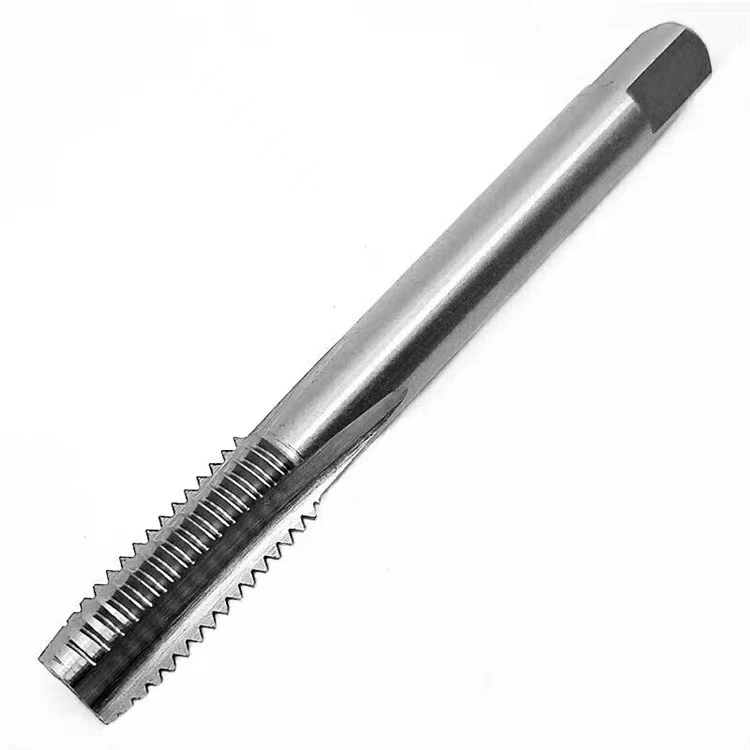
| Taps | Internal thread machining | Efficient and widely used | Sensitive to chip evacuation and alignment |
| Dies | External thread machining | Practical for rods, bolts, and repair work | Less flexible for complex CNC production |
| Thread Milling Cutters | Internal or external threads on CNC machines | Flexible sizing, excellent control, reduced breakage risk | Requires programming capability and suitable machine conditions |
| Thread Rolling Tools | Formed threads without cutting | Strong thread surface and material flow benefits | Material and application limitations apply |
| Combined Threading Cutters | Drilling and threading in one process path | Can improve efficiency and reduce tool changes | Needs careful application matching |
For workshops that handle mixed production, tool diversity matters. A supplier that only offers a narrow range may not be able to support future jobs or material changes. That is one reason many buyers prefer working with manufacturers that can provide multiple threading options rather than a single standard catalog item.
Ningbo Wangdefu Precision Machinery Co.Ltd. presents a threading range associated with internal and external thread machining, including taps and thread milling related solutions, which reflects the kind of breadth many industrial buyers look for when they want room to optimize over time. :contentReference[oaicite:1]{index=1}
How do you choose the right Threading Tools for different materials
Material selection changes everything. The same tool geometry that performs well in one workpiece may fail quickly in another. When buyers say a tool “doesn’t work,” the problem is often not the category of tool itself. It is the mismatch between material behavior and tool design.
When choosing Threading Tools, start with the material family and production target.
Material-based selection logic
- Carbon steel and alloy steel: focus on wear resistance, edge stability, and consistent cutting action.
- Stainless steel: prioritize anti-buildup performance, heat control, and stable evacuation of chips.
- Aluminum alloys: watch for edge adhesion and thread burr formation; clean cutting geometry becomes important.
- Cast iron: dry or near-dry processing may be practical, but edge toughness and dust-like chip behavior must be considered.
- Plastics and softer nonmetals: avoid deformation, tearing, and poor thread profile definition.
Production volume matters too. In short runs, flexibility may outweigh maximum speed. In long runs, tool life consistency often becomes more important than initial unit price. A lower-cost tool that fails unpredictably can easily become the most expensive option on the floor.
This is exactly where better-matched Threading Tools earn their value. They reduce uncertainty. Operators spend less time adjusting parameters, buyers face fewer complaints from production, and quality teams see fewer irregular thread issues.
Why do some threads fail even when the machine seems stable
A stable machine does not automatically guarantee good threads. Thread defects often come from a combination of small mismatches that become visible only under real cutting conditions.
Here are the most common reasons thread quality drops unexpectedly:
- Wrong tool geometry: the tool may not suit blind holes, through holes, or the chip shape generated by the material.
- Poor chip evacuation: trapped chips damage the thread profile and increase breakage risk.
- Insufficient rigidity: even slight tool deflection can distort thread form and pitch accuracy.
- Improper cutting speed or feed: tool wear accelerates, and the thread surface becomes unstable.
- Weak coolant or lubrication strategy: friction rises and chips become harder to control.
- Inconsistent workpiece material: hardness variation can change cutting behavior across batches.
Buyers who understand these causes make better purchasing decisions. Instead of only asking for a cheaper price, they ask whether the supplier can recommend tool style by application, hole type, and material condition. That changes the conversation from simple buying to problem solving.
The best Threading Tools suppliers usually support that process with technical communication, not just a product list. That support can be especially valuable when the application includes precision machinery parts, difficult metals, or combined drilling-and-threading requirements.
Which performance indicators matter most when comparing suppliers
Many buyers compare threading tools by price first. That is understandable, but it is not enough. A more useful comparison is built around total production impact.
What to evaluate when comparing suppliers
- Dimensional consistency from batch to batch
- Tool life stability rather than best-case lifespan claims
- Availability of tool styles for different thread forms and materials
- Ability to support custom specifications
- Response speed for technical questions and repeat orders
- Manufacturing control and quality assurance capability
It also helps to ask how the supplier supports real applications. Do they understand the difference between high-volume production and prototype work? Can they recommend solutions for both internal and external threads? Can they support special thread requirements when standard catalog tools are not enough?
Industrial buyers are usually better served by a manufacturer that can explain where each tool fits. The Wangdefu threading page, for example, presents threading tools as solutions for internal and external threads and also distinguishes between taps, dies, thread milling cutters, and thread rolling approaches, which is the kind of categorization that helps buyers make more practical decisions. :contentReference[oaicite:2]{index=2}
How can custom Threading Tools improve productivity
Standard tools are useful, but they are not always the best answer. Once production reaches a certain level of complexity, customization can make a visible difference in output and process stability.
Custom Threading Tools become especially valuable when:
- The thread standard is unusual
- The hole depth creates chip removal problems
- The workpiece material causes abnormal wear
- The process combines several machining steps
- The customer wants to reduce cycle time without sacrificing thread quality
Customization does not have to mean overengineering. Sometimes a change in flute style, coating choice, edge preparation, shank design, or thread length is enough to improve performance. For buyers, that can mean fewer interruptions, more predictable quality, and better output per shift.
This is one reason manufacturers often look for suppliers with real production and engineering capability rather than sellers who only move standard stock. Ningbo Wangdefu Precision Machinery Co.Ltd. positions itself around precision manufacturing and threading-related solutions, which aligns well with what buyers typically want when standard products are no longer sufficient for demanding jobs. :contentReference[oaicite:3]{index=3}
What should buyers ask before placing an order
A good purchase starts with better questions. If you want Threading Tools that actually improve production instead of creating new uncertainty, ask beyond price and delivery.
Useful questions before ordering
- What workpiece material is this tool optimized for?
- Is it better suited for through holes or blind holes?
- What thread tolerance and surface condition can it realistically support?
- How should speed, feed, and lubrication be adjusted for this application?
- Is a standard model enough, or would a custom version improve stability?
- What signs indicate the tool is nearing the end of its practical life?
- Can the supplier support repeated production with stable batch quality?
These questions help uncover whether the supplier understands real machining conditions. The goal is not to make buying slower. It is to avoid expensive mistakes that appear later during production.
FAQ
What are Threading Tools used for?
Threading Tools are used to create internal or external threads on parts so they can be assembled securely with mating components such as bolts, screws, or threaded fittings.
Which is better for production, tapping or thread milling?
Neither is universally better. Tapping is efficient and common for many internal threads, while thread milling offers greater flexibility, lower breakage risk in some cases, and better control for certain materials or thread sizes.
Why do taps break so often in some workshops?
Breakage often comes from chip evacuation problems, poor alignment, wrong cutting parameters, unsuitable geometry, or unstable material conditions rather than from the tool alone.
Can custom Threading Tools really reduce cost?
Yes. While the purchase price may be higher, a custom tool can reduce scrap, improve cycle time, lower tool-change frequency, and make output more predictable.
What should I prioritize if I buy Threading Tools for stainless steel?
Focus on chip control, edge stability, heat management, and a tool design suited to the thread depth and hole type. Stainless steel often exposes weak tool matching very quickly.
Conclusion
Reliable threads are built through the right combination of tool design, material understanding, process control, and supplier support. When buyers choose Threading Tools carefully, they protect much more than a single machining operation. They protect assembly performance, quality consistency, and the economics of the whole production line.
If you are looking for a more dependable way to improve thread quality, reduce machining uncertainty, and match tooling more closely to your production needs, Ningbo Wangdefu Precision Machinery Co.Ltd. is worth considering as a practical manufacturing partner. If you want to discuss your material, thread standard, or custom tooling requirements in detail, contact us to explore a more suitable threading solution for your application.