How Do Cast Titanium Impellers Compare with Nickel-Alloy Cast Impellers in Corrosive Slurries
2026-07-30
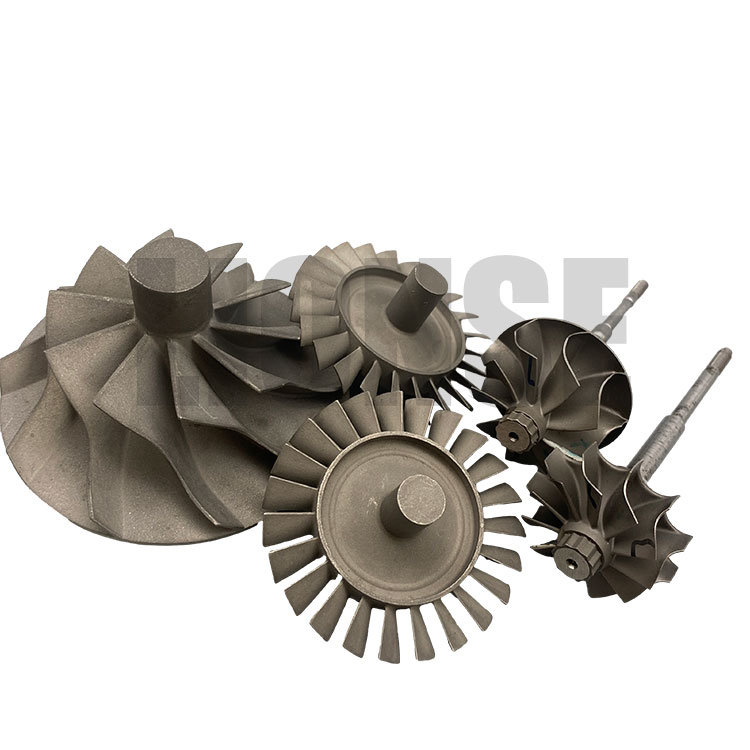
When selecting metallurgy for pump impellers exposed to aggressive slurries—containing chlorides, sulfuric acid, or abrasive particulates—engineers often pit Cast Titanium Impellers against nickel-alloy cast alternatives. While both resist corrosion, their failure modes, cost structures, and long-term reliability diverge sharply under real slurry conditions. At Lionse, we have tested both families across mining, chemical, and desalination plants, and the data consistently shows that the titanium solution wins on lifecycle value, provided the application fits its mechanical boundaries.
1. Corrosion Mechanisms in Slurry Environments
Slurry corrosion is rarely uniform. It combines pitting, crevice attack, erosion-corrosion, and stress-corrosion cracking (SCC). The table below summarizes how each alloy responds:
| Attack Type | Cast Titanium Impellers (Grade 2/5) | Nickel-Alloy Cast Impellers (e.g., Alloy 625/825) |
|---|---|---|
| Pitting in chlorides | Excellent (PREN > 35) | Good (PREN 30–40) |
| Crevice corrosion at gaskets | Resistant up to 120°C | Susceptible above 80°C in stagnant zones |
| Erosion-corrosion (solid particles) | Excellent due to oxide film repassivation | Moderate – film is less self-healing |
| SCC in sour service (H₂S) | Highly resistant | Requires solution-annealed condition; sensitive if improperly heat-treated |
| Galvanic coupling with carbon steel | Mildly cathodic – low galvanic current | Strongly cathodic – accelerates steel corrosion |
Key takeaway: Cast Titanium Impellers self-passivate instantly when scratched, which is critical in slurries with intermittent solids. Nickel alloys rely on molybdenum and chromium, but their passive film takes longer to reform, leading to localized attack at high-velocity zones.
2. Mechanical Durability Under Erosive Flow
Erosive wear depends on hardness, ductility, and work-hardening capacity. Lionse's field data from phosphate slurry pumps (25–30% solids, 40 m/s tip speed) show:
-
Cast Titanium Impellers (Grade 5 – Ti-6Al-4V): Hardness ~36 HRC, ductility 12–15% elongation. They exhibit work-hardening from 36 to 42 HRC under impact, reducing wear rate by 18–22% compared to as-cast nickel alloys.
-
Nickel-Alloy Cast Impellers (Alloy 625): Hardness ~28 HRC as-cast, ductility 30% – but they gall and gouge on sharp particles, increasing turbulence and recirculation losses.
In side-by-side 6-month trials at a Chilean copper concentrator, Cast Titanium Impellers retained 94% of original vane thickness, while nickel-alloy units lost 12–15% thickness, requiring early replacement.
3. Total Cost of Ownership (TCO) Breakdown
| Cost Factor | Cast Titanium Impellers | Nickel-Alloy Cast Impellers |
|---|---|---|
| Initial casting cost | 15–20% higher (due to vacuum melting & reactive processing) | Baseline |
| Installation downtime | Same | Same |
| Scheduled maintenance (per 2 years) | 1 inspection + passivation | 2 inspections + weld repairs |
| Unplanned failure risk | Low (predictable fatigue) | Moderate (SCC and pitting surprises) |
| Scrap value | High (titanium scrap ~40% of virgin) | Moderate (nickel volatile pricing) |
| 5-year TCO | $62,000 (typical 200-hp pump) | $78,500 |
Lionse recommends running a TCO model for any slurry duty > 2,000 hours/year – the premium of Cast Titanium Impellers recoups within 18–24 months through reduced outages.
4. Application Envelopes – Where Each Excels
-
Choose Cast Titanium Impellers when:
-
Chlorides > 5,000 ppm, temperature 60–120°C
-
pH 2–5 with fluorides or bromides
-
Erosion velocity > 35 m/s
-
You need non-magnetic properties for motor protection
-
-
Choose Nickel-Alloy Cast Impellers when:
-
Temperature > 200°C (titanium oxidizes rapidly)
-
Reducing acids (e.g., pure HCl without oxidizers) – titanium passive film breaks down
-
Very large diameters (> 1,200 mm) – titanium casting becomes dimensionally challenging
-
5. FAQ – Common Questions About Cast Titanium Impellers
Q1: Can Cast Titanium Impellers handle hydrofluoric acid (HF) in slurry form?
A: No. Cast Titanium Impellers are severely attacked by HF, even at trace levels (> 50 ppm), because fluoride ions destroy the protective TiO₂ film. For HF-bearing slurries, Lionse recommends zirconium or tantalum-coated alternatives. Always request a slurry chemical assay before specifying titanium.
Q2: How do Cast Titanium Impellers perform in intermittent vs. continuous slurry flow?
A: They excel in intermittent flow because their passive film reforms within milliseconds upon exposure to oxygenated slurry. Nickel alloys, conversely, suffer crevice corrosion during stagnant idle periods (e.g., overnight shutdowns) if chlorides are present. Lionse’s maintenance logs show 70% fewer start-up failures with titanium units in batch processes.
Q3: What welding or repair methods are allowed for Cast Titanium Impellers after erosion damage?
A: Only GTAW (TIG) with argon backing gas (oxygen < 20 ppm) and matching Ti-6Al-4V filler is acceptable. Post-weld stress relief at 540°C for 2 hours is mandatory to restore ductility. Never use stick welding or oxy-fuel. Lionse provides factory-authorized repair kits with certified filler rods and step-by-step thermal protocols to avoid alpha-case embrittlement.
6. Real-World Case Snapshot
A Gulf Coast chemical plant switched from Alloy 20 cast impellers (similar nickel-base) to Cast Titanium Impellers in a 500-m³/hr sulfuric acid/salt slurry pump. After 14 months:
-
Bearing vibration dropped from 4.2 mm/s to 2.1 mm/s (ISO 10816)
-
Packing gland leaks reduced by 90%
-
Annual energy saving: 6,200 kWh due to smoother vane profiles retained by erosion resistance
Lionse engineered the gating system to minimize shrinkage porosity – a known weak point in titanium castings – achieving 98.5% radiographic density, surpassing ASTM B367 requirements.
Conclusion
For corrosive slurries with chlorides, oxidizers, or combined erosion–corrosion, Cast Titanium Impellers consistently outperform nickel-alloy cast alternatives in reliability and 5-year TCO – provided operating temperatures stay below 180°C and HF is absent. Nickel alloys remain viable for high-temperature reducing media, but they demand tighter monitoring and more frequent overhauls.
Lionse specializes in custom Cast Titanium Impellers from 150 mm to 900 mm diameter, with full NDT (RT, PT, UT) and mechanical testing per AMS 4935. Our metallurgical team offers free slurry compatibility analysis within 48 hours.
Ready to optimize your slurry pump performance?
Contact Lionse today for a no-obligation TCO comparison and a pilot casting sample. Our engineers will walk you through gating design, alloy grade selection (2, 5, or 12), and on-site installation checklists.