How Die-casting Mold Improves Manufacturing Efficiency and Product Quality
2026-03-27
Abstract
Die-casting mold technology plays a critical role in modern manufacturing, enabling high-volume production of complex metal components with exceptional precision and consistency. However, many buyers and engineers face challenges such as mold wear, high upfront costs, and inconsistent product quality. This article explores how die-casting molds function, how to optimize their performance, and how businesses can overcome common pain points to achieve long-term cost efficiency and product reliability.
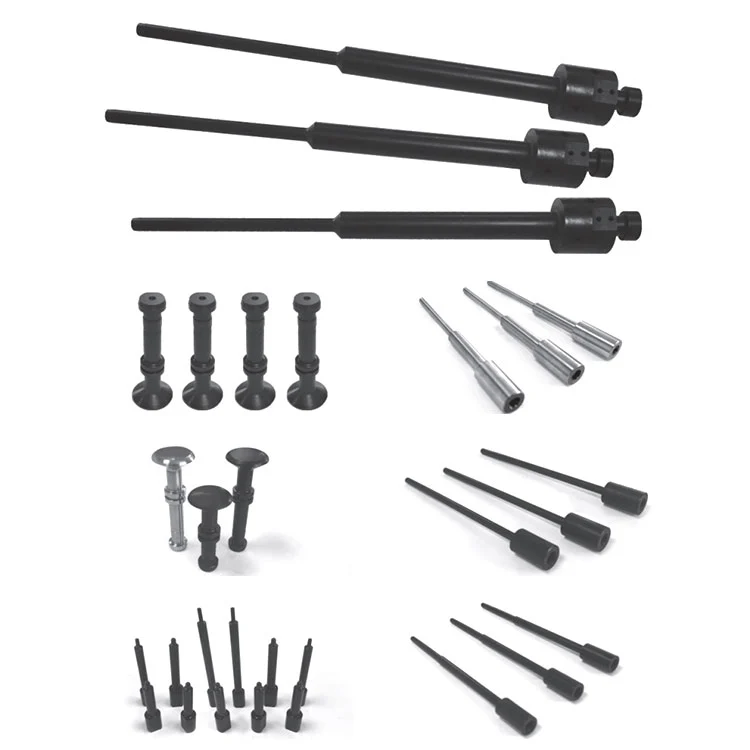
Table of Contents
- Outline
- What Is a Die-casting Mold?
- Why Die-casting Molds Matter in Manufacturing
- Types of Die-casting Molds
- How Die-casting Mold Works
- Common Customer Pain Points
- How to Solve These Challenges
- Material Selection for Mold Durability
- Maintenance and Lifecycle Optimization
- Die-casting vs Other Manufacturing Methods
- FAQ
Outline
- Introduction to die-casting molds
- Core functions and benefits
- Technical workflow explanation
- Challenges faced by buyers and manufacturers
- Actionable solutions and best practices
- Comparative analysis
- Practical FAQs
What Is a Die-casting Mold?
A die-casting mold is a precision-engineered tool used in the die-casting process to shape molten metal into specific forms. Typically made from hardened tool steel, the mold consists of two halves: the fixed half and the moving half. These molds are designed to withstand extreme temperatures and repeated mechanical stress while maintaining dimensional accuracy.
Industries such as automotive, aerospace, electronics, and industrial machinery rely heavily on die-casting molds to produce components like housings, brackets, and engine parts.
Why Die-casting Molds Matter in Manufacturing
The efficiency and quality of a die-casting operation are directly tied to the mold design and material. A well-designed mold can:
- Ensure high dimensional accuracy
- Reduce production cycle time
- Minimize material waste
- Improve surface finish
- Enable complex geometries
For companies like Wuhai, investing in advanced die-casting mold solutions means delivering consistent quality while maintaining cost competitiveness.
Types of Die-casting Molds
| Type | Description | Application |
|---|---|---|
| Single Cavity Mold | Produces one part per cycle | Low-volume production |
| Multi-Cavity Mold | Produces multiple parts simultaneously | Mass production |
| Hot Chamber Mold | Integrated with injection system | Zinc, magnesium alloys |
| Cold Chamber Mold | Separate injection system | Aluminum alloys |
How Die-casting Mold Works
The die-casting process involves several critical steps:
- Mold Preparation: The mold is cleaned and lubricated to ensure smooth release.
- Metal Injection: Molten metal is injected into the mold cavity under high pressure.
- Cooling: The metal solidifies rapidly within the mold.
- Ejection: The finished part is ejected using ejector pins.
- Trimming: Excess material is removed.
This high-speed process allows manufacturers to produce thousands of identical parts with minimal variation.
Common Customer Pain Points
Despite its advantages, customers often encounter the following issues:
- High Initial Investment: Mold development costs can be significant.
- Mold Wear and Tear: Repeated cycles lead to degradation.
- Inconsistent Product Quality: Poor design or material choice affects output.
- Long Lead Times: Complex molds require extensive design and testing.
- Maintenance Costs: Frequent repairs increase operational expenses.
How to Solve These Challenges
Addressing these issues requires a strategic approach:
- Optimized Mold Design: Use simulation tools to predict performance before production.
- Partner with Experienced Manufacturers: Companies like Wuhai provide technical expertise and reliable production capabilities.
- Invest in Quality Materials: High-grade tool steel improves longevity.
- Implement Preventive Maintenance: Regular inspection reduces downtime.
- Use Modular Mold Design: Allows easier replacement of worn components.
Material Selection for Mold Durability
Choosing the right material is crucial for mold performance. Below is a comparison:
| Material | Advantages | Limitations |
|---|---|---|
| H13 Tool Steel | High heat resistance, durability | Higher cost |
| P20 Steel | Good machinability | Lower wear resistance |
| 8407 Steel | Excellent toughness | Requires precise heat treatment |
Maintenance and Lifecycle Optimization
Proper maintenance extends mold life and ensures consistent output:
- Regular cleaning and lubrication
- Monitoring thermal fatigue
- Replacing worn components promptly
- Using proper cooling systems
A well-maintained die-casting mold can last hundreds of thousands of cycles, significantly improving return on investment.
Die-casting vs Other Manufacturing Methods
| Method | Precision | Cost Efficiency | Production Volume |
|---|---|---|---|
| Die Casting | High | Excellent (mass production) | High |
| CNC Machining | Very High | Moderate | Low to Medium |
| Injection Molding | High | High | High (plastic only) |
FAQ
1. How long does a die-casting mold last?
Depending on material and maintenance, molds can last from 50,000 to over 500,000 cycles.
2. How can I reduce die-casting mold costs?
Optimize design, choose the right materials, and work with experienced manufacturers to avoid costly revisions.
3. What metals are commonly used in die casting?
Aluminum, zinc, magnesium, and copper alloys are the most common.
4. How do I ensure consistent product quality?
Focus on mold precision, proper temperature control, and regular maintenance.
5. Is die casting suitable for small production runs?
It is generally more cost-effective for medium to large-scale production due to initial tooling costs.
Conclusion
Die-casting molds are the backbone of efficient, high-quality metal manufacturing. By understanding their design, functionality, and maintenance requirements, businesses can significantly reduce production costs while improving product consistency. Partnering with a reliable manufacturer like Wuhai ensures access to advanced technology, expert engineering, and long-term support.
If you are looking to enhance your production capabilities with high-performance die-casting mold solutions, now is the time to take action. Contact us today to discuss your project requirements and discover how we can help you achieve superior results with precision and efficiency.