How Can You Maximize the Tool Life of PCD Inserts in High-Volume Production
2026-03-11
In the competitive world of high-volume manufacturing, maximizing the lifespan of your PCD Inserts is critical for controlling costs and maintaining efficiency. WDF specializes in precision cutting tools, and we understand that the longevity of your PCD Inserts directly impacts your bottom line. By optimizing machining parameters and maintenance routines, you can significantly extend the service life of these high-performance tools.
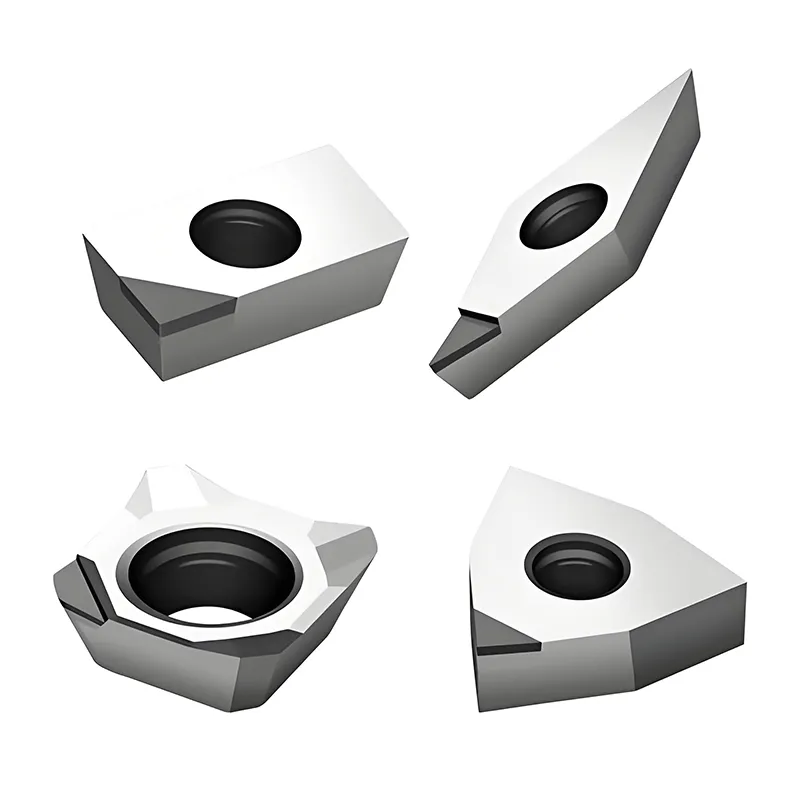
Key Strategies for Extending PCD Insert Life
To achieve the maximum return on your investment in PCD Inserts, it is essential to focus on three core areas: operational parameters, workpiece engagement, and tool maintenance.
1. Optimize Cutting Parameters
Running PCD Inserts at the correct speeds and feeds prevents premature wear. Unlike carbide, polycrystalline diamond requires high surface speed to perform effectively. If the speed is too low, it can cause micro-chipping; if too high with interrupted cuts, it may lead to thermal shock.
2. Ensure Rigid Setup and Coolant Delivery
Stability is non-negotiable. Any vibration in the spindle or workpiece will fracture the brittle diamond edge. Furthermore, while PCD Inserts handle heat well, consistent coolant flow is necessary to evacuate chips and prevent built-up edge on aluminum and other non-ferrous materials.
3. Implement Tool Wear Monitoring
Regular inspection allows you to catch flank wear before it leads to catastrophic failure. The table below illustrates the typical wear stages and recommended actions for PCD Inserts in a production environment.
| Wear Stage | Visual Indicator | Recommended Action |
|---|---|---|
| Initial Break-In | Light abrasion on flank face | Continue monitoring; this is normal. |
| Stable Wear Zone | Uniform wear land (0.1mm - 0.3mm) | Optimize cycle times; ideal production phase. |
| Accelerated Wear | Increased surface roughness on part | Prepare for indexing or replacement. |
| Failure Point | Chipping, cratering, or audible chatter | Immediate replacement required to protect part. |
Best Practices for High-Volume Environments
Implementing a standardized process for tool handling ensures consistency across your production lines.
-
Use Correct Edge Preparation: Ensure the PCD Inserts you select from WDF have the appropriate edge hone for your material. Sharp edges for finishing, stronger edges for roughing.
-
Control Entry and Exit: In high-volume CNC applications, program a reduced feed rate during tool entry and exit to minimize the impact stress on the PCD Inserts.
-
Verify Concentricity: Ensure the tool holder run-out is below 0.01mm. Excessive run-out leads to uneven wear on one tooth, drastically reducing the life of your PCD Inserts.
Frequently Asked Questions
What is the primary cause of premature failure in PCD Inserts during high-volume production?
The most common cause is mechanical shock and vibration. This often stems from an insecure workpiece, excessive tool overhang, or worn spindle bearings. Unlike gradual wear, shock causes the PCD layer to micro-chip or delaminate from the carbide substrate. Ensuring absolute rigidity in the machine setup is the first defense against this type of failure.
Can the material I am machining affect the lifespan of my PCD Inserts?
Yes, significantly. PCD Inserts are chemically suited for non-ferrous metals like aluminum, copper, and brass, as well as abrasive materials like graphite and composites. Machining ferrous metals (like steel or iron) will cause a rapid chemical reaction (carbon diffusion) that destroys the diamond edge almost instantly. The presence of abrasive silicon in high-silicon aluminum alloys will also dictate the specific grade of PCD required for maximum life.
How often should I inspect PCD Inserts in a 24/7 production run?
Inspection frequency should be based on part count rather than time. For critical dimensions, it is advisable to inspect the insert condition every 500 to 1,000 parts initially to establish a baseline wear rate. Once a predictable pattern is established, you can schedule inspections during natural production breaks. Looking for built-up edge on the rake face or a slight increase in cutting pressure are key indicators that the insert is moving out of the stable wear zone.
Conclusion
Maximizing the tool life of your PCD Inserts requires a holistic approach combining the right machining parameters, stable setups, and proactive wear management. By partnering with WDF, you gain access to high-quality tooling engineered for the demands of high-volume production. Let us help you optimize your machining processes to achieve the lowest cost per part.
Contact us today to discuss your specific application and discover how WDF can enhance your manufacturing efficiency.